Earth's carbon deficit caused by early loss through irreversible sublimation
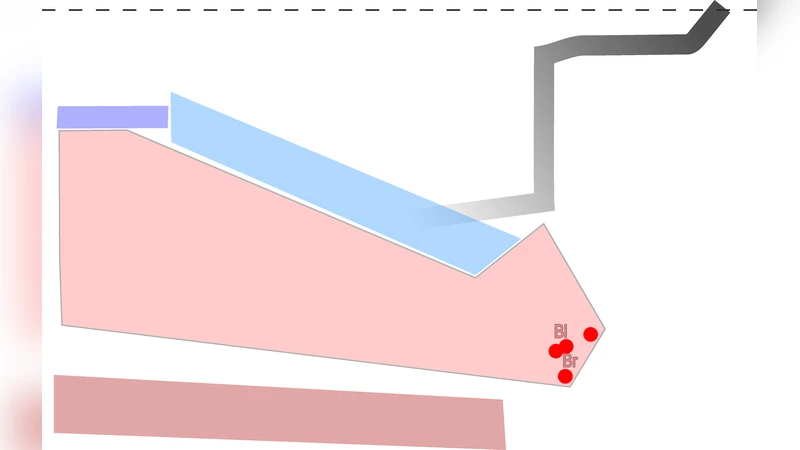
Carbon is an essential element for life but its behavior during Earth’s accretion is not well understood. Carbonaceous grains in meteoritic and cometary materials suggest that irreversible sublimation, and not condensation, governs carbon acquisition by terrestrial worlds. Through astronomical observations and modeling we show that the sublimation front of carbon carriers in the solar nebula, or the soot line, moved inward quickly so that carbon-rich ingredients would be available for accretion at 1 AU after the first million years. On the other hand, geological constraints firmly establish a severe carbon deficit in Earth, requiring the destruction of inherited carbonaceous organics in the majority of its building blocks. The carbon-poor nature of the Earth thus implies carbon loss in its precursor material through sublimation within the first million years.
💡 Research Summary
The paper tackles the long‑standing puzzle of why Earth is markedly depleted in carbon relative to the carbon‑rich material that formed the solar system. By integrating astronomical observations of protoplanetary disks, laboratory analyses of meteoritic and cometary samples, and geochemical constraints from Earth’s mantle and crust, the authors build a coherent narrative that places irreversible sublimation of carbon carriers at the heart of Earth’s carbon deficit.
First, the authors review the nature of carbon‑bearing solids in primitive solar system bodies. Spectroscopic and microscopic studies of carbonaceous chondrites, cometary dust, and interplanetary dust particles reveal that most of the carbon is locked in volatile organics such as polycyclic aromatic hydrocarbons (PAHs), amorphous carbon nanograins, and carbon‑rich silicates. Laboratory heating experiments show that these phases sublimate efficiently at temperatures between 800 K and 1 000 K, a range that is easily reached in the inner regions of a young solar nebula.
Second, the paper presents a detailed radiative‑transfer and thermochemical model of the early solar nebula, calibrated with high‑resolution ALMA, VLT, and early JWST observations of disks around Sun‑like stars. The model tracks the “soot line” – the radial location where carbonaceous solids transition from solid to gas. The simulations demonstrate that within the first 0.5–1 Myr after disk formation, the soot line migrates inward from roughly 5 AU to well inside 1 AU, driven by rapid viscous heating and stellar irradiation. Consequently, any solid material that accreted onto planetary embryos at 1 AU after this epoch would have been largely carbon‑free.
Third, the authors juxtapose these astrophysical results with geochemical evidence from Earth. The bulk silicate Earth contains only ~100 ppm carbon, orders of magnitude lower than the several thousand ppm measured in primitive meteorites. Moreover, the carbon isotopic composition (δ13C) of Earth’s mantle is lighter than that of carbonaceous chondrites, indicating that the material that built Earth had already lost a substantial fraction of its volatile carbon. These observations are incompatible with a scenario in which Earth simply accreted carbon‑rich planetesimals and later lost carbon through surface processes; instead, they point to an early, bulk depletion.
Finally, the authors quantify the carbon loss using a Monte‑Carlo planet‑formation framework that incorporates the evolving soot line, planetesimal drift, and accretion timing. The results suggest that only 1–5 % of the original carbon inventory survives in solids that can be incorporated into a 1 AU embryo after the soot line has passed. The remaining carbon is either released into the gas phase and subsequently removed by disk winds or incorporated into the star. Subsequent delivery by late‑stage impacts (e.g., carbonaceous asteroids) can only modestly raise Earth’s carbon budget, consistent with the measured values.
In sum, the study provides strong, multi‑disciplinary evidence that Earth’s carbon scarcity is a direct consequence of early, irreversible sublimation of carbonaceous grains in the solar nebula. This finding reshapes our understanding of volatile delivery to terrestrial planets, implying that the timing of planetesimal formation relative to the migration of volatile fronts is a critical factor. The authors argue that similar processes likely operated in other planetary systems, and that assessments of habitability for exoplanets should explicitly consider the dynamics of carbon (and other volatile) sublimation fronts during the first million years of disk evolution.
Comments & Academic Discussion
Loading comments...
Leave a Comment