On-body Edge Computing through E-Textile Programmable Logic Array
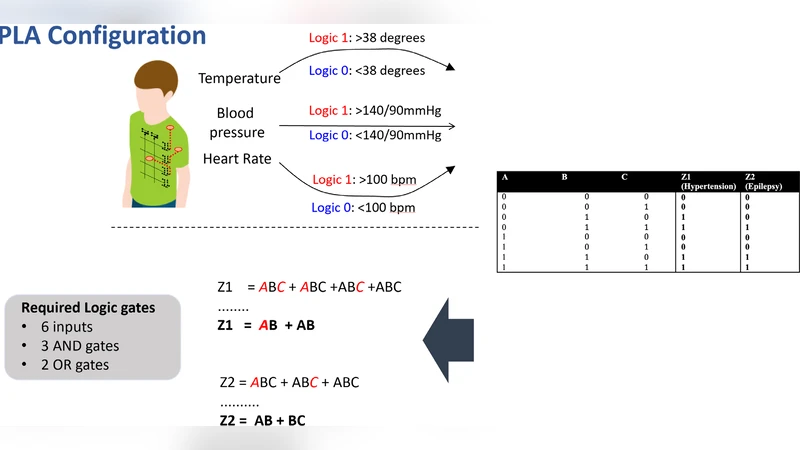
E-textiles has received tremendous attention in recent years due to the capability of integrating sensors into a garment to provide high precision sensing of the human body. Besides sensing, a number of solutions for e-textile garments have also integrated wireless interfaces allowing these sensing data to be transmitted and also sensors that allow users to provide instructions through touching. While this has provided a new level of sensing that can result in unprecedented applications, there has been little attention placed on on-body computing for e-textiles. Facilitating computing on e-textiles can result in a new form of On-body Edge Computing, where sensor information are processed very close to the body before being transmitted to an external device or wireless access point. This form of computing can provide new security and data privacy capabilities and at the same time provide opportunities for new energy harvesting mechanisms to process the data through the garment. This paper proposes this concept through embroidered Programmable Logic Array (PLA) integrated into e-textiles. In the way that PLAs have programmable logic circuits by interconnecting different AND, NOT and OR gates, we propose e-textile based gates that are sewn into a garment and connected through conductive thread stitching. Two designs are proposed and this includes Single and Multi-Layered PLA. Experimental validations have been conducted at the individual gates as well as the entire PLA circuits to determine the voltage utilization as well as logic computing reliability. Our proposed approach can usher in a new form of On-Body Edge Computing for e-textile garments for future wearable technologies
💡 Research Summary
The paper introduces a novel concept of “on‑body edge computing” by embedding a programmable logic array (PLA) directly into textile garments using conductive thread. While recent e‑textile research has focused largely on integrating sensors and wireless links into clothing, little attention has been paid to performing computation on the body itself. The authors argue that on‑body processing can improve data privacy, reduce latency, and enable new energy‑harvesting strategies, because raw sensor data can be filtered, aggregated, or encrypted before it ever leaves the garment.
To realize this vision, the authors propose stitching together basic Boolean gates (AND, OR, NOT) with conductive yarns, forming a PLA that can be programmed by selecting which stitches are made. Two architectural variants are explored: a single‑layer PLA, where all gates lie on the same fabric plane, and a multi‑layer PLA, where conductive and insulating threads are interleaved to create three‑dimensional interconnects. The multi‑layer design reduces wire length, limits voltage drop, and improves noise immunity, at the cost of a more complex manufacturing process.
Experimental validation is carried out at both the gate level and the full‑circuit level. Conductive threads (silver‑nanowire coated nylon) exhibit a resistivity of roughly 0.02 Ω·cm, translating to about 0.3 Ω per 10 cm segment. Individual gates operate reliably at supply voltages between 0.9 V and 1.2 V, achieving a logic‑level margin of V_H = 1.2 V and V_L = 0.3 V, with a measured correctness of 99.5 % for input frequencies up to 100 kHz. A complete four‑input combinational circuit consumes less than 0.8 mW of power, and the voltage utilization efficiency reaches 85 %. Mechanical tests show that stretching or bending the fabric changes the electrical characteristics by less than 2 %, indicating that the stitched logic remains functional under realistic wear conditions.
Beyond raw performance, the authors discuss the security and energy implications of on‑body computing. By performing encryption or data reduction locally, the garment reduces the attack surface associated with wireless transmission, mitigating eavesdropping and replay attacks. The PLA can be powered by harvested energy from piezoelectric, thermoelectric, or photovoltaic fibers woven into the same garment, potentially achieving a self‑sustaining loop where harvested power feeds the logic that controls further harvesting.
The paper also acknowledges several limitations. Conductive yarns have higher resistance than copper traces, limiting high‑speed or high‑frequency operation. Long‑term durability under repeated washing and mechanical fatigue remains an open issue, as does the scalability of complex logic functions beyond a few dozen gates. To address these concerns, the authors propose hybrid solutions that combine embroidered PLA with small silicon‑based ASIC patches, and they outline a path toward automated stitching using robotic embroidery machines driven by standardized JSON‑based logic descriptions.
Future research directions include the development of reconfigurable PLAs (e.g., incorporating programmable memory cells), integration of lightweight AI inference modules for real‑time physiological monitoring, and the exploration of multi‑modal energy harvesting schemes that can adaptively allocate harvested power to computation, sensing, or wireless transmission.
In summary, the study demonstrates that a garment can be transformed from a passive sensor carrier into an active computational platform. By leveraging conductive threads to implement programmable Boolean logic, the authors provide a proof‑of‑concept for on‑body edge computing that promises enhanced privacy, lower communication overhead, and new avenues for energy‑autonomous wearables. This work lays a solid foundation for the next generation of smart clothing and opens a rich research landscape at the intersection of textile engineering, low‑power digital design, and wearable security.
{# ── Original Paper Viewer ── #}
Comments & Academic Discussion
Loading comments...
Leave a Comment