The Simulated Sky: Stellarium for Cultural Astronomy Research
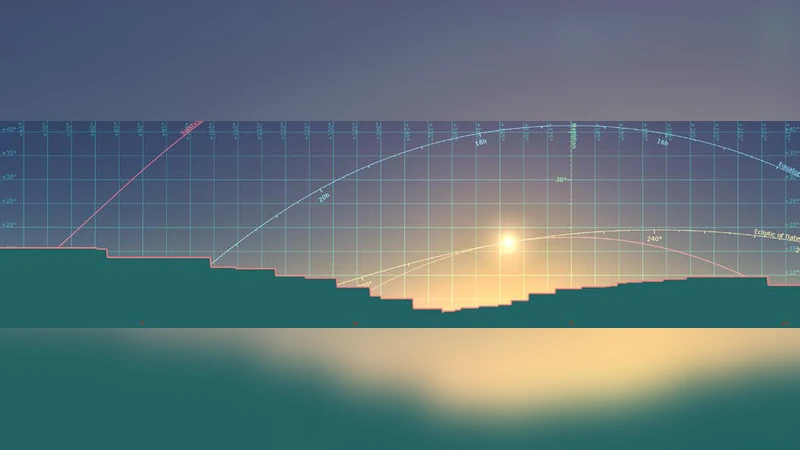
For centuries, the rich nocturnal environment of the starry sky could be modelled only by analogue tools such as paper planispheres, atlases, globes and numerical tables. The immersive sky simulator of the twentieth century, the optomechanical planetarium, provided new ways for representing and teaching about the sky, but the high construction and running costs meant that they have not become common. However, in recent decades, “desktop planetarium programs” running on personal computers have gained wide attention. Modern incarnations are immensely versatile tools, mostly targeted towards the community of amateur astronomers and for knowledge transfer in transdisciplinary research. Cultural astronomers also value the possibilities they give of simulating the skies of past times or other cultures. With this paper, we provide an extended presentation of the open-source project Stellarium, which in the last few years has been enriched with capabilities for cultural astronomy research not found in similar, commercial alternatives.
💡 Research Summary
The paper presents an extensive overview of Stellarium, an open‑source desktop planetarium, and argues that it has become a uniquely valuable tool for cultural astronomy research. After briefly reviewing the historical context—analogue planispheres, atlases, and mechanical planetariums—the authors note that while the latter offered immersive visualisation, their high construction and operating costs limited widespread adoption. The advent of personal‑computer‑based sky simulators in the early 2000s changed this landscape, and Stellarium quickly emerged as the most popular because it is free, cross‑platform, and supports high‑quality 3D rendering.
The core contribution of the article is a systematic description of the new capabilities that have been added to Stellarium specifically for cultural‑astronomy work. First, the software now allows unrestricted manipulation of temporal and spatial parameters: users can set dates from 10 000 BCE to several millennia into the future and specify latitude, longitude, and altitude with meter‑level precision. This makes it possible to reconstruct the night sky as seen from any ancient observatory or remote cultural site. Second, a dedicated “cultural mode” has been implemented through a suite of plug‑ins that embed more than thirty distinct cultural star‑catalogues, each containing constellation lines, names, colour schemes, mythological narratives, and illustrative icons for traditions ranging from Mesopotamian and Egyptian to Maya, Aztec, and various African societies. When activated, Stellarium overlays the selected culture’s constellations on top of the standard IAU framework, allowing scholars to compare and contrast differing sky‑maps directly.
Third, the authors highlight the integration of a Python/Lua scripting engine and a public plug‑in API. Researchers can write scripts that automatically generate sky snapshots for a list of dates, detect the occurrence of eclipses, planetary conjunctions, or heliacal risings, and output structured reports for statistical analysis. Moreover, the software can ingest external GIS data to model local horizon profiles and atmospheric extinction, thereby reproducing the limited visibility conditions that ancient observers would have experienced. This level of automation and customisation is rarely available in commercial planetarium packages.
From a technical standpoint, Stellarium’s rendering pipeline is built on modern OpenGL, employing physically based lighting and high‑resolution texture maps for stars, planets, nebulae, and atmospheric scattering. Astronomical data are sourced directly from NASA’s JPL Horizons system, the International Astronomical Union’s official catalogue, and the IAU’s constellation boundary files, ensuring scientific accuracy. Because the source code is hosted on GitHub under a permissive license, any researcher can audit, modify, or extend the code, which greatly enhances reproducibility and transparency—critical concerns in scholarly work.
The paper also provides a comparative assessment with proprietary planetarium software. Stellarium’s zero‑cost model eliminates licensing barriers for educational institutions and museums, while its modular plug‑in architecture offers greater flexibility for adding new cultural datasets than most closed‑source alternatives. The primary limitation identified is performance: high‑fidelity atmospheric models and ultra‑high‑resolution star fields demand a capable GPU, and low‑end hardware may suffer frame‑rate drops. However, Stellarium includes quality‑settings that allow users to scale back visual detail to maintain interactivity.
Finally, the authors discuss future directions. They envision integration with virtual‑reality headsets to create fully immersive cultural‑sky experiences, collaborative online sessions where multiple users explore the same historical sky in real time, and curriculum‑level projects that let students contribute their own cultural star‑catalogues. By combining open‑source transparency, extensive temporal‑spatial control, and culturally specific visualisation layers, Stellarium is positioned as a cornerstone platform for interdisciplinary research that bridges astronomy, anthropology, history, and education. The paper concludes that continued community development and the addition of new cultural modules will further solidify Stellarium’s role as the de‑facto standard tool for cultural astronomy.