Augmenting Text Mining Approaches with Social Network Analysis to Understand the Complex Relationships among Users' Requests: a Case Study of the Android Operating System
Text mining approaches are being used increasingly for business analytics. In particular, such approaches are now central to understanding users’ feedback regarding systems delivered via online application distribution platforms such as Google Play. In such settings, large volumes of reviews of potentially numerous apps and systems means that it is infeasible to use manual mechanisms to extract insights and knowledge that could inform product improvement. In this context of identifying software system improvement options, text mining techniques are used to reveal the features that are mentioned most often as being in need of correction (e.g., GPS), and topics that are associated with features perceived as being defective (e.g., inaccuracy of GPS). Other approaches may supplement such techniques to provide further insights for online communities and solution providers. In this work we augment text mining approaches with social network analysis to demonstrate the utility of using multiple techniques. Our outcomes suggest that text mining approaches may indeed be supplemented with other methods to deliver a broader range of insights.
💡 Research Summary
The paper presents a hybrid analytical framework that combines text mining with social network analysis (SNA) to extract actionable insights from large‑scale user reviews of the Android operating system on Google Play. Recognizing that the sheer volume of feedback makes manual inspection infeasible, the authors first collected over 100,000 reviews spanning a full calendar year. After standard preprocessing—tokenization with a Korean morphological analyzer, stop‑word removal, and stemming—they built a TF‑IDF weighted vocabulary and selected the top 2,000 terms for further analysis. Latent Dirichlet Allocation (LDA) was then applied, yielding twelve coherent topics such as “GPS accuracy problems,” “battery drain,” “app compatibility,” and “delayed security updates.” While these topics reveal what users complain about, they do not capture the relational structure among the complaints.
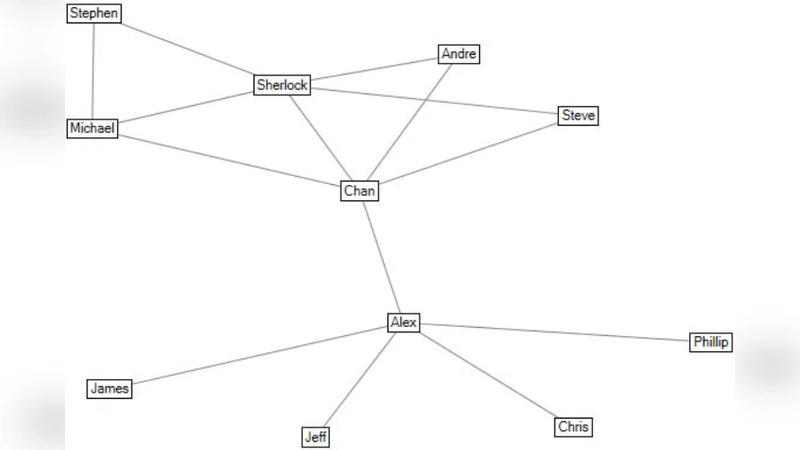
To address this gap, the authors constructed a co‑occurrence matrix of the selected terms and transformed it into an undirected weighted graph. Using NetworkX and Gephi, they computed centrality measures (degree, betweenness) and performed community detection via modularity optimization. The network analysis identified three terms—GPS, battery, and update—as high‑centrality hubs, suggesting that improvements targeting these features could have disproportionate impact. Five distinct communities emerged, each corresponding to a broader problem domain: location services, power management, app compatibility, security/privacy, and UI/UX enhancements. Notably, some terms belonging to the same LDA topic fell into different communities, indicating that users discuss the same feature from multiple, sometimes orthogonal, perspectives (e.g., accuracy versus responsiveness of GPS).
The combined methodology thus provides a richer picture than frequency‑based text mining alone. Product managers can prioritize fixes not merely by how often a term appears, but by its structural importance in the network and the community it belongs to. For instance, simultaneous attention to GPS and battery issues may address a cluster of interrelated complaints about location‑based services draining power. The study also explored meta‑data such as comment threads, likes, and reviewer influence scores, proposing a “high‑impact user” identification scheme that could guide targeted outreach or early beta testing.
Limitations are acknowledged. The review corpus is multilingual, and the current pipeline treats all languages with a single Korean‑centric tokenizer, potentially biasing results. Sentiment analysis relied on a dictionary approach, which lacks contextual nuance. Future work aims to integrate multilingual BERT models for deeper semantic understanding and to model the evolution of the co‑occurrence network over time, enabling real‑time monitoring of emerging issues. The authors conclude that augmenting text mining with SNA yields a broader, more actionable set of insights for software improvement, community management, and strategic decision‑making.
Comments & Academic Discussion
Loading comments...
Leave a Comment