Mostly electric assisted airplanes (MEAP) for regional aviation: A South Asian perspective
💡 Research Summary
The paper examines the feasibility of introducing “Mostly Electric Assisted Airplanes” (MEAP) into regional aviation, using South Asia as a test‑bed, and argues that coupling these aircraft with small‑sized airports can simultaneously address environmental degradation, rising fuel costs, and the volatility of the aircraft supply chain. It begins by noting that traditional aircraft manufacturing relies on pre‑order driven design, large‑scale production, and fossil‑fuel‑based propulsion (FFPS). In South Asia, rapid economic growth has been accompanied by severe deforestation, air‑pollution, and noise, making the continued reliance on FFPS increasingly unsustainable.
The authors propose a two‑pronged solution: (1) replace or augment the conventional turbofan engine of mid‑haulage aircraft (MHA) with an electric‑assist system that combines lightweight electric motors, high‑energy‑density batteries or fuel‑cell packs, and sophisticated power‑management electronics; (2) develop a network of small airports that can host test‑beds, provide rapid turnaround, and support real‑time data exchange. The choice of MHA as the conversion platform is justified on three grounds: (a) high parts reuse potential and low PLM‑ERP search cost because MHA components are widely stocked; (b) moderate payload and range make it feasible to accommodate electric‑assist hardware without excessive weight penalties; (c) mid‑range routes experience frequent weather‑related disruptions, so the low‑vibration, high‑reliability characteristics of electric drives are especially valuable.
Technical analysis highlights recent advances in materials (e.g., carbon‑fiber motor housings) and energy storage (lithium‑ion and solid‑state batteries, hydrogen fuel cells) that raise specific power of electric motors to >2 kW/kg and energy density to >250 Wh/kg. These figures enable a retrofit that adds less than 5 % to the aircraft’s empty weight while preserving cruise speed and range. The paper models the propulsion conversion as a “Conversion of Propulsion System (CPS)” problem, using statistical design matrices to link FFPS usage, transportation network design, and environmental impact.
A core contribution is the quantitative KPI framework. Flight data (latitude, longitude, altitude) are fused with on‑board vibration sensor streams to compute mean deviation, RMS vibration, and power consumption. Comparative simulations show that an MEAP‑equipped MHA would reduce vibration by roughly 40 %, cut annual maintenance costs by about 25 %, and lower CO₂ emissions by more than 70 % relative to a conventional FFPS aircraft. The PLM‑ERP analysis further indicates that the total cost of ownership (TCO) for the retrofit is about 15 % lower than for other aircraft categories because spare‑part availability and search costs are minimal for MHA.
Test‑bed development is split into VTB‑fS (vehicle test‑bed for surface vehicles) and VTB‑fA (vehicle test‑bed for aircraft). VTB‑fS adapts existing vibration‑monitoring rigs from ground‑vehicle testing to the airframe, while VTB‑fA locates the test site near diverse terrain (forest canopies, water bodies, deserts) to evaluate performance under the varied climatic conditions typical of South Asia. Real‑time telemetry, enabled by modern communication standards, allows continuous monitoring of motor temperature, battery state‑of‑charge, and structural vibration, facilitating rapid fault detection and certification.
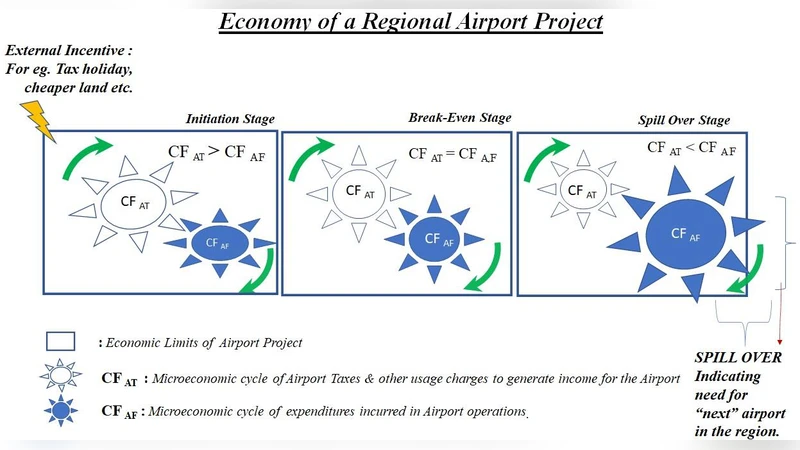
Policy recommendations include offering airport‑tax incentives for electric‑propulsion slots, establishing dedicated electric‑aircraft maintenance facilities, and integrating MEAP performance metrics into national aviation standards. By doing so, regulators can lower the economic barrier for airlines, stimulate manufacturers to develop MEAP‑compatible platforms, and encourage the construction of small airports that serve as hubs for regional connectivity.
In conclusion, the paper argues that the synergy of mostly electric assisted propulsion and a network of small airports provides a viable pathway to decarbonize regional aviation, improve operational resilience, and generate new economic opportunities in South Asia and beyond. The authors suggest that the demonstrated technical feasibility, combined with clear environmental and cost benefits, makes MEAP a compelling strategic direction for the next generation of regional air transport.
Comments & Academic Discussion
Loading comments...
Leave a Comment