A slice tour for finding hollowness in high-dimensional data
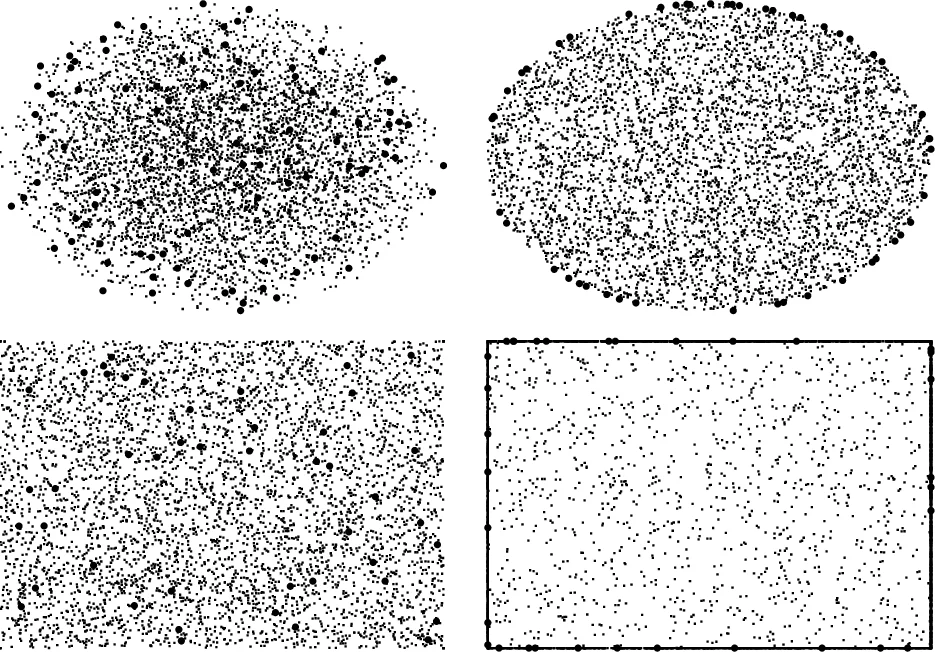
Taking projections of high-dimensional data is a common analytical and visualisation technique in statistics for working with high-dimensional problems. Sectioning, or slicing, through high dimensions is less common, but can be useful for visualising data with concavities, or non-linear structure. It is associated with conditional distributions in statistics, and also linked brushing between plots in interactive data visualisation. This short technical note describes a simple approach for slicing in the orthogonal space of projections obtained when running a tour, thus presenting the viewer with an interpolated sequence of sliced projections. The method has been implemented in R as an extension to the tourr package, and can be used to explore for concave and non-linear structures in multivariate distributions.
💡 Research Summary
The paper introduces a novel dynamic visualization technique called the “slice tour” for uncovering hidden structures—particularly hollow (i.e., interior‑empty) regions and small‑scale non‑linear patterns—in high‑dimensional data sets. Traditional projection‑based visualizations, such as the grand tour, display a smooth sequence of low‑dimensional (usually 2‑D) projections of a p‑dimensional data matrix X. While useful for spotting clusters, outliers, and broad non‑linear trends, pure projections can obscure interior voids or subtle features because the projection collapses many dimensions onto a plane, making the data appear dense and opaque.
The slice tour augments the grand tour by computing, for each observation xi, its orthogonal distance to the current projection plane. Let A =
Comments & Academic Discussion
Loading comments...
Leave a Comment