A survey of blockchain frameworks and applications
The applications of the blockchain technology are still being discov-ered. When a new potential disruptive technology emerges, there is a tendency to try to solve every problem with that technology. However, it is still necessary to determine what approach is the best for each type of application. To find how distributed ledgers solve existing problems, this study looks for blockchain frameworks in the academic world. Identifying the existing frameworks can demonstrate where the interest in the technology exists and where it can be miss-ing. This study encountered several blockchain frameworks in development. However, there are few references to operational needs, testing, and deploy of the technology. With the widespread use of the technology, either integrating with pre-existing solutions, replacing legacy systems, or new implementations, the need for testing, deploying, exploration, and maintenance is expected to in-tensify.
💡 Research Summary
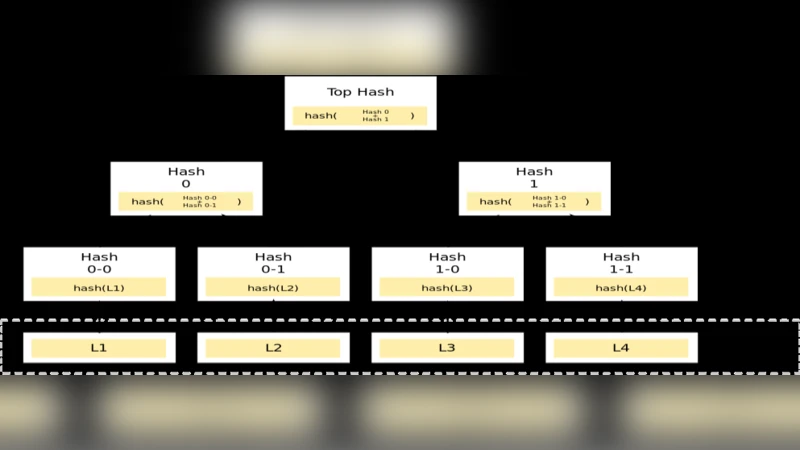
The paper presents a comprehensive survey of blockchain frameworks and their applications, grounded in an analysis of academic literature indexed in Scopus. It begins by highlighting the rapid rise of blockchain research since 2012, noting that while the technology gained fame through cryptocurrencies, its underlying capabilities—decentralized trust, immutability, transparency, and data integrity—make it attractive for a wide array of sectors. The authors outline the basic structure of a blockchain (blocks, hash chaining, Merkle trees) and discuss various consensus mechanisms, emphasizing that each implementation can differ substantially.
A detailed discussion of blockchain’s benefits (trustless operation, integrity, transparency, high‑quality immutable data, and resilience against single points of failure) is followed by an equally thorough enumeration of its challenges: limited transaction throughput, block size constraints, high energy consumption (especially for proof‑of‑work), privacy and security concerns, integration hurdles with legacy systems, cultural resistance, and regulatory uncertainty. These obstacles are identified as the primary reasons why many promising use‑cases remain experimental.
The survey then maps blockchain applications across domains such as legal document notarization, healthcare records, supply‑chain management, Internet of Things (IoT), e‑business, energy markets, e‑government, decentralized registries, and smart‑city initiatives. For each domain, the paper cites examples where blockchain can enhance transparency, reduce fraud, and enable peer‑to‑peer interactions without a trusted intermediary.
The core of the study is a metadata analysis of blockchain‑related publications. Using Scopus queries for “blockchain” and “framework,” the authors chart the exponential growth of papers, the dominance of computer science, engineering, and mathematics, and the prevalence of conference papers over journal articles. Citation patterns reveal that the most influential works are typically two to three years old, suggesting that the field is still consolidating foundational knowledge.
Table 1 lists 30+ blockchain frameworks identified in the literature, classifying each by author, framework name, target application area, and scientific contribution (algorithmic, architectural, analytical, or conceptual). Notable entries include:
- SCIRM (Smart Contract‑based Investigation Report Management) for mobile security,
- BLOCKBENCH, a performance‑evaluation suite for private blockchains,
- PoET‑based security analysis framework,
- Hyperledger‑Fabric‑based backend for stakeholder mobile apps,
- Various IoT‑focused frameworks for data provenance and privacy,
- Energy‑market trading platforms, and
- Reputation‑assessment systems for cloud services.
Despite the diversity of frameworks, the authors observe a common shortfall: most works focus on design or proof‑of‑concept without addressing operational concerns such as testing methodologies, deployment pipelines, scalability testing, or long‑term maintenance. Consequently, there is a gap between academic prototypes and production‑ready solutions.
In the concluding section, the paper argues that future research must move beyond isolated functional prototypes toward holistic lifecycle frameworks that encompass specification, implementation, rigorous testing, deployment, monitoring, and upgrade strategies. Such comprehensive tooling would help identify potential pitfalls early, reduce integration costs with existing infrastructures, and accelerate the transition of blockchain from a promising technology to a reliable component of enterprise systems. The authors also call for stronger collaboration between academia and industry, standardization efforts, and empirical studies that validate blockchain’s claimed benefits in real‑world settings.
Comments & Academic Discussion
Loading comments...
Leave a Comment