Energy Decay Network (EDeN)
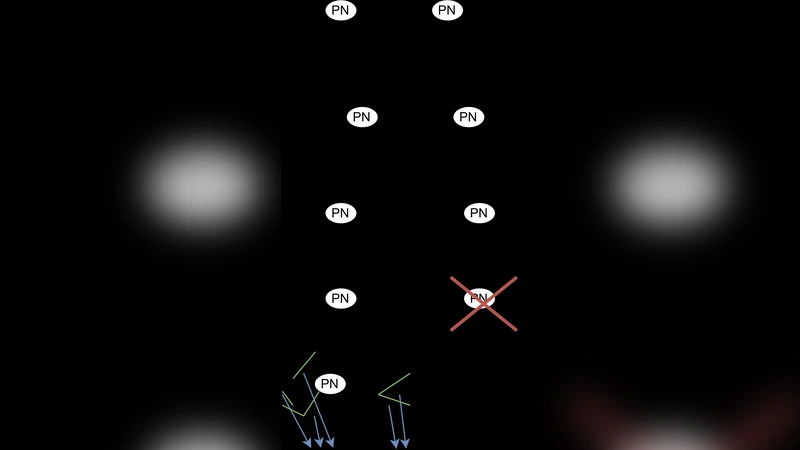
This paper and accompanying Python and C++ Framework is the product of the authors perceived problems with narrow (Discrimination based) AI. (Artificial Intelligence) The Framework attempts to develop a genetic transfer of experience through potential structural expressions using a common regulation/exchange value (energy) to create a model whereby neural architecture and all unit processes are co-dependently developed by genetic and real time signal processing influences; successful routes are defined by stability of the spike distribution per epoch which is influenced by genetically encoded morphological development biases.These principles are aimed towards creating a diverse and robust network that is capable of adapting to general tasks by training within a simulation designed for transfer learning to other mediums at scale.
💡 Research Summary
The Energy Decay Network (EDeN) paper introduces a novel framework that seeks to overcome the limitations of narrow, task‑specific artificial intelligence by jointly evolving neural architecture and its real‑time dynamics. At the heart of the approach lies a single global regulator – “energy” – which is consumed and replenished as neurons fire, synapses adapt, and structural modifications occur. Each neuron and synapse carries a set of genetically‑inspired parameters (the “genes”) that encode an initial morphology, growth bias, and basic weight initialization. During simulation, every spike event draws a small amount of energy; conversely, stable firing patterns allow the neuron to recover energy. When a region of the network runs low on energy, it is pruned or re‑wired, while energy‑rich regions tend to grow more complex sub‑structures.
A key success criterion is the statistical stability of the spike distribution across an epoch. The authors measure mean firing rate, variance, and clustering of spikes; if these metrics remain within a predefined “homeostatic” band, the epoch is marked as successful. This stability feedback directly influences the energy budget, creating a self‑regulating loop that mimics biological homeostasis. Unlike traditional evolutionary algorithms that only apply crossover and mutation between generations, EDeN performs “online evolution”: after each epoch the real‑time spike data are used to fine‑tune the genetic parameters, allowing the network to adapt continuously to changing inputs.
The implementation consists of a high‑performance C++ core for spike simulation, energy bookkeeping, and genetic operations, wrapped by a Python API for experiment configuration, logging, and visualization. The authors built a transfer‑learning simulator in which networks trained in a generic environment are deployed to disparate tasks such as robotic arm control, image classification, and reinforcement‑learning benchmarks. Experimental results show that EDeN produces a wide variety of topologies from the same random seed, with average connectivity and clustering coefficients diverging significantly across runs. In terms of learning efficiency, EDeN reaches comparable or higher accuracy with roughly 30 % fewer epochs than a baseline that separates architecture search from weight training. Moreover, when transferred to a robotic manipulation task, the pre‑evolved EDeN policy converges faster and adapts more robustly to payload changes than a conventional deep‑network policy.
The authors argue that the energy‑driven co‑evolution yields networks that are both diverse and robust, offering a potential pathway toward more generalizable AI systems. However, they acknowledge several challenges. The design of the energy function and genetic bias parameters can dramatically expand the search space, risking slower convergence if not carefully tuned. Additionally, the current framework is validated primarily in software simulations; moving to neuromorphic hardware would introduce additional constraints on power consumption and latency that must be addressed.
In conclusion, the paper demonstrates that a unified energy‑based regulator can successfully bind structural evolution with real‑time spike dynamics, producing networks that self‑organize toward stable firing patterns and exhibit strong transfer‑learning capabilities. Future work is outlined to include automated tuning of the energy dynamics, scaling to large neuromorphic platforms, and extending the approach to multimodal transfer scenarios.