Quantifying Triadic Closure in Multi-Edge Social Networks
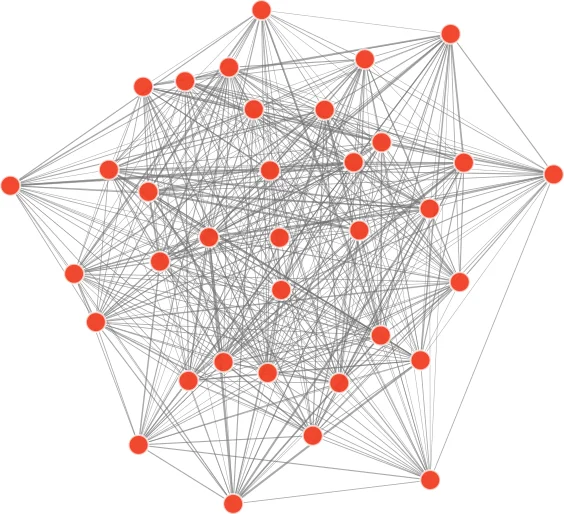
Multi-edge networks capture repeated interactions between individuals. In social networks, such edges often form closed triangles, or triads. Standard approaches to measure this triadic closure, however, fail for multi-edge networks, because they do not consider that triads can be formed by edges of different multiplicity. We propose a novel measure of triadic closure for multi-edge networks of social interactions based on a shared partner statistic. We demonstrate that our operalization is able to detect meaningful closure in synthetic and empirical multi-edge networks, where common approaches fail. This is a cornerstone in driving inferential network analyses from the analysis of binary networks towards the analyses of multi-edge and weighted networks, which offer a more realistic representation of social interactions and relations.
💡 Research Summary
The paper addresses a methodological gap in the analysis of social networks that are represented as multi‑edge (or weighted) graphs, where each pair of individuals may interact repeatedly and thus be connected by multiple edges. Traditional measures of triadic closure—such as the clustering coefficient or binary shared‑partner statistics—are defined for simple (binary) networks and treat every edge as equal. Consequently, they ignore two crucial aspects of multi‑edge data: (1) the intensity or frequency of interactions between a pair of nodes, and (2) the fact that high‑density multi‑edge networks can produce almost maximal counts of triads even when many dyads have only a single interaction. This leads to a loss of information and to misleading conclusions about the presence and strength of closure mechanisms.
To overcome these limitations, the authors propose a new dyad‑level statistic called the weighted shared‑partner statistic. For each unordered dyad (a, b) the method first identifies all shared partners i that are connected to both a and b. For each such partner the edge multiplicities v(a,i) and v(b,i) are retrieved. The contribution of partner i to the dyad’s closure potential is then defined as the minimum of these two multiplicities, min{v(a,i), v(b,i)}. Summing (or averaging) these minima over all shared partners yields a weighted count that reflects both the number of shared partners and the strength of the two‑paths that would close a triangle. Importantly, this statistic does not depend on whether a and b are themselves directly connected; it measures the latent potential for a triad to form, making it suitable as an explanatory variable in statistical network models.
The paper illustrates the concept with a small four‑node example. In the unweighted version, the shared‑partner matrix shows little variance because almost every dyad shares at least one partner. In the weighted version, however, the matrix captures differences in interaction intensity (e.g., a‑b has 10 interactions, b‑c has 4, so the a‑c dyad receives a weight of 4). Linear regressions of edge counts on the two statistics reveal that the weighted version explains a larger proportion of variance (4 % versus 1 %), confirming that it retains more information about the underlying multi‑edge structure.
Methodologically, the authors embed the weighted shared‑partner statistic into two families of inferential network models:
-
ERGM for count data (ERGM‑count) – Extending the classic exponential random graph model to dyadic count outcomes (e.g., Poisson or negative‑binomial). The weighted statistic is entered as an endogenous term, allowing the model to estimate a parameter that quantifies the effect of triadic closure on the expected edge count. Estimation is performed via MCMC maximum likelihood using the
ergm.countpackage in R. -
Generalized Hypergeometric Ensembles (gHypEG) – A framework specifically designed for multi‑edge graphs that generalizes the configuration model. Here, the weighted shared‑partner statistic serves as a constraint on the ensemble, influencing the probability of observing particular edge multiplicities. This approach captures higher‑order dependencies while preserving degree sequences.
Both models are first validated on synthetic networks where the presence or absence of closure is controlled. The weighted statistic consistently yields significant positive coefficients when closure is embedded, and non‑significant coefficients when it is not, whereas the unweighted version often fails to detect the difference. The authors then apply the methodology to two empirical datasets: (a) a longitudinal friendship network of U.S. middle‑school students (≈480 nodes, multiple interactions per dyad) and (b) an information‑exchange network among German policy actors (≈30 nodes). In each case, the weighted shared‑partner term improves model fit (lower AIC/BIC) and produces a robust estimate of triadic closure, even after controlling for other structural effects such as degree heterogeneity and homophily.
The discussion situates the contribution within broader theories of social closure, balance, and tie strength. Repeated interactions are interpreted as proxies for relationship strength; by weighting shared‑partner contributions with the minimum interaction count, the statistic respects the intuition that a triangle can only be as strong as its weakest two‑path. The authors also note that the method can be generalized to directed networks, where different configurations (transitive triplets, cycles) would be handled by analogous minimum‑weight formulations.
In conclusion, the paper delivers a practical, theoretically grounded tool for measuring triadic closure in multi‑edge social networks. The weighted shared‑partner statistic captures both the number of shared partners and the intensity of the underlying two‑paths, offering richer information than binary measures. Its dyad‑state independence makes it readily usable in a variety of statistical network models, facilitating more accurate inference about the role of closure in network formation, community emergence, and diffusion processes. Future work could extend the approach to temporal dynamics, multiplex layers, or to incorporate alternative definitions of edge strength (e.g., duration, sentiment).
Comments & Academic Discussion
Loading comments...
Leave a Comment