Stationary points at infinity for analytic combinatorics
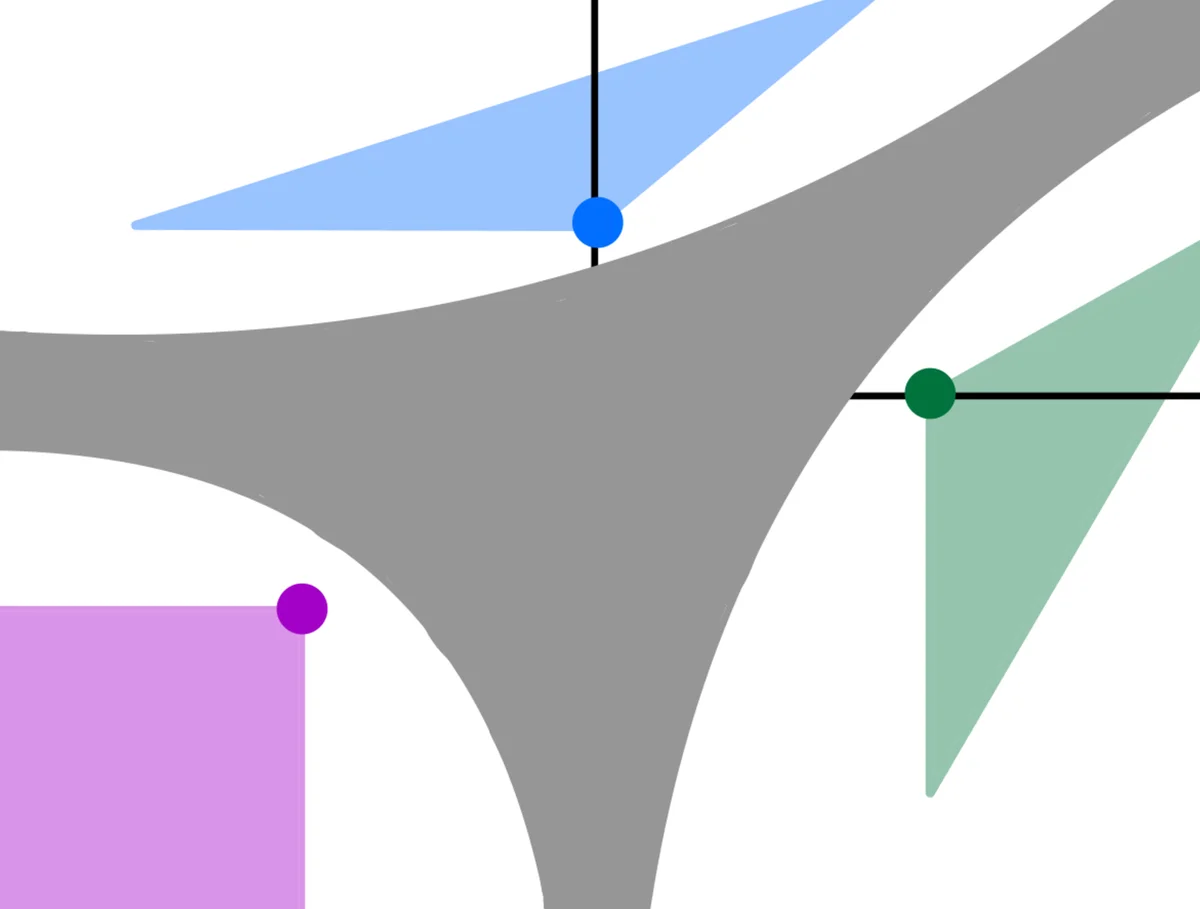
On complex algebraic varieties, height functions arising in combinatorial applications fail to be proper. This complicates the description and computation via Morse theory of key topological invariants. Here we establish checkable conditions under which the behavior at infinity may be ignored, and the usual theorems of classical and stratified Morse theory may be applied. This allows for simplified arguments in the field of analytic combinatorics in several variables, and forms the basis for new methods applying to problems beyond the reach of previous techniques.
💡 Research Summary
The paper addresses a fundamental obstacle in analytic combinatorics in several variables (ACSV): the height (or phase) function associated with a multivariate generating function is generally not proper on the pole variety, which means that gradient flows used in Morse‑theoretic deformations can escape to infinity or to coordinate hyperplanes. This phenomenon prevents the construction of a homology basis consisting of cycles localized near genuine critical points, a key step in the standard ACSV program.
To overcome this, the authors introduce the notion of Stationary Points at Infinity (SPAI). An SPAI is a limit point at infinity of a sequence of points whose height values remain bounded while the points themselves tend toward the coordinate hyperplanes or projective infinity. A refined concept, Heighted SPAI (H‑SPAI), consists of SPAI together with the limiting height values; both sets contain the usual critical values crit
Comments & Academic Discussion
Loading comments...
Leave a Comment