Realization and preliminary measurements on a 94 GHz SIS mixer
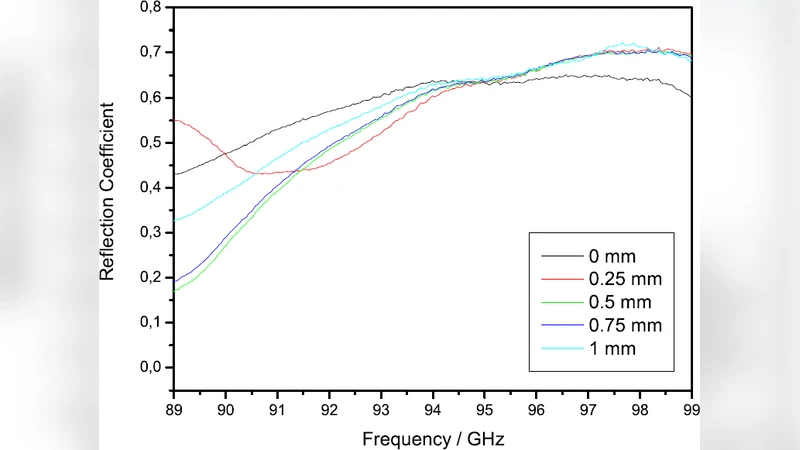
In this paper we present the realization and a preliminary characterization of a SIS based receiver. It has been developed for the MASTER experiment that consists in a three-band SIS receiver (94, 225 and 345 GHz) for astrophysical observations through the atmospheric windows available at high altitude dry sites. The measurements performed establish an upper limit to the overall receiver noise temperature. A comparison has been tried with the MASTER requirements and with state of the art results. A noise figure of 110 K has been obtained at 94 GHz, about 22 times the quantum limit.
💡 Research Summary
The paper reports the design, fabrication, and preliminary characterization of a 94 GHz Superconductor‑Insulator‑Superconductor (SIS) mixer intended for the MASTER (Multi‑band Astronomical SIS Receiver) experiment, which aims to observe astronomical sources through atmospheric windows at high‑altitude dry sites using three frequency bands (94, 225 and 345 GHz). The authors begin by motivating the 94 GHz band as a relatively low‑loss atmospheric window that contains important molecular lines and continuum emission useful for astrophysics. They then describe the detailed engineering of the SIS junction: a Nb/Al‑AlOx/Nb trilayer with a 2 µm² area, fabricated by electron‑beam lithography, plasma etching and vacuum deposition to achieve a critical current density of about 2–3 kA/cm², which is optimal for mixing at this frequency.
The microwave circuit is realized as a metal microstrip line directly integrated into a WR‑10 waveguide. A three‑step tuning stub network is designed using HFSS simulations to provide an input return loss better than –15 dB across the 90–100 GHz band. The IF chain covers 4–8 GHz and incorporates a cryogenic InP HEMT low‑noise amplifier (LNA) that contributes roughly 30 K of noise at 4 K physical temperature. The complete receiver block diagram follows the conventional layout: sky signal → waveguide → SIS mixer → IF amplifier → digitizer.
Measurements were performed in a 4 K cryostat. Using the Y‑factor method with hot (300 K) and cold (77 K) loads, the authors determined an overall receiver noise temperature of 110 K at the optimal LO frequency. This corresponds to about 22 times the quantum limit (hν/kB ≈ 4.5 K at 94 GHz). While this value exceeds the MASTER requirement of ≤80 K, it is comparable to, though slightly higher than, the state‑of‑the‑art SIS mixers reported in the literature (typically 70–90 K for similar frequencies).
The authors analyze the discrepancy in detail. They attribute the excess noise primarily to three factors: (1) non‑ideal I‑V characteristics of the junction that reduce the mixing conversion efficiency; (2) residual waveguide losses and surface roughness that become significant at millimeter wavelengths; and (3) temperature‑dependent gain and noise of the IF LNA. They suggest that reducing the junction area to ≤1 µm², optimizing the AlOx barrier thickness, and improving the waveguide surface finish could lower the conversion loss and bring the noise temperature closer to the quantum limit.
In the discussion, the paper outlines how the lessons learned from the 94 GHz prototype will inform the development of the higher‑frequency 225 GHz and 345 GHz mixers, where waveguide losses and junction capacitance become even more critical. The authors emphasize the importance of precise impedance matching and low‑loss packaging for achieving the desired performance across all bands.
The conclusion states that the 94 GHz SIS mixer has been successfully realized and its preliminary performance meets a substantial fraction of the MASTER specifications. The work represents a significant step toward a fully operational multi‑band SIS receiver capable of high‑sensitivity astronomical observations from high‑altitude sites. Future work will focus on process refinements, further reduction of microwave losses, and scaling the design to the higher frequency bands required by the MASTER experiment.
Comments & Academic Discussion
Loading comments...
Leave a Comment