Cloud-Based Video Streaming Services: A Survey
📝 Abstract
Video streaming, in various forms of video on demand (VOD), live, and 360 degree streaming, has grown dramatically during the past few years. In comparison to traditional cable broadcasters whose contents can only be watched on TVs, video streaming is ubiquitous and viewers can flexibly watch the video contents on various devices, ranging from smart-phones to laptops and large TV screens. Such ubiquity and flexibility are enabled by interweaving multiple technologies, such as video compression, cloud computing, content delivery networks, and several other technologies. As video streaming gains more popularity and dominates the Internet traffic, it is essential to understand the way it operates and the interplay of different technologies involved in it. Accordingly, the first goal of this paper is to unveil sophisticated processes to deliver a raw captured video to viewers’ devices. In particular, we elaborate on the video encoding, transcoding, packaging, encryption, and delivery processes. We survey recent efforts in academia and industry to enhance these processes. As video streaming industry is increasingly becoming reliant on cloud computing, the second goal of this survey is to explore and survey the ways cloud services are utilized to enable video streaming services. The third goal of the study is to position the undertaken research works in cloud-based video streaming and identify challenges that need to be obviated in future to advance cloud-based video streaming industry to a more flexible and user-centric service.
💡 Analysis
Video streaming, in various forms of video on demand (VOD), live, and 360 degree streaming, has grown dramatically during the past few years. In comparison to traditional cable broadcasters whose contents can only be watched on TVs, video streaming is ubiquitous and viewers can flexibly watch the video contents on various devices, ranging from smart-phones to laptops and large TV screens. Such ubiquity and flexibility are enabled by interweaving multiple technologies, such as video compression, cloud computing, content delivery networks, and several other technologies. As video streaming gains more popularity and dominates the Internet traffic, it is essential to understand the way it operates and the interplay of different technologies involved in it. Accordingly, the first goal of this paper is to unveil sophisticated processes to deliver a raw captured video to viewers’ devices. In particular, we elaborate on the video encoding, transcoding, packaging, encryption, and delivery processes. We survey recent efforts in academia and industry to enhance these processes. As video streaming industry is increasingly becoming reliant on cloud computing, the second goal of this survey is to explore and survey the ways cloud services are utilized to enable video streaming services. The third goal of the study is to position the undertaken research works in cloud-based video streaming and identify challenges that need to be obviated in future to advance cloud-based video streaming industry to a more flexible and user-centric service.
📄 Content
비디오 스트리밍은 VOD(비디오 온 디맨드), 라이브 스트리밍, 360도 스트리밍 등 다양한 형태로 제공되며, 지난 몇 년간 급격히 성장해 왔습니다. 특히 4K·8K 초고해상도 영상, HDR(High Dynamic Range) 콘텐츠, 그리고 실시간 인터랙티브 기능을 포함한 최신 서비스들은 기존의 스트리밍 모델을 한층 더 복잡하게 만들고 있습니다. 전통적인 케이블 방송사가 제공하는 콘텐츠가 텔레비전 화면에서만 시청될 수 있었던 것과 달리, 비디오 스트리밍은 거의 모든 장소와 상황에서 언제든지 시청할 수 있는 보편성을 갖추고 있습니다. 시청자는 스마트폰, 태블릿, 노트북, 데스크톱 PC, 그리고 대형 TV 화면에 이르기까지 다양한 디바이스를 자유롭게 선택하여 원하는 영상 콘텐츠를 재생할 수 있습니다. 이러한 디바이스 다양성은 운영체제와 하드웨어 사양이 서로 다름에도 불구하고, 동일한 스트리밍 프로토콜과 포맷을 통해 일관된 사용자 경험을 제공하도록 설계된 미들웨어와 어플리케이션 레이어의 역할이 크게 작용합니다. 이러한 보편성과 유연성은 비디오 압축 기술, 클라우드 컴퓨팅, 콘텐츠 전송 네트워크(CDN), 그리고 그 외 여러 핵심 기술들이 서로 얽히고 설키면서 가능해졌습니다. 예를 들어, 비디오 압축에서는 H.264/AVC, H.265/HEVC, AV1 등 최신 코덱이 사용되며, 각 코덱은 화질과 비트레이트 효율성 사이의 트레이드오프를 최적화하기 위해 복잡한 변환·양자화·예측 알고리즘을 적용합니다. 클라우드 컴퓨팅에서는 가상화된 인프라스트럭처 위에 컨테이너화된 인코더와 트랜스코더가 배치되어 대규모 동시 스트리밍 요청을 실시간으로 처리합니다. CDN은 전 세계에 분산된 엣지 서버를 활용해 사용자와 가장 가까운 지점에서 캐시된 콘텐츠를 제공함으로써 지연 시간을 최소화하고 네트워크 혼잡을 완화합니다. 비디오 스트리밍이 점점 더 많은 인기를 끌고 인터넷 트래픽의 대부분을 차지하게 됨에 따라, 그 작동 원리와 관련 기술들 간의 상호작용을 정확히 이해하는 것이 매우 중요해졌습니다. 따라서 이러한 기술 스택을 종합적으로 이해하고, 각 요소가 어떻게 상호 보완적으로 작동하는지를 파악하는 것이 연구자와 실무자 모두에게 필수적인 과제가 됩니다.
따라서 본 논문의 첫 번째 목표는 원시(raw) 촬영 영상을 최종 사용자 디바이스에 전달하기까지 거치는 복잡하고 정교한 일련의 과정을 밝히는 데 있습니다. 구체적으로는 비디오 인코딩, 트랜스코딩, 패키징, 암호화, 그리고 전송 과정 각각을 상세히 설명하고, 최근 학계와 산업계에서 이들 과정을 개선하기 위해 시도된 연구와 기술들을 조사·정리합니다. 특히 인코딩 단계에서는 원본 영상의 색 공간, 프레임 레이트, 해상도 등을 고려하여 최적의 코덱 설정을 선택하고, 트랜스코딩 단계에서는 다양한 디바이스와 네트워크 환경에 맞추어 여러 품질 레벨의 스트림을 생성합니다. 패키징 단계에서는 MPEG‑DASH, HLS, CMAF 등 표준화된 스트리밍 포맷으로 영상 세그먼트를 분할하고 메타데이터와 초기화 정보를 삽입합니다. 암호화 단계에서는 DRM(디지털 권리 관리) 시스템과 연계하여 콘텐츠 보호를 구현하고, 전송 단계에서는 HTTP/2, QUIC, WebTransport 등 최신 전송 프로토콜을 활용하여 효율적인 데이터 전송을 보장합니다. 학계에서는 머신러닝 기반의 비트레이트 예측, 적응형 스트리밍 알고리즘, 그리고 네트워크 상태에 실시간으로 대응하는 제어 메커니즘 등에 대한 연구가 활발히 진행되고 있으며, 산업계에서는 클라우드 네이티브 아키텍처, 서버리스 인코딩 파이프라인, 그리고 엣지 컴퓨팅을 결합한 하이브리드 솔루션을 도입하여 서비스 품질(QoE)을 극대화하고 비용 효율성을 높이고 있습니다.
비디오 스트리밍 산업이 클라우드 컴퓨팅에 점점 더 의존하게 되면서, 두 번째 목표는 클라우드 서비스가 비디오 스트리밍 서비스를 가능하게 하는 다양한 활용 방식을 탐색하고 종합적으로 조사하는 것입니다. 클라우드 서비스 제공자는 IaaS, PaaS, SaaS 형태로 다양한 레벨의 추상화와 관리 기능을 제공하며, 이를 통해 스트리밍 사업자는 자체 데이터 센터를 구축하지 않고도 전 세계에 걸친 확장성을 확보할 수 있습니다. 또한, 오토스케일링, 로드 밸런싱, 그리고 멀티 리전 복제와 같은 기능을 활용해 급격한 트래픽 변동에도 안정적인 서비스 제공이 가능하도록 설계됩니다.
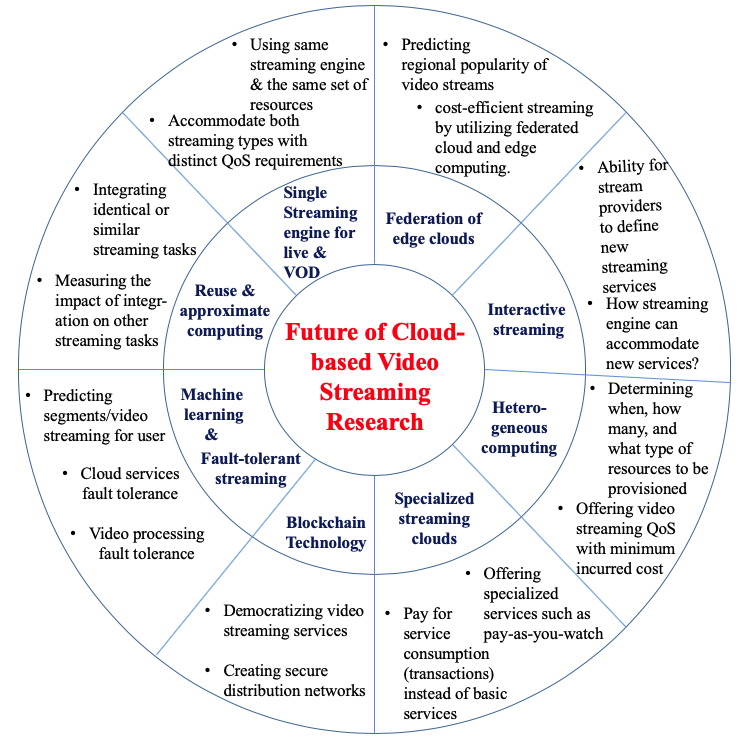
마지막으로 세 번째 목표는 클라우드 기반 비디오 스트리밍 분야에서 수행된 연구들을 체계적으로 정리하고, 향후 클라우드 기반 비디오 스트리밍 산업을 보다 유연하고 사용자 중심적인 서비스로 발전시키기 위해 해결해야 할 과제와 도전 과제를 식별하는 데 있습니다. 앞으로의 연구 과제로는 인코딩 효율성을 더욱 향상시키는 차세대 코덱 개발, 저지연 실시간 인터랙티브 스트리밍을 위한 네트워크 최적화, 그리고 사용자 프라이버시와 데이터 보안을 동시에 만족시키는 DRM 및 암호화 기술의 혁신이 포함됩니다. 또한, 에너지 소비를 최소화하면서 대규모 스트리밍 워크로드를 처리할 수 있는 친환경 클라우드 인프라 구축도 중요한 과제로 대두되고 있습니다.
이와 같이 본 논문은 비디오 스트리밍이 어떻게 작동하는지에 대한 전반적인 메커니즘을 밝히고, 클라우드 컴퓨팅과 결합된 최신 기술 동향을 조명함으로써, 향후 연구자와 실무자가 직면하게 될 핵심 과제들을 사전에 인식하고 대비할 수 있도록 돕는 것을 목표로 합니다.