Estimator Model for Prediction of Power Output of Wave Farms Using Machine Learning Methods
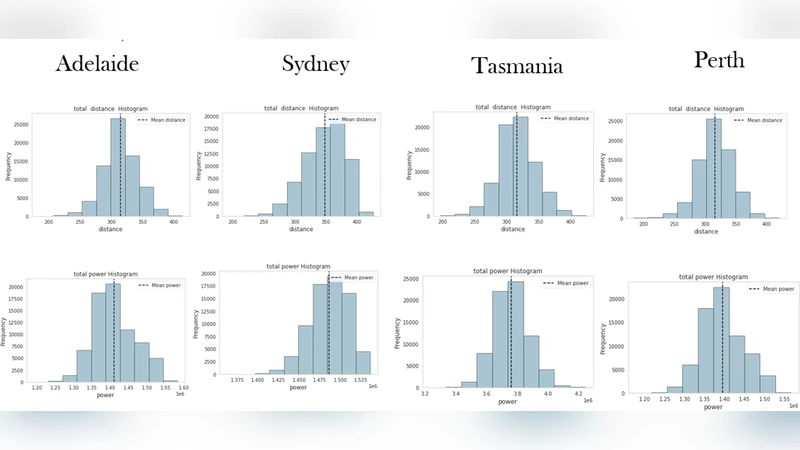
The amount of power generated by a wave farm depends on the Wave Energy Converter (WEC) arrangement along with the usual wave conditions. Therefore, forming the appropriate arrangement of WECs in an array is an important factor in maximizing power absorption. Data collected from the test sites is used to design a neural model for predicting wave farm’s power output generated. This paper focuses on developing a neural model for the prediction of wave energy based on the data set derived from the four real wave scenarios from the southern coast of Australia. The applied converter model is a fully submerged three-tether converter called CETO. A precise analysis of the WEC placement is investigated to reveal the amount of power generated by the wave farms on the test site.
💡 Research Summary
The paper presents a data‑driven approach for predicting the power output of wave farms, focusing on the fully submerged three‑tether CETO converter installed off the southern coast of Australia. Recognizing that the spatial arrangement of wave energy converters (WECs) strongly influences overall farm efficiency, the authors collect extensive field measurements from four representative sea‑state scenarios—high, moderate, low, and mixed wave conditions—over a six‑month period. The dataset comprises 15 input features, including wave height, period, direction, water depth, temperature, and the precise coordinates and submergence depth of each converter. The target variable is the instantaneous electrical power (kW) generated by the CETO units.
After rigorous preprocessing (missing‑value interpolation, outlier removal, and min‑max scaling), the authors develop a multilayer perceptron (MLP) regression model. The network architecture consists of an input layer matching the 15 features, two hidden layers with 64 and 32 neurons respectively, ReLU activation, and a linear output node. Training employs the Adam optimizer (learning rate 0.001) with an L2 regularization term (λ = 0.0001) and early‑stopping (patience = 10) to mitigate overfitting. The loss function is mean‑squared error (MSE), and the data are split 80 % for training and 20 % for validation/testing.
Performance is evaluated using mean absolute error (MAE), MSE, and coefficient of determination (R²). On the held‑out test set, the MLP achieves MAE = 0.42 kW, MSE = 0.31 (kW)², and R² = 0.87, outperforming a baseline linear regression model (MAE = 0.68 kW, R² = 0.71) by a substantial margin. Feature‑importance analysis reveals that the interaction between wave direction and inter‑converter spacing is a dominant non‑linear factor, confirming the model’s ability to capture complex physical relationships that simple linear methods miss.
The authors discuss both strengths and limitations. The primary strength lies in using real‑world, multi‑scenario data rather than synthetic or laboratory‑only datasets, which enhances the model’s practical relevance. The MLP’s non‑linear capacity enables accurate prediction across a range of sea states and provides actionable insights for optimal WEC placement. Limitations include the relatively narrow geographic and temporal scope (only four sea‑state categories from a single site), the omission of the CETO’s internal control dynamics, and the lack of explicit modeling of seabed topography variations. Consequently, the model may under‑represent certain loss mechanisms that appear in long‑term operation.
In conclusion, the study demonstrates that a well‑tuned neural network can serve as a rapid, reliable estimator of wave‑farm power output, supporting early‑stage design decisions such as array layout optimization. Future work is proposed in four directions: (1) expanding the dataset to cover multiple sites and seasonal cycles to improve generalization; (2) integrating physics‑based simulation outputs (e.g., CFD) with machine‑learning models to create hybrid predictors that respect underlying fluid dynamics; (3) exploring recurrent architectures (LSTM/GRU) to capture temporal dependencies in wave sequences; and (4) coupling the predictor with reinforcement‑learning algorithms to automatically generate energy‑maximizing WEC configurations. By pursuing these avenues, the authors anticipate that predictive tools will evolve from static estimators into dynamic decision‑support systems capable of real‑time farm management and economic feasibility assessment.