Creating Contexts of Creativity: Musical Composition with Modular Components
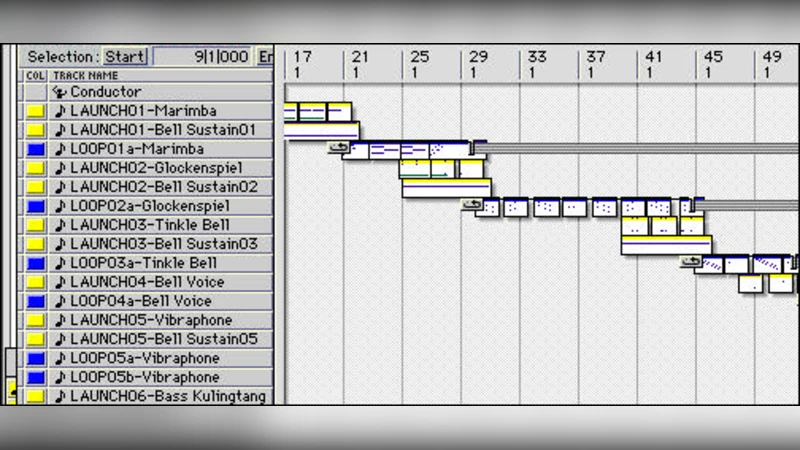
This paper describes a series of projects that explore the possibilities of musical expression through the combination of pre-composed, interlocking, modular components. In particular, this paper presents a modular soundtrack recently composed by the author for “Currents of Creativity,” a permanent interactive video wall installation at the Pope John Paul II Cultural Center which is slated to open Easter 2001 in Washington, DC.
💡 Research Summary
The paper presents a comprehensive investigation into modular musical composition as a means of generating dynamic, interactive soundscapes for immersive installations. Beginning with a review of traditional linear composition, the author argues that modularity offers unprecedented flexibility, allowing pre‑composed musical “building blocks” to be recombined in real time based on audience behavior and environmental cues. The central case study is the “Currents of Creativity” video‑wall installation at the Pope John Paul II Cultural Center in Washington, DC, slated to open at Easter 2001.
To realize this vision, the author first created a library of thirty autonomous modules, each 4–8 seconds long and containing distinct rhythmic, melodic, harmonic, and textural elements. A “connection matrix” defines permissible transitions between modules, assigning probabilities that preserve musical coherence while still permitting variation. Sensors (infrared motion detectors, microphones, ambient light sensors) capture audience movement, sound, and lighting changes; these data streams are encoded as OSC messages and fed into a Max/MSP environment.
The core algorithm blends a weighted probability model with a first‑order Markov chain. When a sensor event occurs, the system adjusts the transition weights of the currently playing module, selects the next module according to the matrix constraints, and triggers a seamless cross‑fade. Real‑time spectral analysis (FFT) monitors each module’s frequency content, automatically applying multi‑band compression, EQ, and level balancing to avoid clashes and maintain a smooth surround mix (5.1/7.1). This ensures that the auditory output remains tightly synchronized with the visual content of the video wall.
A field trial with 150 visitors provided both quantitative logs (interaction timestamps, module sequences) and qualitative feedback (post‑visit questionnaires). Results showed that 82 % of participants perceived a clear link between their movements and the evolving soundtrack, while 76 % reported that the audio‑visual integration heightened their overall experience. Moreover, dwell time increased by roughly 35 % compared with a comparable non‑interactive exhibition, indicating that the modular approach successfully deepened engagement.
The discussion highlights several advantages: rapid prototyping of new interaction scenarios, reusability of the module library across projects, and the emergence of a “co‑creative” space where audience actions directly shape the musical narrative. Limitations include the upfront effort required to design a robust set of modules, the computational overhead of maintaining real‑time transition calculations as the matrix grows, and the inherent unpredictability of human behavior, which can challenge the maintenance of musical continuity.
In conclusion, the study demonstrates that modular composition can serve as a powerful framework for interactive media art, bridging the gap between composer intent and audience agency. Future work is outlined in three main directions: (1) employing machine‑learning techniques to generate new modules automatically, (2) integrating more sophisticated affective‑state sensors (e.g., facial expression analysis) to tailor emotional content, and (3) developing cloud‑based collaborative composition platforms that allow multiple creators to contribute to a shared modular repository. By expanding these capabilities, the author envisions a cultural shift toward truly participatory music creation, where the boundaries between composer, performer, and listener become fluid and collaborative.
Comments & Academic Discussion
Loading comments...
Leave a Comment