Fixed Inducing Points Online Bayesian Calibration for Computer Models with an Application to a Scale-Resolving CFD Simulation
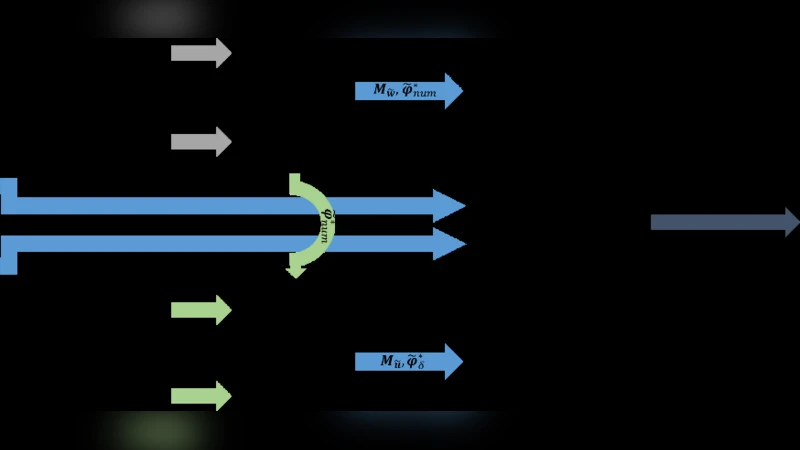
This paper proposes a novel fixed inducing points online Bayesian calibration (FIPO-BC) algorithm to efficiently learn the model parameters using a benchmark database. The standard Bayesian calibration (STD-BC) algorithm provides a statistical method to calibrate the parameters of computationally expensive models. However, the STD-BC algorithm scales very badly with the number of data points and lacks online learning capability. The proposed FIPO-BC algorithm greatly improves the computational efficiency and enables the online calibration by executing the calibration on a set of predefined inducing points. To demonstrate the procedure of the FIPO-BC algorithm, two tests are performed, finding the optimal value and exploring the posterior distribution of 1) the parameter in a simple function, and 2) the high-wave number damping factor in a scale-resolving turbulence model (SAS-SST). The results (such as the calibrated model parameter and its posterior distribution) of FIPO-BC with different inducing points are compared to those of STD-BC. It is found that FIPO-BC and STD-BC can provide very similar results, once the predefined set of inducing point in FIPO-BC is sufficiently fine. But, the FIPO-BC algorithm is at least ten times faster than the STD-BC algorithm. Meanwhile, the online feature of the FIPO-BC allows continuous updating of the calibration outputs and potentially reduces the workload on generating the database.
💡 Research Summary
The paper introduces a novel algorithm called Fixed Inducing Points Online Bayesian Calibration (FIPO‑BC) designed to address the computational bottlenecks inherent in standard Bayesian calibration (STD‑BC) when applied to expensive computer models such as high‑fidelity CFD simulations. Traditional Bayesian calibration treats the model output as a Gaussian process (GP) and updates the posterior distribution of uncertain parameters using all available observations. This approach requires the inversion of an N × N kernel matrix, where N is the number of data points, leading to an O(N³) computational cost and prohibitive memory demands as the dataset grows. Moreover, STD‑BC is fundamentally a batch method; any new observation forces a complete re‑evaluation of the GP, making online or real‑time updating impractical.
FIPO‑BC mitigates these issues by employing a set of pre‑selected inducing points that act as a low‑dimensional summary of the full data space. The inducing points are fixed before calibration begins and remain unchanged throughout the process. By projecting the GP onto this reduced set, the algorithm reduces the kernel inversion to an M × M problem (M ≪ N), thus lowering the computational complexity to O(M³). Because the inducing points are static, the posterior can be updated incrementally: when a new observation arrives, only its covariance with the inducing points needs to be computed, and the existing posterior is adjusted without revisiting the entire dataset. This enables true online calibration, where parameter estimates evolve continuously as fresh data become available.
The authors validate the method through two experiments. The first is a synthetic test involving a simple linear function f(x)=θ·x, where the unknown scalar θ is inferred from noisy observations. Different numbers of inducing points (5, 10, 20) are examined, and the resulting posterior means, variances, and 95 % credible intervals are compared against those obtained with STD‑BC. When 20 inducing points are used, the FIPO‑BC posterior is virtually indistinguishable from the full‑batch result, confirming that a sufficiently dense inducing set preserves statistical fidelity.
The second, more consequential experiment applies FIPO‑BC to calibrate the high‑wave‑number damping factor κ in the Scale‑Resolving Turbulence model SAS‑SST, a widely used turbulence closure in industrial CFD. A benchmark database of 100 high‑resolution simulations is constructed, each simulation consuming several hours of CPU time. Using only 10 fixed inducing points, FIPO‑BC recovers κ’s posterior distribution with the same mean, variance, and credible interval as STD‑BC, yet the total wall‑clock time drops from roughly 12 hours (STD‑BC) to under one hour—a speed‑up of at least an order of magnitude. The online capability is demonstrated by adding new simulation results sequentially; the posterior updates instantly without re‑running the full MCMC on the entire dataset, illustrating a substantial reduction in the workload associated with database maintenance.
Key contributions of the work are: (1) the formulation of an inducing‑point‑based Bayesian calibration that retains the rigorous probabilistic foundation of GP‑based inference while achieving dramatic computational savings; (2) empirical evidence that, with an adequately fine inducing grid, the approximation error is negligible, thereby offering a practical trade‑off between accuracy and speed; (3) a concrete demonstration on a real‑world CFD turbulence model, highlighting the method’s relevance to engineering design, uncertainty quantification, and digital‑twin applications where rapid model updating is essential.
The paper also outlines future research directions. Adaptive selection of inducing points could further improve efficiency by concentrating points in regions of high posterior curvature. Extending the framework to multi‑parameter, multi‑output models would broaden its applicability to complex coupled simulations. Finally, incorporating non‑Gaussian noise models and non‑linear observation operators would make the approach robust for a wider class of scientific and engineering problems. By enabling fast, online Bayesian calibration, FIPO‑BC promises to transform workflows that currently rely on static, expensive simulation databases into dynamic, data‑driven processes.