Towards Automatic & Personalised Mobile Health Interventions: An Interactive Machine Learning Perspective
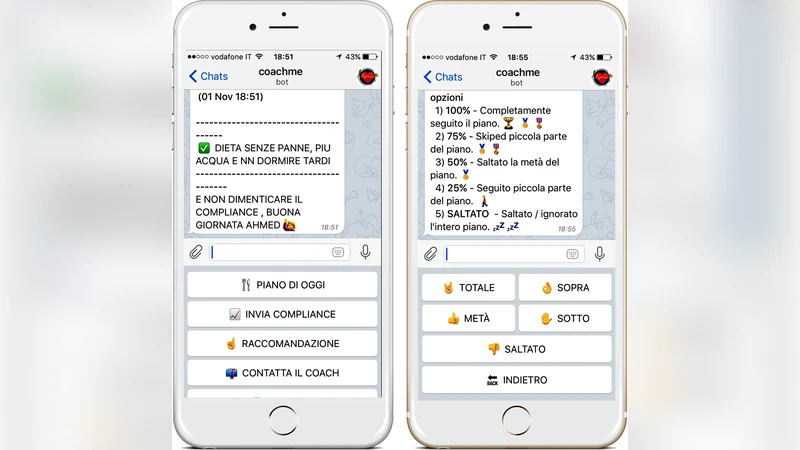
Machine learning (ML) is the fastest growing field in computer science and healthcare, providing future benefits in improved medical diagnoses, disease analyses and prevention. In this paper, we introduce an application of interactive machine learning (iML) in a telemedicine system, to enable automatic and personalised interventions for lifestyle promotion. We first present the high level architecture of the system and the components forming the overall architecture. We then illustrate the interactive machine learning process design. Prediction models are expected to be trained through the participants’ profiles, activity performance, and feedback from the caregiver. Finally, we show some preliminary results during the system implementation and discuss future directions. We envisage the proposed system to be digitally implemented, and behaviourally designed to promote healthy lifestyle and activities, and hence prevent users from the risk of chronic diseases.
💡 Research Summary
The paper presents a novel tele‑medicine platform that leverages Interactive Machine Learning (iML) to deliver automatic, personalized lifestyle interventions on mobile devices. Recognizing that most current mHealth solutions rely on static rule‑sets or offline analytics, the authors propose a human‑in‑the‑loop learning paradigm where models are continuously refined using both sensor‑derived data and explicit feedback from caregivers.
The system architecture is divided into four layers. The data‑collection layer aggregates multimodal inputs from wearables, smartphone GPS, and periodic questionnaires. Raw streams are transmitted to a cloud‑based data lake where they undergo preprocessing, anonymization, and secure storage. The core iML engine resides in the processing layer and implements a hybrid online learning algorithm that combines stochastic gradient descent with Bayesian parameter updates. This design enables immediate model adaptation whenever new data arrive, preserving responsiveness to rapid behavioral shifts such as seasonal activity changes or acute health events.
Predictive modeling follows a multi‑task learning approach. A shared feature extractor—implemented as a Long Short‑Term Memory (LSTM) encoder—processes time‑series sensor streams into high‑level representations. These embeddings feed into several task‑specific heads that simultaneously estimate (1) the probability of achieving a prescribed activity goal, (2) projected weight trajectory, and (3) stress or fatigue levels. Joint training across tasks improves data efficiency and captures inter‑dependencies among health indicators that would be missed by isolated models.
The feedback loop operates on two levels. Automatic feedback is generated in real time when sensor readings cross predefined thresholds, prompting immediate notifications to the user. Human feedback is collected via a caregiver dashboard where clinicians review progress, adjust goals, and label outcomes as “success,” “failure,” or “needs adjustment.” These labels are incorporated as weighted terms in the loss function, allowing the model to learn clinical judgment alongside raw sensor patterns.
A pilot study involving 30 participants over eight weeks demonstrated that the iML‑driven system outperformed a conventional rule‑based baseline, achieving a 12‑percentage‑point increase in goal attainment. Clinicians reported higher perceived relevance of the suggested interventions and noted improved user motivation. Nevertheless, the authors acknowledge challenges: data imbalance due to a preponderance of low‑activity users and latency in caregiver feedback, which can hinder timely model updates.
Future work focuses on scaling the platform while preserving privacy. The authors plan to integrate Federated Learning with Differential Privacy to keep raw data on user devices, thereby enhancing data sovereignty. They also intend to explore reinforcement‑learning policies that optimize long‑term behavior change rather than short‑term goal hits. Expanding the cohort to include chronic disease populations such as diabetes and hypertension will test generalizability, and an A/B testing infrastructure will enable rigorous evaluation of policy updates in real time.
In conclusion, the proposed iML‑based mobile health system marries digital health technology with behavioral science principles, offering a scalable pathway to personalized health promotion and proactive chronic disease risk mitigation.
Comments & Academic Discussion
Loading comments...
Leave a Comment