Modulated Signals in Chemical Reaction Networks
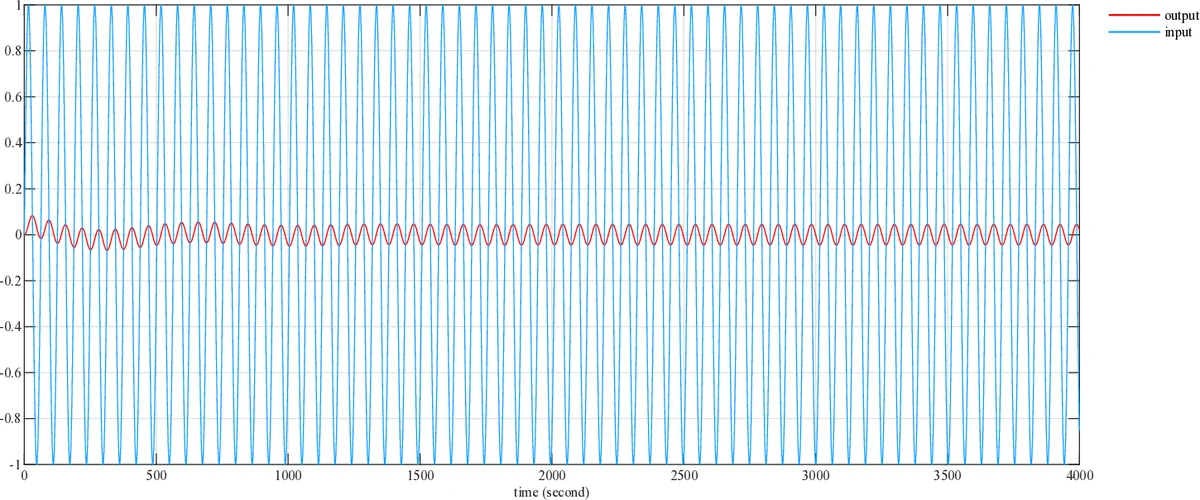
Electrical engineering and molecular programming share many of the same mathematical foundations. In this paper, we show how to send multiple signals through a single pair of chemical species using modulation and demodulation techniques found in electrical engineering. Key to our construction, we provide chemical implementations of classical linear band-pass and low-pass filters with induced differential equations that are identical to their electrical engineering counterparts. We show how to modulate \emph{arbitrary} independent input signals with different carrier frequencies for transmission through a shared medium. Specific signals in the medium can then be isolated and demodulated using band-pass and low-pass filters. Such programmable chemical band-pass filters also offer a way to monitor chemical systems to verify that they are operating between a prescribed set of frequencies.
💡 Research Summary
This paper, “Modulated Signals in Chemical Reaction Networks,” presents a groundbreaking method for implementing classical electrical engineering signal processing techniques—specifically amplitude modulation (AM), demodulation, and linear filtering—within the framework of deterministic Chemical Reaction Networks (CRNs). The core achievement is the design of CRNs whose induced ordinary differential equations (ODEs) are mathematically identical to those of their electronic counterparts, enabling precise molecular-level communication and signal analysis without approximation.
The work begins by establishing that CRNs, under mass-action kinetics, are inherently analog systems described by polynomial ODEs, sharing foundational mathematics with electrical circuits. The authors first demonstrate the construction of a “pure pursuit” CRN that exactly implements a first-order low-pass filter with transfer function H(s) = k/(s+c), where the output chemical species chases the input species. The key innovation, however, lies in overcoming the central challenge of building a high-pass filter, which requires computing the derivative of an arbitrary input signal—an operation not directly possible in CRNs. They ingeniously employ a “difference construction” technique, representing each signal variable as the difference between two positive species (e.g., X = X⁺ - X⁻). This allows them to craft a CRN that realizes a second-order band-pass filter transfer function, H(s) = as/(s²+bs+c), exactly and for any unknown input over all time. Crucially, the filter parameters (center frequency ω₀, bandwidth, and gain) are tunable not via reaction rate constants but via the concentrations of catalyst species, making them programmable in situ.
Building upon these precise filter implementations, the paper constructs a full AM communication system using CRNs. The system can modulate multiple independent input signals onto different carrier frequencies (generated by simple oscillator CRNs) and multiplex them onto a single, shared medium represented by a pair of chemical species (M⁺ and M⁻). To recover a specific signal, a programmable band-pass filter first isolates the desired frequency band from the shared medium. The isolated signal is then demodulated using a rectification process followed by a low-pass filter to reconstruct the original input signal. This demonstrates frequency-division multiplexing at the molecular scale.
Beyond communication, the authors highlight a significant application for their programmable chemical band-pass filter: system monitoring. Such a filter can be designed to act as a “chemical spectrum analyzer,” monitoring a target species in a complex reaction network to verify that its oscillations remain within a prescribed frequency range, which is critical for many biological functions. This monitoring can be done without interfering with the system’s core dynamics.
In summary, this research successfully bridges concepts from analog signal processing and molecular programming. It provides concrete, small, and natural CRN designs that perform exact linear filtering and multiplexed communication, opening new avenues for advanced sensing, control, and inter-system communication in synthetic biology and molecular computing.
Comments & Academic Discussion
Loading comments...
Leave a Comment