Exploring the Design Space of Aesthetics with the Repertory Grid Technique
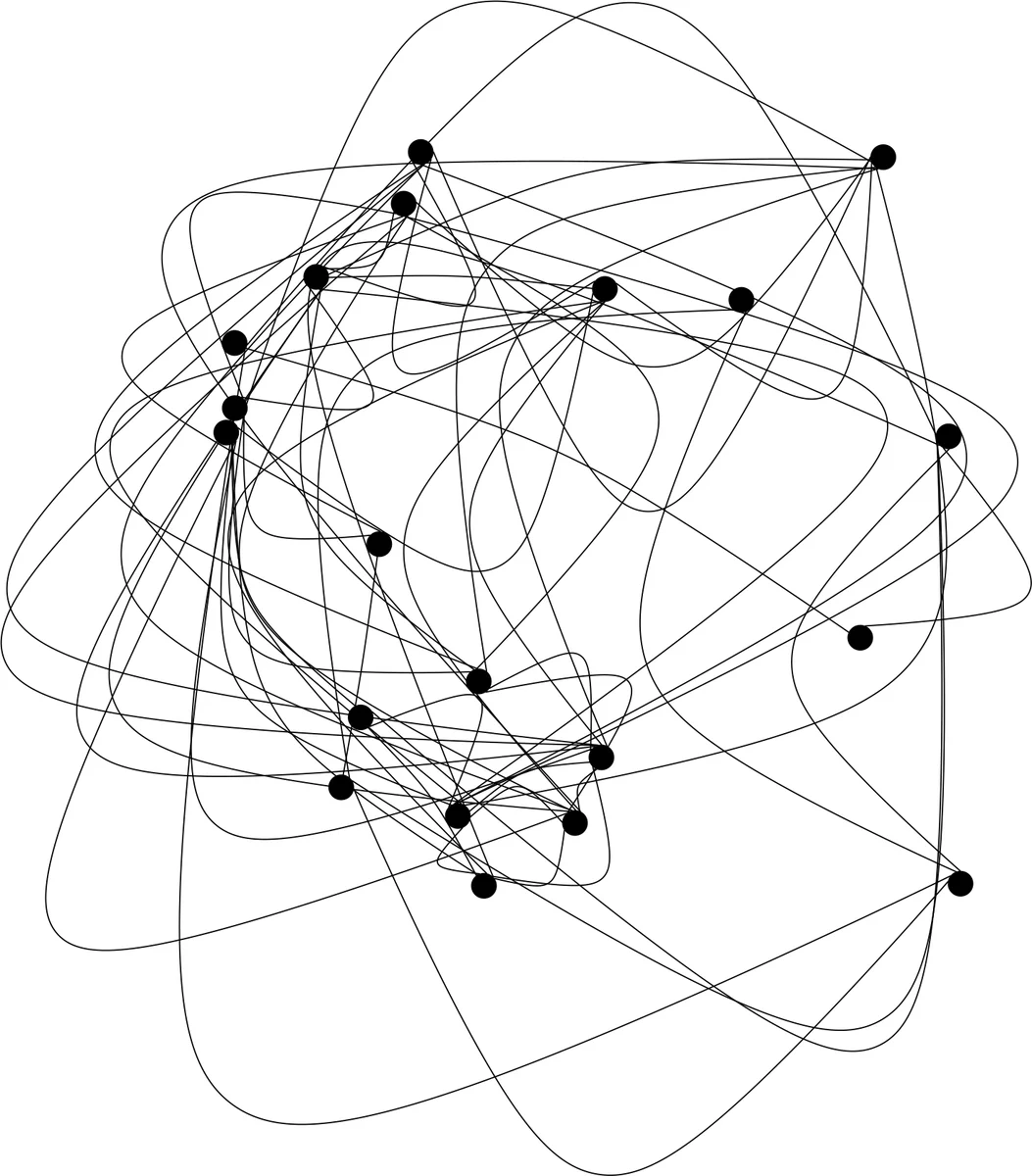
By optimizing aesthetics, graph diagrams can be generated that are easier to read and understand. However, the challenge lies in identifying suitable aesthetics. We present a novel approach based on repertory grids to explore the design space of aesthetics systematically. We applied our approach with three independent groups of participants to systematically identify graph aesthetics. In all three cases, we were able to reproduce the aesthetics with positively evaluated influence on readability without any prior knowledge. We also applied our approach to two- and three-dimensional domain-specific software visualizations to demonstrate its versatility. In this case, we were also able to acquire several aesthetics that are relevant for perceiving the visualization.
💡 Research Summary
This paper presents a novel, user-centered methodology for systematically exploring the design space of “aesthetics” in visualizations. Aesthetics are defined as measurable and perceivable visual properties (e.g., minimizing edge crossings, maximizing angles between edges) that influence the readability and comprehension of diagrams, independent of their semantic content. The conventional process for identifying such aesthetics relies heavily on researcher intuition, leading to potential oversight of important factors, interference from unknown aesthetics during evaluation, and general inefficiency.
To address these limitations, the authors propose adapting the Repertory Grid Technique (RGT), a qualitative interview method from psychology, to the visualization domain. The RGT process involves: (1) selecting a set of “elements” (e.g., 12 different graph visualizations) that broadly represent the domain of interest; (2) conducting interviews where participants are shown triads of these elements and asked to describe how two are similar and what the opposite of that characteristic is, generating bipolar “constructs” (e.g., “straight edges – bent edges”); and (3) using “laddering” questions (e.g., “Why does it look more ordered?”) to drill down from abstract constructs to concrete, measurable visual properties. The final analysis filters these constructs, retaining only those related to visual mapping or composition, which are then formalized as candidate aesthetics.
The core of the paper is an evaluation of this methodology in the well-researched domain of graph visualization. The authors first established a “ground truth” through a comprehensive literature review, identifying 13 graph aesthetics with empirically proven positive effects on readability. They then conducted three independent RGT studies with different groups of participants (10 per group) and different sets of randomly generated graph images. The results strongly validated the approach: all three groups successfully reproduced most of the aesthetics from the ground truth list (e.g., crossing angle, edge bendiness, local symmetry, uniform node distribution) without any prior prompting. This confirms that the method can yield valid results (H1) and that these results are reproducible across different stimuli and participants (H2). Furthermore, the studies elicited novel aesthetic candidates not explicitly found in the literature, such as “uniform face area,” demonstrating the method’s exploratory power.
The paper concludes by briefly illustrating the versatility of the RGT approach through its application to two- and three-dimensional domain-specific software visualizations, where it also successfully identified relevant aesthetics. The key contribution is a structured, reproducible, and less subjective method for the initial, critical phase of aesthetics research: discovery. By leveraging user perception directly, the RGT-based methodology mitigates researcher bias, helps ensure that identified aesthetics are genuinely perceptible, and provides a more comprehensive foundation for subsequent empirical evaluation and algorithm design. This work offers a significant methodological advancement for the field of visualization design.
Comments & Academic Discussion
Loading comments...
Leave a Comment