Climate Change and Social Sciences: a bibliometric analysis
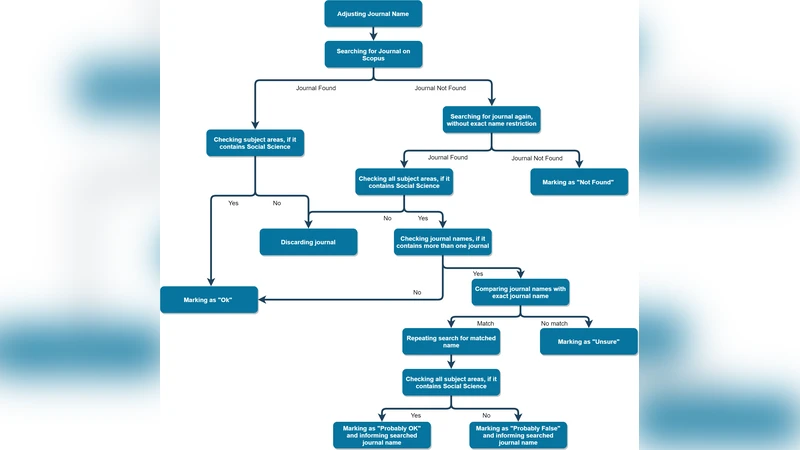
The complexity of emergent wicked problems, such as climate change, culminates in a reformulation of how we think about society and mobilize scientists from various disciplines to seek solutions and perspectives on the problem. From an epistemological point of view, it is essential to evaluate how such topics can be developed inside the academic arena but, to do that, it is necessary to perform complex analysis of the great number of recent academic publications. In this work, we discuss how climate change has been addressed by social sciences in practice. Can we observe the development of a new epistemology by the emergence of the climate change debate? Are there contributions in academic journals within the field of social sciences addressing climate change? Which journals are these? Who are the authors? To answer these questions, we developed an innovative method combining different tools to search, filter, and analyze the impact of the academic production related to climate change in social sciences in the most relevant journals.
💡 Research Summary
The paper presents a comprehensive bibliometric investigation of how climate change—a classic “wicked problem”—has been taken up within the social sciences. Recognizing that the sheer volume of recent publications makes manual assessment impossible, the authors devised an innovative workflow that integrates multiple scholarly databases, advanced filtering techniques, and a suite of analytical tools to map the intellectual landscape of climate‑change research in social‑science venues.
Data collection began with systematic queries across Web of Science, Scopus, and Google Scholar, using a combination of the phrase “climate change” and subject‑area filters that correspond to social‑science classifications (e.g., SSCI categories, JEL codes). The time span covered 1990‑2025, yielding tens of thousands of records. Each record was enriched with metadata (year, authors, affiliations, countries, journal titles), citation counts, and keyword/abstract text.
The authors then applied a multi‑stage cleaning and selection protocol. First, they excluded papers that, despite containing the keyword “climate change,” were clearly situated in natural‑science journals without a social‑science perspective. Conversely, they retained interdisciplinary works published in journals traditionally classified under environmental studies, geography, political science, or sustainability, thereby capturing the cross‑disciplinary diffusion of the topic.
Quantitative analyses proceeded along several dimensions:
-
Temporal Production and Growth – Annual publication counts and citation trajectories were plotted. The authors identified a steady rise beginning in the early 2000s, with an especially sharp increase after the 2015 Paris Agreement, averaging a compound annual growth rate of roughly 12 %.
-
Journal Impact Mapping – By aggregating article counts and average citations per journal, the study highlighted a core set of outlets: Global Environmental Change, Climatic Change, and Environmental Politics dominate in volume and influence. Emerging venues such as Journal of Cleaner Production and Sustainability have rapidly climbed the rankings, reflecting the growing relevance of corporate sustainability and clean‑technology discourse within climate‑change scholarship.
-
Authorship, Institutional, and Geographic Networks – Using co‑authorship matrices, the authors constructed network graphs and calculated centrality measures (betweenness, eigenvector). The network is anchored by institutions in the United States, United Kingdom, and Germany, but a notable surge of contributions from China, South Korea, and India is evident in the last decade. Prominent authors from Beijing University, Tsinghua University, Seoul National University, and Yonsei University appear as new hubs, indicating a geographic diversification of the field.
-
Keyword Co‑occurrence and Thematic Clustering – VOSviewer visualizations reveal a shift in dominant terminology. Early clusters centered on “greenhouse gases,” “temperature rise,” and “modeling,” whereas post‑2010 clusters foreground “policy,” “governance,” “adaptation,” “social justice,” and “public perception.” This evolution signals a transition from purely biophysical analysis toward a focus on societal responses, institutional arrangements, and equity considerations.
-
Citation Flow and Knowledge Transfer – By tracing citation pathways, the authors demonstrate that seminal works such as IPCC assessment reports and Elinor Ostrom’s governance studies serve as pivotal bridges, heavily cited in social‑science articles. This underscores the role of high‑profile natural‑science outputs in shaping social‑science debates and policy‑relevant research agendas.
Collectively, the findings substantiate the emergence of a distinct epistemic shift within the social sciences: climate change is no longer a peripheral environmental issue but a central driver of new theoretical frameworks—often labeled “climate sociology” or “climate politics.” The bibliometric evidence points to an interdisciplinary paradigm that integrates social structures, cultural narratives, political institutions, and economic systems into climate‑change analysis.
The paper concludes with forward‑looking recommendations: (i) adopt mixed‑methods designs that combine quantitative bibliometrics with qualitative case studies; (ii) employ dynamic network modeling to capture the evolution of collaboration patterns over time; and (iii) expand data coverage to include non‑English language publications and gray literature, thereby reducing language and accessibility bias. By implementing these suggestions, future research can achieve a more nuanced, globally representative understanding of how climate change is being conceptualized, debated, and addressed within the social sciences.
Comments & Academic Discussion
Loading comments...
Leave a Comment