Relative Entropy Regularised TDLAS Tomography for Robust Temperature Imaging
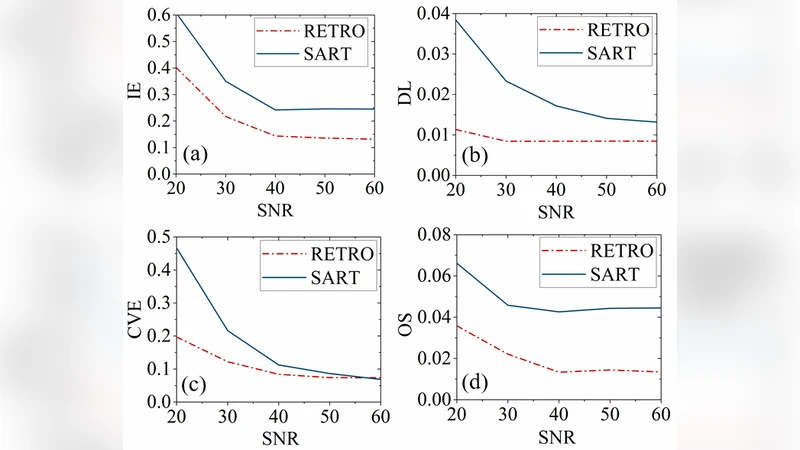
Tunable Diode Laser Absorption Spectroscopy (TDLAS) tomography has been widely used for in situ combustion diagnostics, yielding images of both species concentration and temperature. The temperature image is generally obtained from the reconstructed absorbance distributions for two spectral transitions, i.e. two-line thermometry. However, the inherently ill-posed nature of tomographic data inversion leads to noise in each of the reconstructed absorbance distributions. These noise effects propagate into the absorbance ratio and generate artefacts in the retrieved temperature image. To address this problem, we have developed a novel algorithm, which we call Relative Entropy Tomographic RecOnstruction (RETRO), for TDLAS tomography. A relative entropy regularisation is introduced for high-fidelity temperature image retrieval from jointly reconstructed two-line absorbance distributions. We have carried out numerical simulations and proof-of-concept experiments to validate the proposed algorithm. Compared with the well-established Simultaneous Algebraic Reconstruction Technique (SART), the RETRO algorithm significantly improves the quality of the tomographic temperature images, exhibiting excellent robustness against TDLAS tomographic measurement noise. RETRO offers great potential for industrial field applications of TDLAS tomography, where it is common for measurements to be performed in very harsh environments.
💡 Research Summary
Tunable Diode Laser Absorption Spectroscopy (TDLAS) tomography is a powerful non‑intrusive technique for obtaining spatially resolved species concentration and temperature fields inside combustion environments. Conventional two‑line thermometry reconstructs the absorbance distribution for each of two selected spectral transitions independently and then forms a temperature map from the ratio of these absorbances. Because tomographic inversion is intrinsically ill‑posed, measurement noise inevitably contaminates each reconstructed absorbance image; when the ratio is taken, the noise is amplified, producing spurious artefacts and unstable temperature fields.
The authors address this fundamental limitation by introducing a novel reconstruction framework called Relative Entropy Tomographic RecOnstruction (RETRO). The key idea is to treat the two absorbance fields as a coupled pair and to regularize the joint inversion with a relative‑entropy (Kullback‑Leibler) term. In practice, the algorithm solves the following optimization problem:
\