Mechanical model of the inhomogeneous Maxwell's equations and of Lorentz transformations
We present a mechanical model of a quasi-elastic body (aether) which reproduces Maxwell’s equations with charges and currents. Major criticism against mechanical models of electrodynamics is that any presence of charges in the known models appears to violate the continuity equation of the aether and it remains a mystery as to where the aether goes and whence it comes. We propose a solution to the mystery - in the present model the aether is always conserved. Interestingly it turns out that the charge velocity coincides with the aether velocity. In other words, the charges appear to be part of the aether itself. We interpret the electric field as the flux of the aether and the magnetic field as the torque per unit volume. In addition we show that the model is consistent with the theory of relativity, provided that we use Lorentz-Poincare interpretation (LPI) of relativity theory. We make a statistical-mechanical interpretation of the Lorentz transformations. It turns out that the length of a body is contracted by the electromagnetic field which the molecules of this same body produce. This self-interaction causes also delay of all the processes and clock-dilation results. We prove this by investigating the probability distribution for a gas of self-interacting particles. We can easily extend this analysis even to elementary particles.
💡 Research Summary
The paper proposes a mechanical, continuum‑based model of an “aether” that reproduces the inhomogeneous Maxwell equations together with Lorentz transformations. The author begins by recalling three empirically equivalent interpretations of special relativity and adopts the Lorentz‑Poincaré interpretation (LPI), which treats space‑time measurements as distorted by electromagnetic fields rather than as fundamental geometric entities. In this view a single privileged reference frame (the cosmic rest frame) is allowed, and super‑luminal velocities are not forbidden.
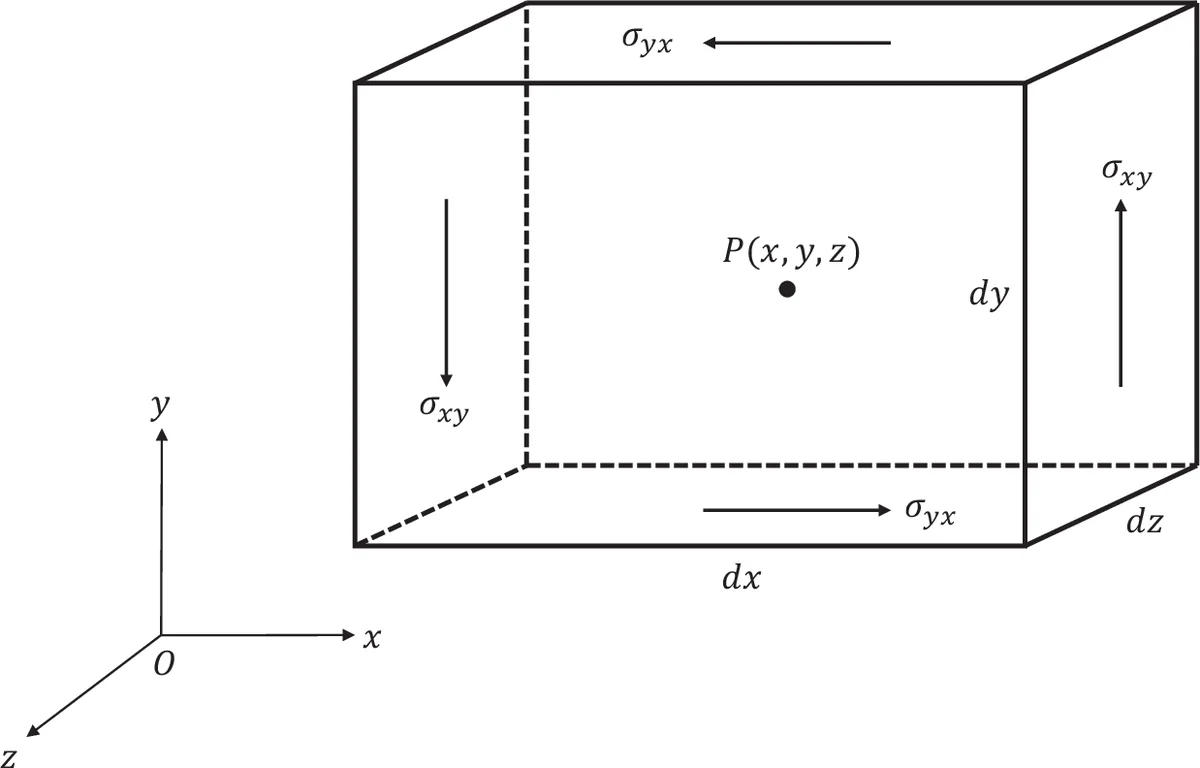
The core of the model is a quasi‑elastic medium characterized by an antisymmetric stress tensor
σᵢₖ = c²(∂ᵢAₖ – ∂ₖAᵢ)
where A(r,t) is a vector field defined by
ṘA = ρ v + ∇φ.
Here ρ is the aether density, v the local aether velocity, and φ an arbitrary scalar potential (gauge freedom). Newton’s equation for the medium, together with the continuity equation
ρ̇ + ∇·(ρ v) = 0,
yields the dynamical relation
ρ · v̇ = –c²∇×(∇×A).
The author then defines the electric field as the aether flux
E ≡ ρ v
and the magnetic field as the torque density per unit volume
B ≡ –c ∇×A.
With these definitions one obtains
∇·E = –ρ̇ = ρₑ, ∇·B = 0,
–∂B/∂t = c ∇×E,
∇×B = (1/c)∂E/∂t + (1/c)ρₑ v.
The crucial additional postulate is that the velocity of any charge coincides with the local aether velocity,
v_charge(r,t) = v(r,t).
Consequently the charge density is simply ρₑ = –ρ̇, and the current density J = ρₑ v, reproducing the familiar Maxwell–Ampère law
c ∇×B = J + ∂E/∂t.
The author acknowledges that at the microscopic level E and J are always parallel, which would prevent a full equivalence with standard electrodynamics. To overcome this, a “macro‑theory” is introduced: a small volume δV is divided into a very large number N of cells, each possibly containing many charges. Spatial averages over the cells are taken, denoted ⟨·⟩, so that
E = ⟨ρ v⟩, J = ⟨ρₑ v⟩, B = –c⟨∇×A⟩.
Because the averaging includes cells with both positive and negative charges, E and J need not be parallel after coarse‑graining. By differentiating the averaged electric field and using the basic axioms (1‑4) the author recovers
∂E/∂t = –J + c ∇×B,
which is exactly one of Maxwell’s equations. The other three follow analogously, showing that the macroscopic model reproduces the full set of Maxwell equations while preserving aether conservation.
The second major part of the paper addresses the compatibility of the model with special relativity. Using the LPI viewpoint, the author derives length contraction (Fitzgerald‑Lorentz) and time dilation from a statistical‑mechanical analysis of a gas of self‑interacting particles. The gas is described by two distribution functions f₁ and f₂ (positive and negative charges) obeying Boltzmann’s equation with Lorentz force terms:
∂f_j/∂t + v·∇_r f_j = e_j (E + v×B)·∇_p f_j, j = 1,2.
The electromagnetic fields satisfy the Lorenz gauge, and the charge and current densities are obtained by integrating the distribution functions over momentum. The author first solves the coupled Maxwell–Boltzmann system for a gas at rest with respect to the aether, obtaining static potentials φ⁽⁰⁾(r) and A⁽⁰⁾(r). Then the same gas is considered moving with constant velocity V in the x‑direction while the aether frame remains unchanged. By introducing the shifted coordinate x₁ = x – Vt and subsequently a Lorentz‑type scaling x₂ = γ(x – Vt), the wave equations for φ and A acquire the familiar Lorentz‑contracted form. The transformed equations show that, in order for the moving gas to remain in thermal equilibrium, its spatial dimensions must contract by the factor γ⁻¹, and the internal dynamical processes must be slowed, yielding the standard time‑dilation factor γ. The author interprets these effects as arising from the self‑interaction of each particle’s own electromagnetic field: the field exerts a torque and a drag on the particle, effectively “stretching” the rod and “slowing” the clock.
A further speculative extension is sketched: the same aether framework could be applied to the linearized Einstein equations, treating gravity as a compressional mode of the aether. This would provide a unified mechanical picture of both electromagnetism and gravitation, though no detailed derivation is given.
In summary, the paper offers a revival of the aether concept by constructing a quasi‑elastic continuum whose stress tensor reproduces Maxwell’s equations when the electric field is identified with aether flux and the magnetic field with torque density. Charge conservation is ensured by defining charge density as the negative time derivative of aether density, and charge motion is forced to follow the aether flow. By coarse‑graining over many microscopic cells the model recovers the full Maxwell set. The Lorentz transformations are then derived from a statistical‑mechanical treatment of a self‑interacting gas, providing a mechanical explanation for length contraction and time dilation within the LPI framework. While the approach is mathematically consistent at the macroscopic level and offers an intuitive mechanical narrative, it leaves open several critical issues: the microscopic justification of the averaging procedure, compatibility with quantum electrodynamics, experimental falsifiability, and the precise formulation of the gravitational extension. Nonetheless, the work is an intriguing attempt to bridge classical mechanical intuition with modern relativistic field theory.
Comments & Academic Discussion
Loading comments...
Leave a Comment