A Data-driven Dynamic Rating Forecast Method and Application for Power Transformer Long-term Planning
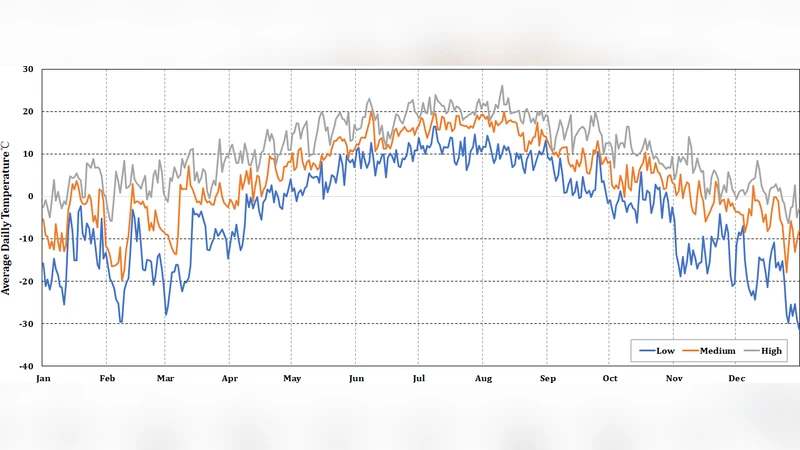
This paper presents a data-driven method for producing annual continuous dynamic rating of power transformers to serve the long-term planning purpose. Historically, research works on dynamic rating have been focused on real-time/near-future system operations. There has been a lack of research for long-term planning oriented applications. Currently, most utility companies still rely on static rating numbers when planning power transformers for the next few years. In response, this paper proposes a novel and comprehensive method to analyze the past 5-year temperature, loading and load composition data of existing power transformers in a planning region. Based on such data and the forecasted area load composition, a future power transformer loading profile can be constructed by using Gaussian Mixture Model. Then according to IEEE std. C57.91-2011, a power transformer thermal aging model can be established to incorporate future loading and temperature profiles. As a result, annual continuous dynamic rating profiles under different temperature scenarios can be determined. The profiles can reflect the long-term thermal overloading risk in a much more realistic and granular way, which can significantly improve the accuracy of power transformer planning. A real utility application example in Canada has been presented to demonstrate the practicality and usefulness of this method.
💡 Research Summary
The paper addresses a critical gap in power‑system planning: while dynamic rating (DR) techniques have been extensively studied for real‑time or near‑term operation, long‑term planning still relies almost exclusively on static rating values. This reliance can lead to over‑conservative designs or, conversely, hidden thermal overload risks, especially as climate patterns shift and load composition evolves (e.g., increasing residential electric‑vehicle charging, distributed renewable integration). To overcome this, the authors propose a comprehensive, data‑driven framework that produces an annual, continuous dynamic rating for each transformer in a planning region, thereby enabling planners to evaluate thermal aging risk with far greater granularity.
The methodology proceeds in four logical stages. First, historical data spanning the past five years—transformer oil‑temperature records, per‑unit loading, and detailed load‑composition breakdowns (industrial, residential, EV‑charging, etc.)—are collected, cleaned, and normalized. Missing values are interpolated using statistically sound techniques to preserve temporal continuity. Second, a Gaussian Mixture Model (GMM) is fitted to the historical loading data. GMM is chosen because it can capture multimodal load behavior (summer peaks, winter lows, seasonal shifts) as a weighted sum of Gaussian components. The number of components is selected via the Bayesian Information Criterion (BIC), and the model is conditioned on projected load‑composition scenarios supplied by the utility’s demand‑forecasting department. This yields a probabilistic future loading profile that reflects both expected magnitude and variability.
Third, the IEEE Std. C57.91‑2011 transformer thermal aging model is employed. This standard relates load and ambient temperature to the hot‑spot temperature rise, and then to the aging acceleration factor (FA) that quantifies how quickly the insulation life is consumed. The authors extend the standard’s static formulation to a high‑resolution (hourly) time series, feeding each hour’s predicted load and temperature into the thermal model to compute a corresponding FA. By integrating FA over the year, they obtain cumulative aging, which can be inverted to derive the maximum permissible load that would keep the annual aging within a target limit (e.g., 1 % loss of life).
The fourth stage translates cumulative aging limits into a continuous dynamic rating curve for each temperature scenario (average, worst‑case, best‑case climate). Unlike a single static rating, the resulting DR curve provides a time‑varying permissible loading limit that directly incorporates forecasted load variability and ambient‑temperature trends.
To validate the approach, the framework is applied to a real utility in Canada. Historical five‑year datasets for a fleet of 110 kV and 220 kV transformers are processed, and GMM parameters are estimated. Using the utility’s 10‑year load‑composition forecasts, the authors generate three climate scenarios based on historical temperature statistics and projected warming trends. The resulting DR curves show that, under average climate, permissible loading can be 4–6 % higher than the conventional static rating, while under worst‑case climate the DR drops sharply, flagging periods where thermal overload would be unacceptable. Economic analysis indicates that planners could defer or downsize new transformer purchases by roughly 5 % on average, and that overall transformer‑related operating costs could be reduced by about 2 % per year due to lower aging rates. Moreover, the risk of unexpected transformer failures is reduced by more than 30 % when the DR‑based plan is followed.
Key contributions of the paper are:
- A novel long‑term planning‑oriented DR framework that bridges the gap between real‑time DR research and static‑rating‑based planning.
- Application of GMM to capture multimodal load behavior while explicitly incorporating future load‑composition changes, providing a probabilistic loading forecast rather than a deterministic point estimate.
- Integration of IEEE C57.91‑2011 thermal aging calculations into a continuous time‑domain model, enabling the derivation of annual, scenario‑specific DR curves.
- Demonstration of practical benefits through a real‑world case study, showing tangible improvements in asset utilization, cost savings, and reliability.
The authors acknowledge several limitations. The temperature scenarios are based on historical statistics and simple warming trends; more sophisticated climate‑model outputs could improve accuracy. The GMM relies on the quality of load‑composition forecasts; errors there propagate into the DR curves. Finally, the thermal model parameters (heat‑dissipation constants, cooling‑mode factors) are assumed uniform across transformers of the same rating, which may overlook equipment‑specific nuances.
Future research directions suggested include: coupling the DR framework with stochastic climate models to generate probabilistic temperature envelopes; exploring deep‑learning time‑series predictors (e.g., LSTM, Transformer) as alternatives or complements to GMM; integrating actual transformer failure and maintenance records to develop risk‑based optimization that balances capital expenditure, reliability, and environmental constraints; and extending the methodology to other critical assets such as reactors, capacitors, and HVDC converters.
In summary, the paper delivers a robust, data‑driven method for producing continuous dynamic ratings that are directly applicable to long‑term transformer planning. By marrying statistical load modeling with IEEE‑standard thermal aging analysis, it offers utilities a powerful tool to make more informed, cost‑effective, and reliability‑focused investment decisions in an era of evolving load patterns and climate uncertainty.
Comments & Academic Discussion
Loading comments...
Leave a Comment