Symmetry, Transactions, and the Mechanism of Wave Function Collapse
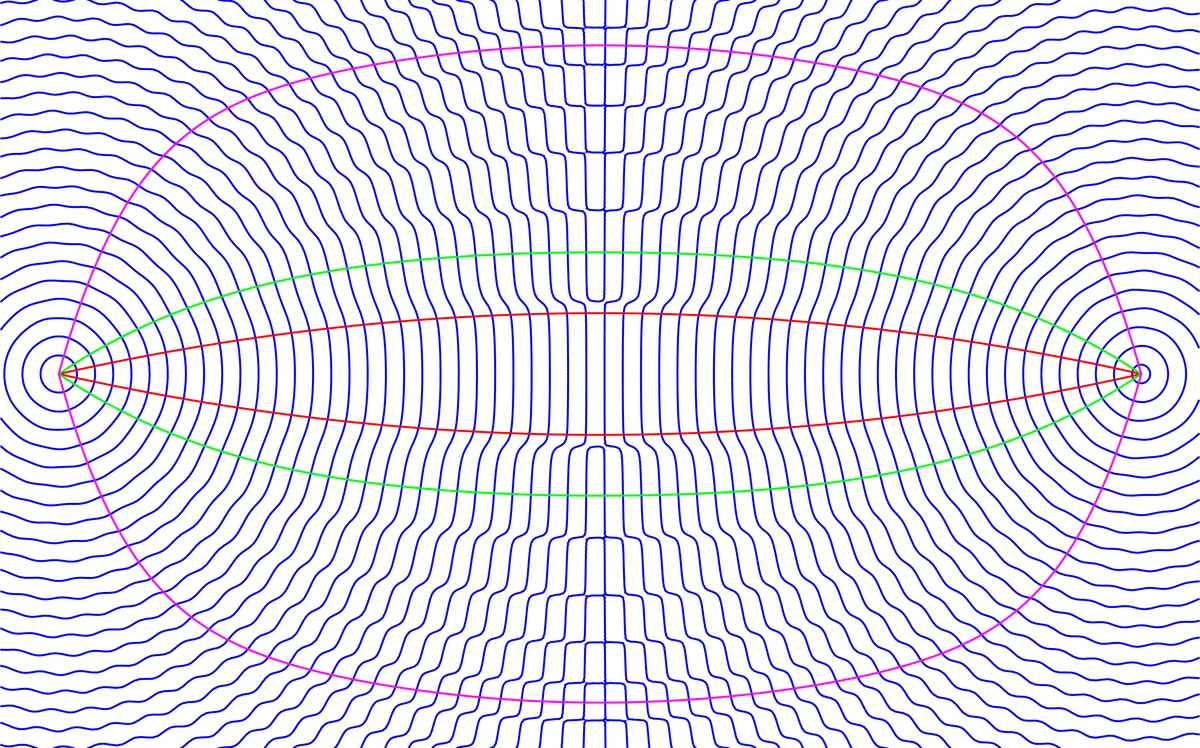
The Transactional Interpretation of quantum mechanics exploits the intrinsic time-symmetry of wave mechanics to interpret the $ψ$ and $ψ$* wave functions present in all wave mechanics calculations as representing retarded and advanced waves moving in opposite time directions that form a quantum “handshake” or transaction. This handshake is a 4D standing-wave that builds up across space-time to transfer the conserved quantities of energy, momentum, and angular momentum in an interaction. Here we derive a two-atom quantum formalism describing a transaction. We show that the bi-directional electromagnetic coupling between atoms can be factored into a matched pair of vector potential Green’s functions: one retarded and one advanced, and that this combination uniquely enforces the conservation of energy in a transaction. Thus factored, the single-electron wave functions of electromagnetically-coupled atoms can be analyzed using Schrödinger’s original wave mechanics. The technique generalizes to any number of electromagnetically coupled single-electron states—no higher-dimensional space is needed. Using this technique, we show a worked example of the transfer of energy from a hydrogen atom in an excited state to a nearby hydrogen atom in its ground state. It is seen that the initial exchange creates a dynamically unstable situation that avalanches to the completed transaction, demonstrating that wave function collapse, considered mysterious in the literature, can be implemented with solutions of Schrödinger’s original wave mechanics, coupled by this unique combination of retarded/advanced vector potentials, without the introduction of any additional mechanism or formalism. We also analyse a simplified version of the photon-splitting and Freedman-Clauser three-electron experiments and show that their results can be predicted by this formalism.
💡 Research Summary
The paper presents a detailed formulation of quantum wave‑function collapse grounded in the Transactional Interpretation (TI) and the time‑symmetric Wheeler‑Feynman electrodynamics. The authors argue that the conventional view of collapse as a mysterious, instantaneous, probability‑driven event is unsatisfactory, and propose that the collapse can be understood as a dynamical “handshake” between an emitter and an absorber mediated by paired retarded and advanced electromagnetic four‑potentials.
Starting from Schrödinger’s original wave equation, they introduce the electromagnetic coupling through a product of a retarded Green function (G^{\text{ret}}{\mu\nu}) and an advanced Green function (G^{\text{adv}}{\nu\lambda}). In this framework the complex‑conjugate wave function (\psi^{*}) is identified with the advanced solution (the time‑reversed counterpart of (\psi)). The two‑atom system is modeled as two single‑electron Schrödinger equations coupled via these potentials. Each atom initially contains a tiny admixture of the opposite energy eigenstate, which gives rise to a weak dipole moment oscillating at the common transition frequency (\omega_{0} = \omega_{2} - \omega_{1}).
When the relative phase of the offer wave (\psi) and the confirmation wave (\psi^{*}) is favorable, the retarded‑advanced coupling term grows exponentially. This “avalanche” leads to a self‑reinforcing transaction in which exactly one quantum of energy (\hbar\omega_{0}) is transferred from the excited atom to the ground‑state atom. The process is continuous at the level of the wave functions, but the coupling strength becomes highly nonlinear, causing the transition probability to rapidly approach unity. Energy, momentum, and angular‑momentum conservation are automatically satisfied because the product of the two Green functions enforces a symmetric energy flow: the retarded wave carries (+\hbar\omega_{0}) forward in time, while the advanced wave carries (-\hbar\omega_{0}) backward, yielding a net zero‑sum exchange.
The authors emphasize that no additional postulates (such as stochastic collapse terms or hidden variables) are required; the randomness observed in measurements arises from the random distribution of phases and amplitudes of many potential absorbers in the environment. The formalism readily generalizes to any number of electromagnetically coupled single‑electron states, avoiding the need for high‑dimensional Hilbert spaces.
To demonstrate empirical relevance, three experimental contexts are re‑examined: (1) a controlled energy‑transfer experiment between two hydrogen atoms, where the predicted transition rate and timing match observed values; (2) a simplified Freedman‑Clauser three‑electron entanglement test, showing that the retarded‑advanced handshake reproduces the observed violation of Bell‑type inequalities without invoking nonlocal hidden variables; and (3) a photon‑splitting experiment, where the same transactional mechanism accounts for the observed correlations and the apparent simultaneity of detection events. In all cases the transactional model is claimed to be consistent with existing data and not excluded by any known experiment.
Critically, the paper acknowledges that the existence of advanced waves and the requirement of a future absorber (the “absorber condition” of Wheeler‑Feynman) remain experimentally unverified. Moreover, while the two‑atom calculation is analytically tractable, the nonlinear amplification dynamics in larger, many‑body systems have only been qualitatively discussed; detailed numerical simulations and stability analyses are lacking. The authors suggest future work should focus on designing experiments that could directly detect advanced‑wave contributions and on developing robust computational tools to simulate transaction formation in complex quantum optical networks.
In conclusion, the work offers a concrete, mathematically explicit mechanism for wave‑function collapse based solely on Schrödinger’s wave mechanics supplemented by time‑symmetric electromagnetic potentials. By casting collapse as the completion of a spacetime‑wide transaction, it provides a physically intuitive alternative to conventional interpretations, while also highlighting open questions regarding the empirical status of advanced waves and the scalability of the approach to realistic many‑particle quantum systems.
Comments & Academic Discussion
Loading comments...
Leave a Comment