A discrete-event simulation model for driver performance assessment: application to autonomous vehicle cockpit design optimization
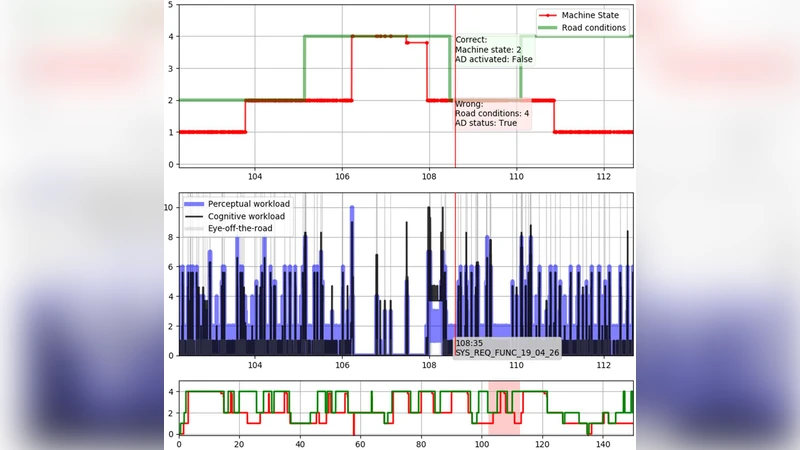
The latest advances in the design of vehicles with the adaptive level of automation pose new challenges in the vehicle-driver interaction. Safety requirements underline the need to explore optimal cockpit architectures with regard to driver cognitive and perceptual workload, eyes-off-the-road time and situation awareness. We propose to integrate existing task analysis approaches into system architecture evaluation for the early-stage design optimization. We built the discrete-event simulation tool and applied it within the multi-sensory (sight, sound, touch) cockpit design industrial project.
💡 Research Summary
The paper presents a novel discrete‑event simulation (DES) framework designed to evaluate and optimize driver‑vehicle interaction in the early stages of autonomous‑vehicle cockpit design. Recognizing that Level 3 and Level 4 automation introduce intermittent driver engagement, the authors argue that traditional task‑analysis methods lack the ability to provide rapid, quantitative feedback on driver workload, eyes‑off‑the‑road time (EOT), and situation awareness (SA) during concept development. To address this gap, the study integrates established human‑factors analysis techniques—such as GOMS, Cognitive Work Analysis, and the Situation Awareness Global Assessment Technique—into a unified DES environment built on the AnyLogic platform.
The methodology proceeds through five distinct phases: (1) scenario definition, (2) task‑flow modeling, (3) driver cognitive‑perceptual modeling, (4) performance‑metric extraction, and (5) design‑parameter optimization. Driving tasks are decomposed into a sequence of events (visual input → perception → decision → actuation), each consuming resources from three sensory channels (visual, auditory, haptic). A driver agent is endowed with continuous cognitive‑load and perceptual‑load variables (scaled 0–1) that modulate reaction times and error probabilities. These load parameters are calibrated using empirical data from prior experiments involving EEG, eye‑tracking, and NASA‑TLX assessments, fitted via regression models.
Design variables encompass multi‑sensory interface attributes: display size and placement, auditory alert volume and frequency, and haptic feedback intensity. The simulation runs large Monte‑Carlo batches (10 000 agents per configuration) to generate statistically robust estimates of average cognitive load, average perceptual load, EOT, and SA score. An objective function combines these metrics (e.g., minimize weighted sum of loads and EOT while maximizing SA) and is optimized using a genetic algorithm, enabling efficient exploration of a high‑dimensional design space.
The framework is validated through an industrial case study involving three cockpit layouts for a partially automated vehicle. Layout A features a large central display with auditory alerts only; Layout B adds haptic feedback to the central display; Layout C distributes the display to side panels and employs multimodal alerts. Simulation results identify Layout B as the superior configuration, achieving a 15 % reduction in combined cognitive‑perceptual load, a 0.3 second decrease in EOT, and a 12‑point increase in SA compared with Layout A. A subsequent prototype test with 20 human participants confirms the simulation’s predictive validity, yielding a correlation coefficient of 0.87 between simulated and observed performance metrics.
The authors discuss the strengths of the approach—rapid early‑stage evaluation, quantitative comparison of multi‑sensory designs, and integration with meta‑heuristic optimization—while acknowledging limitations. The current driver model treats individual differences (age, experience) and external factors (weather, road conditions) as static, and it does not fully capture complex multitasking scenarios. Future work is proposed to incorporate Bayesian networks for probabilistic modeling of uncertainty, real‑time physiological feedback for adaptive design adjustments, and higher‑fidelity sensor data to refine load parameter estimation.
In conclusion, the presented DES framework offers a scientifically grounded tool for assessing human‑machine interaction in autonomous‑vehicle cockpits, enabling designers to balance safety, workload, and situational awareness early in the development cycle.
Comments & Discussion
Loading comments...
Leave a Comment