Virtual acoustics in inhomogeneous media with single-sided access
A virtual acoustic source inside a medium can be created by emitting a time-reversed point-source response from the enclosing boundary into the medium. However, in many practical situations the medium can be accessed from one side only. In those cases the time-reversal approach is not exact. Here, we demonstrate the experimental design and use of complex focusing functions to create virtual acoustic sources and virtual receivers inside an inhomogeneous medium with single-sided access. The retrieved virtual acoustic responses between those sources and receivers mimic the complex propagation and multiple scattering paths of waves that would be ignited by physical sources and recorded by physical receivers inside the medium. The possibility to predict complex virtual acoustic responses between any two points inside an inhomogeneous medium, without needing a detailed model of the medium, has large potential for holographic imaging and monitoring of objects with single-sided access, ranging from photoacoustic medical imaging to the monitoring of induced-earthquake waves all the way from the source to the earth’s surface.
💡 Research Summary
The paper presents a novel methodology for generating virtual acoustic sources and receivers inside an inhomogeneous medium when only one side of the medium is accessible. Traditional time‑reversal (TR) techniques require recordings on the entire enclosing boundary; they work well in lossless, homogeneous media but fail in strongly heterogeneous media with high impedance contrasts, especially when only a single-sided aperture is available. In such cases, TR produces ghost foci and highly anisotropic radiation patterns, limiting its practical utility in non‑destructive testing, medical imaging, holography, and seismology.
To overcome these limitations, the authors adopt a single‑sided focusing approach based on the multidimensional Marchenko method. The key idea is to construct a focusing function F(x,s,t) that, when emitted from sources placed only on the accessible boundary S₀, creates a clean focal point at the desired interior location s without generating ghost artefacts. The focusing function is derived directly from the measured single‑sided reflection response G(x₀,x,t) and an initial smooth background velocity model. The direct arrival between a source x₀ on S₀ and a virtual point r is used as the first estimate of F; iterative Marchenko updates then incorporate all multiple scattering recorded in G.
Mathematically, the conventional TR expression is
G(r,s,t)+G(r,s,−t)=∫S G(r,x,t) * V(x,s,−t) dx (1)
where V is the time‑reversed point‑source response recorded on the full boundary S. The single‑sided formulation replaces V with the focusing function F and integrates only over S₀:
G(r,s,t)+anti‑symmetric artefacts = ∫{S₀} G(r,x,t) * F(x,s,t) dx (2)
The anti‑symmetric term vanishes at t=0, yielding a clean focus. By adding the time‑reversed counterpart (symmetrization) the authors obtain
G(r,s,t)+G(r,s,−t)=Symmetrize ∫_{S₀} G(r,x,t) * F(x,s,t) dx (3)
which is formally identical to the full‑boundary TR expression but requires data only from the single side.
The methodology proceeds in two stages. First, the recorded reflection data G(x₀,x,t) are transformed into virtual‑receiver responses G(r,x,t) using equation (4), which is the symmetrized version of (3) with the roles of source and receiver interchanged. Second, the virtual‑receiver data are inserted back into (3) to retrieve the full virtual‑source‑receiver Green’s function G(r,s,t)+G(r,s,−t). This process yields the complete interior wavefield, including all primary and multiply scattered arrivals, without any physical source or receiver inside the medium.
The authors validate the approach with two distinct data sets.
-
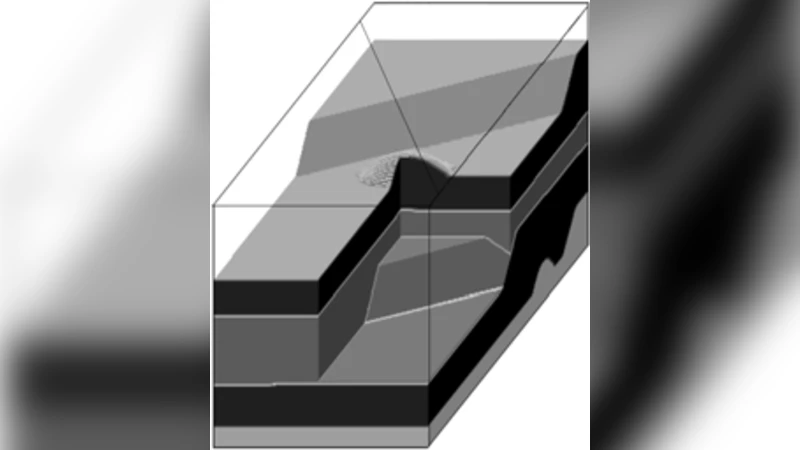
Ultrasonic physical model – A 3‑D laboratory phantom composed of silicone gel and beeswax layers with contrasting acoustic velocities (≈1 km/s to 2.2 km/s) is immersed in water. A broadband sweep (0.4–1.8 MHz) is transmitted and received by piezo‑electric transducers positioned along a diagonal line 12 mm above the phantom. Over 300 million traces are recorded, reciprocity is applied, and the data are interpolated to mitigate spatial aliasing. Using a 2‑D implementation of the Marchenko scheme, the authors compute focusing functions from a smooth background model, retrieve virtual receivers throughout the cross‑section, and finally synthesize the interior response for a virtual source placed in the second layer. The resulting snapshots display clear wave propagation, refraction at layer interfaces, and multiple reflections, confirming that the method captures the true physics despite the 2‑D approximation of a 3‑D object. Minor artefacts arise from finite transducer aperture, limited radiation angles, neglect of evanescent waves, and the dimensional reduction.
-
Seismic reflection data – Vintage 2‑D seismic data from the Vøring Basin (1994) are processed with the same workflow. A smooth background velocity model provides the initial direct arrivals. After Marchenko iteration and symmetrization, the reconstructed interior wavefield exhibits both primary reflections and higher‑order multiples, matching independent seismic images of the basin. This demonstrates that the technique scales from laboratory‑scale ultrasound to field‑scale seismology.
The paper highlights several important implications. The single‑sided Marchenko framework eliminates the need for a detailed a priori model of the internal structure; all scattering information is extracted directly from the measured reflection data. It is applicable to scalar acoustic waves, lossless electromagnetic waves, and, after appropriate decomposition, to elastic P‑ and S‑wave fields. Small to moderate attenuation can be accommodated by pre‑processing loss corrections. Potential applications span photo‑acoustic medical imaging (where only the skin surface is accessible), non‑destructive testing of thick components, holographic acoustic rendering, and monitoring of induced seismicity from surface measurements.
Limitations are acknowledged: (i) evanescent components are ignored, which may affect high‑frequency resolution; (ii) the 2‑D implementation introduces approximations when applied to truly 3‑D media; (iii) accurate background velocity estimation remains a prerequisite, although only a smooth model is required. Future work is suggested on extending the algorithm to full 3‑D Marchenko inversions, automating loss compensation, and adapting the method to vectorial wavefields for broader electromagnetic and elastodynamic applications.
In conclusion, by combining single‑sided focusing functions with a symmetrization step, the authors achieve the same interior Green’s function reconstruction as full‑boundary time‑reversal, but with far fewer measurement constraints. The experimental and field results convincingly demonstrate that virtual acoustic sources and receivers can be generated inside complex, heterogeneous media using only one‑sided access, opening new avenues for imaging and monitoring across a wide range of scientific and engineering disciplines.
Comments & Academic Discussion
Loading comments...
Leave a Comment