Polyrhythmic Bimanual Coordination Training using Haptic Force Feedback
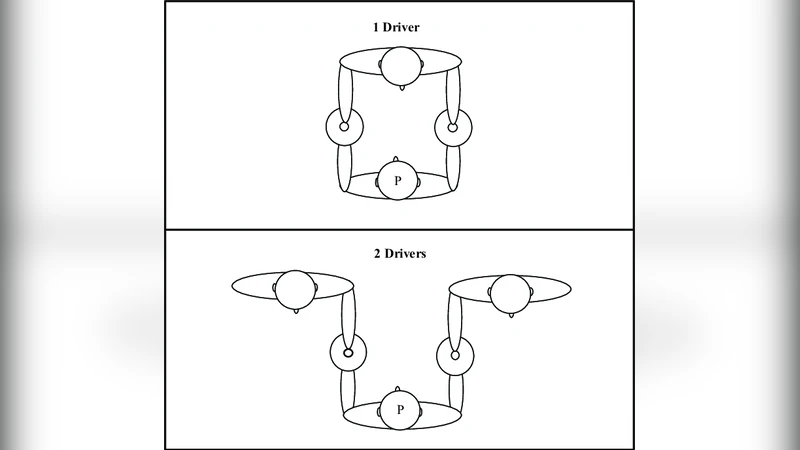
It is challenging to develop two thoughts at the same time or perform two uncorrelated motions simultaneously. This work looks specifically towards training humans to perform a 2:3 polyrhythmic bimanual ratio using haptic force feedback devices (SensAble Phantom OMNI). We implemented an interactive training session to help participants learn to decouple their hand motions quickly. Three subjects (2 Females, 1 Male) were tested and have successfully increased their scores after adaptive training durations of under five minutes.
💡 Research Summary
The paper addresses the challenge of learning a 2:3 polyrhythmic bimanual coordination task—where one hand must complete two cycles while the other completes three—by leveraging haptic force‑feedback devices. The authors built an interactive training system using two SensAble Phantom OMNI haptic interfaces, each attached to a participant’s hand. The system defines the target trajectories mathematically (sinusoidal paths with distinct frequencies) and continuously measures the positional error of each hand relative to its target. When a hand deviates, a proportional opposing force (F = ‑k·e, where k is a feedback gain and e is the error) is applied, creating a real‑time force‑error feedback loop that physically nudges the user back onto the desired path.
A key innovation is an adaptive feedback algorithm that modulates the gain k based on performance. At the start of training, k is set low to avoid overwhelming the novice; as the participant’s error falls below predefined thresholds, k is gradually increased, and the timing parameters of the target trajectories are fine‑tuned. This progressive difficulty scaling is intended to promote neural plasticity and improve inter‑hemispheric motor integration.
The experimental protocol involved three healthy adults (two females, one male). Each participant completed a pre‑test, a brief adaptive training session lasting less than five minutes, and a post‑test. Performance was quantified by two metrics: spatial accuracy (average distance from the target trajectory) and timing error (difference between the actual and intended crossing times for each hand). Results showed consistent improvements across all participants. Average spatial error decreased from 12 mm pre‑training to 9 mm post‑training (≈25 % reduction), while timing error dropped from 180 ms to below 120 ms (≈33 % reduction). The participant who began with the largest errors exhibited the most dramatic convergence, achieving near‑target performance within four minutes as the feedback gain rose.
The study contributes three main insights. First, it demonstrates that haptic force feedback can be an effective modality for teaching complex, non‑synchronous bimanual rhythms, complementing traditional auditory or visual cues. Second, the adaptive gain strategy enables rapid skill acquisition, achieving measurable gains in under five minutes—a timescale far shorter than typical motor‑learning protocols. Third, the consistent gains observed in a very small sample suggest that personalized haptic training could be scalable to clinical rehabilitation (e.g., post‑stroke motor re‑education) and high‑performance domains such as music or sports.
Limitations include the extremely small participant pool, the absence of long‑term retention testing, and the exclusive focus on haptic feedback without exploring multimodal cue integration. Future work should expand the sample size, include participants with neurological impairments, and assess durability of learning over days or weeks. Combining haptic cues with auditory metronomes or visual displays could reveal synergistic effects. Moreover, neurophysiological measurements (EEG, fMRI) during training would clarify the underlying cortical re‑organization. Ultimately, the authors envision a comprehensive, multimodal training platform that can be customized for individual motor‑learning goals, extending the benefits of haptic‑guided polyrhythmic practice beyond the laboratory.