An investigation on the effect of the near-fault earthquakes on the seismic behavior of RC Moment Resisting Frames (MRFs) designed based on Iranian seismic code (standard no. 2800)
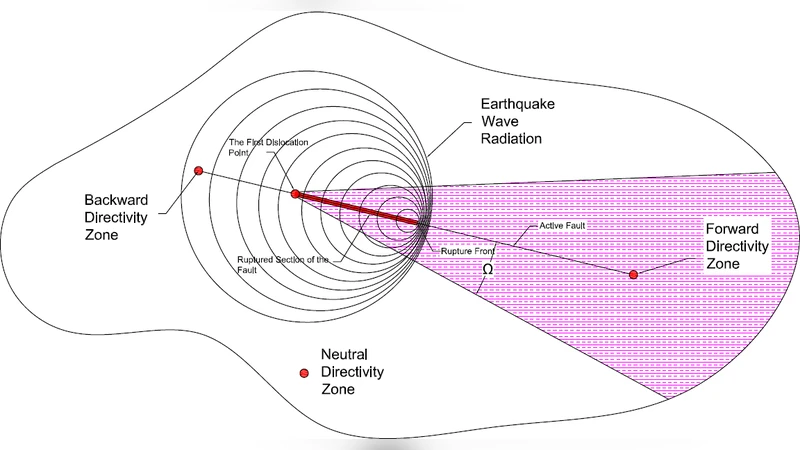
Past severe earthquakes, such as Bam earthquake of 2003 and Tabas earthquake of 1978, have demonstrated that many cities in Iran are prone to be struck by near-fault earthquakes. Such earthquakes are impulsive in nature, and therefore, they are more destructive than the ordinary ground shaking. In the fourth edition of Iranian seismic code (Standard No. 2800), some changes, including a modification factor for the elastic acceleration response spectrum (EARS) have been recently recommended to reflect the effects of such probable near-fault earthquakes for the designing procedure. In this study, a numbers of 2D RC moment resisting frames (MRFs), from four to twelve story buildings, are designed linearly based on Iranian National Building Code (INBC) and Standard No. 2800 as well. Subsequently, their nonlinear models are reproduced for conducting nonlinear dynamic time history (NDTH) analysis. For this purpose, twenty impulsive ground motions are selected and scaled to be compatible with the design basis earthquake (DBE) spectrum of the abovementioned code. It is concluded that the seismic performance of the analyzed structures are not satisfactory at all; no buildings are successful to satisfy the life safety (LS) performance level posed by guidelines such as ASCE41-06 or ASCE41-13. Moreover, it is worth mentioning that even collapse prevention (CP) limit states are not also met in some cases. Therefore, the recently added modifications in the Standard No. 2800 may be inadequate to incorporate the near-fault earthquakes’ effects.
💡 Research Summary
The paper investigates whether the recent revisions of the Iranian seismic code (Standard No. 2800, fourth edition) adequately address the effects of near‑fault earthquakes on reinforced‑concrete (RC) moment‑resisting frames (MRFs). Three 2‑D frame models representing low‑rise (4‑story), mid‑rise (8‑story) and high‑rise (12‑story) buildings were designed using the linear equivalent static force method prescribed by the code, with concrete compressive strength of 21 MPa and steel yield strength of 400 MPa. The designs incorporated the code’s new “N‑factor” that amplifies the elastic acceleration response spectrum (EARS) for mid‑ to long‑period structures.
The authors then rebuilt the frames in Seismostruct v7.2 using fiber‑section modeling: Mander concrete and Menegotto‑Pinto steel constitutive laws, inelastic beam elements with concentrated plastic hinges, and rigid diaphragm floors. Dynamic analysis employed the Hilber‑α integration scheme with 5 % tangent stiffness proportional damping; masses included dead load plus 30 % live load per ASCE 07.
Twenty impulsive near‑fault ground motions from the SAC‑Steel project were selected. These records exhibit forward directivity pulses (high PGV, short strong‑motion duration) and include both horizontal components and the intense vertical component typical of near‑fault events. Each record was scaled so that the 5 %‑damped response spectrum matched the design‑basis earthquake (DBE) spectrum of Standard 2800 over the relevant period range.
Performance was evaluated against ASCE 41‑13 criteria. Global demand was measured by maximum inter‑story drift ratio (IDR), with 2 % drift as the Life‑Safety (LS) limit and 4 % as the Collapse‑Prevention (CP) limit. Local demand was assessed by plastic hinge rotation, using the same LS/CP thresholds.
Results show that none of the frames satisfied the LS requirement for at least one of the 20 records; several cases even failed the CP limit. IDR values peaked in the lower stories due to pronounced P‑Δ effects, and plastic hinge rotations frequently exceeded allowable values. The 12‑story frame, despite the N‑factor amplification at long periods, still experienced excessive demands because the code‑based spectrum did not capture the high‑energy pulse and peak ground velocity of the selected near‑fault motions. The 4‑story frame also failed LS, indicating that the N‑factor’s mid‑period boost is insufficient for short‑period structures subjected to impulsive loading.
The authors conclude that the N‑factor modification introduced in Standard 2800 is inadequate for representing the unique characteristics of near‑fault earthquakes, particularly forward‑directivity pulses. They recommend that designers (1) incorporate explicit nonlinear time‑history analyses with representative near‑fault records, (2) provide additional stiffness and damping to mitigate P‑Δ effects, (3) design for plastic hinge continuity through targeted reinforcement, and (4) revise the design spectrum to reflect higher PGV and pulse periods (1.5–3 s).
In summary, the study demonstrates that relying solely on the revised spectrum of Standard 2800 may lead to unsafe designs under near‑fault conditions, and that a more robust performance‑based approach—combining code provisions with detailed nonlinear dynamic analysis—is essential for the seismic safety of RC MRFs in Iran’s near‑fault zones.
Comments & Academic Discussion
Loading comments...
Leave a Comment