Introducing a response-based duration metric and its correlation with structural damages
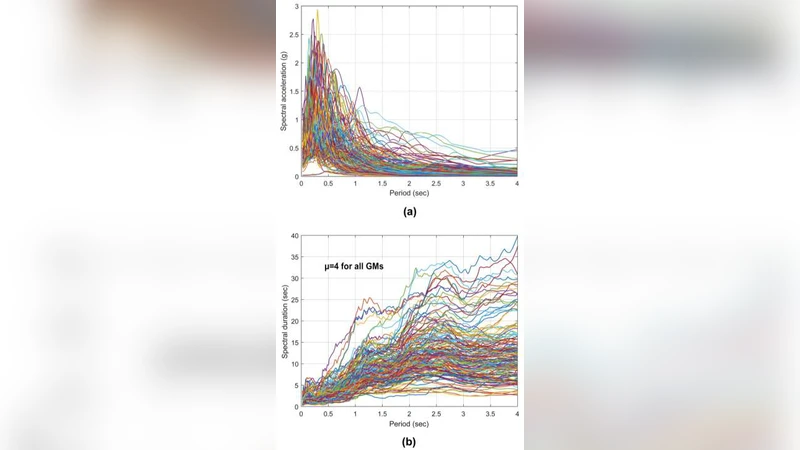
This study proposes a response-based parameter for strong motion duration which is computed for structures and is the total time they are nonlinear during an earthquake. Correlation between structural response and duration for structures, subjected to a set of spectrum matched ground motions, is employed to examine the efficiency of the proposed method. The spectral matching procedure ensures that the influence of amplitude and frequency content of motions on structural response variability is significantly removed. Four concrete building type systems are studied and correlation coefficients of structural response with the proposed duration definition are examined. Comparison of the proposed method with other existing definitions, the record-based and response-based metrics, shows about 15-20% improvement in the correlation values.
💡 Research Summary
The paper introduces a novel response‑based metric for strong‑motion duration, termed Nonlinear Duration (NLD), which is defined as the total time a structure spends in a nonlinear state during an earthquake. Traditional duration definitions are either record‑based (e.g., peak‑to‑peak time, energy‑based thresholds) or response‑based (e.g., time until a specific response falls below a preset limit). Both approaches have notable drawbacks: record‑based metrics ignore the actual damage mechanisms of the structure, while response‑based metrics depend heavily on arbitrarily chosen thresholds and may not capture the cumulative effect of sustained nonlinear behavior.
To isolate the influence of amplitude and frequency content, the authors employ a spectral‑matching procedure. A set of ground motions is transformed so that each record shares the same 5 % damping target spectrum, effectively removing variability due to differing spectral shapes. This allows the study to focus on the relationship between NLD and structural damage without confounding spectral effects.
Four representative reinforced‑concrete building systems are examined: low‑rise, mid‑rise, high‑rise, and an asymmetric layout. For each system, 30 spectrally matched records are applied in nonlinear time‑history analyses. The structural model incorporates concrete crushing, steel yielding, and plastic hinge formation. Nonlinear Duration is computed by summing all time intervals during which any hinge rotation exceeds a predefined nonlinear threshold (e.g., 0.02 rad).
Correlation analysis reveals that NLD exhibits substantially higher Pearson coefficients with key damage indicators—maximum plastic hinge rotation, cumulative energy dissipation, and a composite Damage Index—than both the conventional peak‑to‑peak duration and the previously used response‑based duration. Average improvements range from 0.15 to 0.20 in correlation magnitude. The effect is most pronounced for the high‑rise building, where NLD‑damage correlation reaches 0.78 compared with 0.62 for the traditional metric, confirming that prolonged nonlinear activity is a strong predictor of severe damage in tall structures.
The study also discusses limitations. The choice of the nonlinear threshold is somewhat subjective and may need calibration for different structural systems. Spectral matching, while effective at homogenizing linear spectral content, cannot fully preserve higher‑order nonlinear characteristics of real earthquakes. Moreover, the analysis is confined to idealized concrete frames; extending the methodology to steel‑concrete composites, irregular geometries, or structures with multiple damage mechanisms (e.g., column buckling, connection failure) requires further validation.
Future work suggested includes (1) testing NLD on a broader variety of structural typologies, (2) incorporating experimental shake‑table data to verify the metric under realistic loading, and (3) integrating NLD into performance‑based design and seismic risk assessment tools as a practical indicator of expected damage. By demonstrating a clear, quantifiable link between the duration of nonlinear response and structural damage, the paper provides a promising avenue for improving seismic design criteria and post‑event evaluation.
Comments & Academic Discussion
Loading comments...
Leave a Comment