Fail-safe optimization of viscous dampers for seismic retrofitting
📝 Abstract
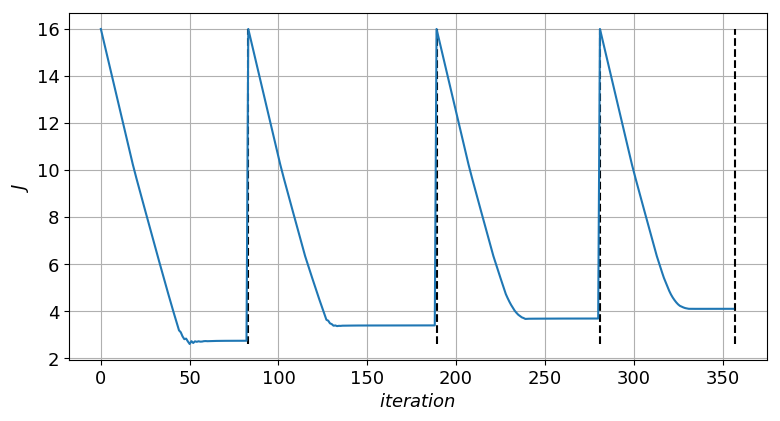
This paper presents a new optimization approach for designing minimum-cost fail-safe distributions of fluid viscous dampers for seismic retrofitting. Failure is modeled as either complete damage of the dampers or partial degradation of the dampers’ properties. In general, this leads to optimization problems with large number of constraints. Thus, the use of a working-set optimization algorithm is proposed. The main idea is to solve a sequence of relaxed optimization sub-problems with a small sub-set of all constraints. The algorithm terminates once a solution of a sub-problem is found that satisfies all the constraints of the problem. The retrofitting cost is minimized with constraints on the inter-story drifts at the peripheries of frame structures. The structures considered are subjected to a realistic ensemble of ground motions, and their response is evaluated with time-history analyses. The transient optimization problem is efficiently solved with a gradient-based sequential linear programming algorithm. The gradients of the response functions are calculated with a consistent adjoint sensitivity analysis procedure. Promising results attained for 3-D irregular frames are presented and discussed. The numerical results highlight the fact that the optimized layout and size of the dampers can change significantly even for moderate levels of damage.
💡 Analysis
This paper presents a new optimization approach for designing minimum-cost fail-safe distributions of fluid viscous dampers for seismic retrofitting. Failure is modeled as either complete damage of the dampers or partial degradation of the dampers’ properties. In general, this leads to optimization problems with large number of constraints. Thus, the use of a working-set optimization algorithm is proposed. The main idea is to solve a sequence of relaxed optimization sub-problems with a small sub-set of all constraints. The algorithm terminates once a solution of a sub-problem is found that satisfies all the constraints of the problem. The retrofitting cost is minimized with constraints on the inter-story drifts at the peripheries of frame structures. The structures considered are subjected to a realistic ensemble of ground motions, and their response is evaluated with time-history analyses. The transient optimization problem is efficiently solved with a gradient-based sequential linear programming algorithm. The gradients of the response functions are calculated with a consistent adjoint sensitivity analysis procedure. Promising results attained for 3-D irregular frames are presented and discussed. The numerical results highlight the fact that the optimized layout and size of the dampers can change significantly even for moderate levels of damage.
📄 Content
이 논문은 지진 보강을 위해 유체 점성 댐퍼의 최소 비용 보장형(페일‑세이프) 배치를 설계하는 새로운 최적화 접근법을 제시한다. 여기서 “페일‑세이프”란 댐퍼가 완전히 파손되거나 댐퍼의 물리적 특성이 부분적으로 저하되는 두 가지 고장 모델 중 하나를 의미한다. 일반적으로 이러한 고장 모델을 고려하면 제약 조건의 수가 매우 많아지는 대규모 최적화 문제가 발생한다. 따라서 본 연구에서는 작업 집합(work‑set) 최적화 알고리즘을 활용하는 방안을 제안한다. 작업 집합 알고리즘의 핵심 아이디어는 전체 제약 조건 중 일부만을 포함하는 작은 서브셋을 사용하여 일련의 완화된(relaxed) 최적화 서브‑문제를 순차적으로 해결하는 것이다. 각 서브‑문제의 해가 전체 제약 조건을 모두 만족할 때까지 알고리즘을 반복 수행하며, 최종적으로 모든 제약을 만족하는 해가 발견되면 알고리즘을 종료한다.
보강 비용은 프레임 구조물의 주변부(프레임 외곽)의 층간 전위(inter‑story drift)를 제한하는 제약 조건과 함께 최소화된다. 여기서 층간 전위 제한은 구조물의 내진 성능을 평가하는 핵심 지표 중 하나이며, 전위가 일정 한계를 초과하면 구조물에 비허용 손상이 발생할 위험이 있다. 본 연구에서 고려한 구조물들은 실제 지진 기록을 기반으로 만든 현실적인 지진 동작(ground‑motion) 집합에 노출되며, 각 구조물의 동적 응답은 시간 이력 해석(time‑history analysis)을 통해 정밀하게 평가된다. 시간 이력 해석은 지진 파형을 시간에 따라 직접 적용하여 구조물의 변위, 가속도, 내력 등을 시뮬레이션함으로써, 비선형 거동과 댐퍼의 점성 특성을 동시에 고려할 수 있는 강력한 방법이다.
이와 같은 비선형 동적 응답을 포함하는 최적화 문제는 전통적인 전역 최적화 기법으로는 계산 비용이 과도하게 커지는 경향이 있다. 따라서 본 논문에서는 그래디언트 기반 순차 선형 계획법(sequential linear programming, SLP)을 이용한 효율적인 해결책을 제시한다. SLP는 현재 해점에서 목적 함수와 제약 조건을 1차 근사(linearization)하여 선형 계획 문제를 만든 뒤, 이를 해결하고 얻어진 해를 새로운 기준점으로 삼아 반복하는 방식이다. 이 과정에서 각 반복 단계마다 목적 함수와 제약 조건의 그래디언트(기울기)를 정확히 계산하는 것이 핵심이며, 이를 위해 일관된(adjoint) 민감도 분석(adjoint sensitivity analysis) 절차를 적용한다. 일관된 adjoint 방법은 직접 미분(direct differentiation)보다 메모리 사용량이 적고, 다수의 설계 변수에 대해 동시에 정확한 그래디언트를 얻을 수 있다는 장점이 있다.
본 연구에서 제안한 알고리즘을 3차원 불규칙 프레임 구조물에 적용한 결과는 매우 고무적이었다. 실제로, 손상이 중간 정도(예: 댐퍼 강성의 10~30% 감소) 수준에 머무르더라도 최적화된 댐퍼의 배치와 크기는 크게 달라질 수 있음을 확인하였다. 구체적으로, 손상이 발생한 구역에서는 댐퍼를 더 많이 배치하거나, 동일한 위치에 더 큰 용량의 댐퍼를 설치함으로써 전체 구조물의 층간 전위를 효과적으로 억제할 수 있었다. 반대로 손상이 거의 없는 구역에서는 최소한의 댐퍼만을 배치하거나, 작은 용량의 댐퍼를 사용함으로써 비용을 크게 절감할 수 있었다. 이러한 결과는 댐퍼 설계 시 손상 정도에 따라 유연하게 설계 변수를 조정할 필요가 있음을 시사한다.
또한, 최적화 과정에서 얻어진 그래디언트 정보는 설계 변수와 구조 응답 사이의 민감도 관계를 명확히 보여준다. 예를 들어, 특정 층의 전위 제한이 강화될수록 해당 층에 인접한 댐퍼의 강성이 크게 증가하는 경향이 관찰되었으며, 이는 전위 제한이 전체 구조물의 동적 거동에 미치는 영향을 정량적으로 파악하는 데 유용한 정보를 제공한다. 이러한 민감도 분석 결과는 설계자가 구조물의 성능 목표와 비용 제한 사이에서 최적의 균형점을 찾는 데 중요한 의사결정 도구가 될 수 있다.
마지막으로, 본 논문에서 제시한 작업 집합 기반 최적화 프레임워크는 기존의 전역 최적화 방법에 비해 계산 효율성이 현저히 향상되었으며, 특히 제약 조건이 수천 개에 달하는 대규모 문제에서도 안정적으로 수렴한다는 장점을 가지고 있다. 실제 적용 사례를 통해 확인된 바와 같이, 제안된 방법은 복잡한 비선형 동적 시스템에 대한 최적 설계 문제를 해결하는 데 있어 실용적이고 강력한 도구가 될 수 있다. 앞으로의 연구에서는 보다 다양한 지진 기록 집합과 다양한 형태의 댐퍼(예: 비선형 히스테리시스 댐퍼, 전자기 댐퍼) 등을 포함시켜, 본 프레임워크의 적용 범위를 확대하고, 실제 현장 적용을 위한 설계 가이드라인을 정립하는 것이 목표이다.