Copernicanism and the Typicality in Time
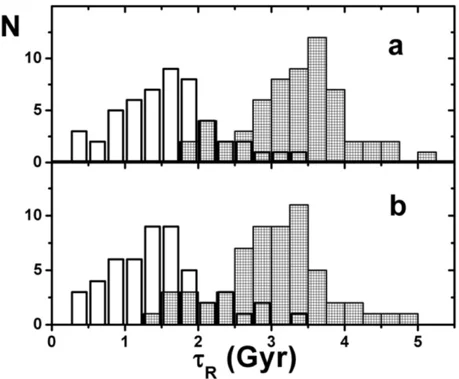
How special (or not) is the epoch we are living in? What is the appropriate reference class for embedding the observations made at the present time? How probable – or else – is anything we observe in the fulness of time? Contemporary cosmology and astrobiology bring those seemingly old-fashioned philosophical issues back into focus. There are several examples of contemporary research which use the assumption of typicality in time (or temporal Copernicanism) explicitly or implicitly, while not truly elaborating upon the meaning of this assumption. The present paper brings attention to the underlying and often uncritically accepted assumptions in these cases. It also aims to defend a more radical position that typicality in time is not – and cannot ever be – well-defined, in contrast to the typicality in space, and the typicality in various specific parameter spaces. This, of course, does not mean that we are atypical in time; instead, the notion of typicality in time is necessarily somewhat vague and restricted. In principle, it could be strengthened by further defining the relevant context, e.g., by referring to typicality within the Solar lifetime, or some similar restricting clause.
💡 Research Summary
The paper “Copernicanism and the Typicality in Time” examines the often‑taken assumption that our present epoch is typical within the full temporal span of the universe—a principle the authors refer to as “temporal Copernicanism.” The authors begin by recalling how the classical cosmological principle (CP) underwrites spatial typicality: homogeneity and isotropy on large scales allow one to define a spatial average (or median) of any astrophysical quantity, and to compare the local value with that average. This spatial averaging is anchored to a well‑defined reference frame, such as the cosmic microwave background (CMB), and is mathematically straightforward because the underlying distributions are assumed to be stationary in space.
In contrast, the paper argues that temporal typicality cannot be defined with comparable rigor. First, the universe is not static; it evolves dramatically over cosmic time. Physical processes such as star formation, galaxy mergers, black‑hole growth, and eventual decay of all bound structures (e.g., proton decay, heat death) imply that many quantities cease to exist after a finite epoch. Averaging a quantity over an infinite interval (
Comments & Academic Discussion
Loading comments...
Leave a Comment