An agent-based model of multi-dimensional opinion dynamics and opinion alignment
It is known that individual opinions on different policy issues often align to a dominant ideological dimension (e.g. “left” vs. “right”) and become increasingly polarized. We provide an agent-based model that reproduces these two stylized facts as emergent properties of an opinion dynamics in a multi-dimensional space of continuous opinions. The mechanisms for the change of agents’ opinions in this multi-dimensional space are derived from cognitive dissonance theory and structural balance theory. We test assumptions from proximity voting and from directional voting regarding their ability to reproduce the expected emerging properties. We further study how the emotional involvement of agents, i.e. their individual resistance to change opinions, impacts the dynamics. We identify two regimes for the global and the individual alignment of opinions. If the affective involvement is high and shows a large variance across agents, this fosters the emergence of a dominant ideological dimension. Agents align their opinions along this dimension in opposite directions, i.e. create a state of polarization.
💡 Research Summary
The paper presents an agent‑based model that captures two widely observed phenomena in contemporary politics: the emergence of a dominant ideological dimension (e.g., a “left‑right” axis) and the polarization of societies along that axis. To move beyond the binary spin‑type models common in sociophysics, the authors represent each individual’s stance on M policy issues as a continuous opinion vector oᵢ = (oᵢ₁,…,oᵢ_M). The dynamics of these vectors are grounded in two well‑established psychological theories.
First, cognitive dissonance theory posits that an individual experiences discomfort when holding contradictory beliefs; the model translates this into a force that pushes opinion vectors of interacting agents toward reducing their disagreement. Second, structural balance theory extends this idea to the network of interpersonal relations: each pair of agents i and j carries a signed relationship rᵢⱼ ∈ {+1, −1}. Triads {i, j, k} are classified as stable if the product rᵢⱼ rᵢₖ rⱼₖ is positive and unstable otherwise. When an unstable triad is detected, either the agents adjust the relevant opinion dimension or they flip the sign of a relationship, thereby moving the triad toward stability.
Two interaction paradigms are examined. The classic bounded‑confidence (or “proximity voting”) rule allows interaction only when the Euclidean distance between opinion vectors is smaller than a fixed threshold ε. The authors argue that in a multi‑dimensional space such a scalar distance is ambiguous, especially when agents agree on some issues but diverge on others. The alternative “directional voting” scheme determines the sign of rᵢⱼ from the inner product of the opinion vectors: a positive inner product yields a positive relation, a negative one a hostile relation. The sign then governs whether the interaction will tend to bring agents closer (positive relation) or push them further apart (negative relation).
A novel contribution is the incorporation of emotional involvement, modeled as an individual resistance parameter αᵢ. Higher αᵢ means the agent tolerates larger cognitive dissonance before engaging, effectively raising the interaction threshold for that agent. By varying the mean μ_α and variance σ_α of the α‑distribution, the authors identify two distinct global regimes. When μ_α is low and σ_α small, agents frequently interact, leading to consensus or the formation of small, non‑polarized clusters. When μ_α is high and σ_α large, only a subset of highly involved agents remain socially active; the rest become isolated. In this high‑involvement regime, the opinion cloud collapses onto its first principal component, which the authors interpret as the emergent ideological dimension. Agents then align along this axis, but split into two opposite directions, producing a robust polarized state.
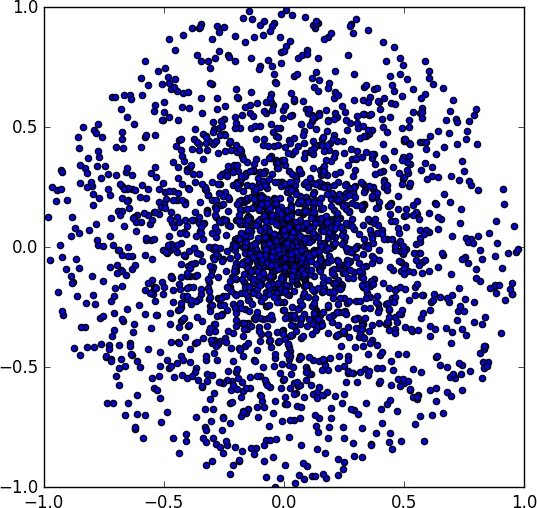
Simulation experiments start from normally distributed opinions and random initial relations. The authors systematically explore the parameter space (ε, α‑distribution, number of issues M) and measure (i) the variance explained by the leading eigenvector of the opinion covariance matrix, (ii) the polarization index (difference between the means of the two emerging clusters), and (iii) the stability of the underlying signed network. Results confirm that directional voting combined with heterogeneous emotional involvement reproduces both the emergence of a dominant ideological axis and sustained polarization, whereas proximity voting fails to generate a clear axis and often leads to fragmented, non‑polarized outcomes.
The discussion links the model’s findings to empirical observations: societies with high political affect (e.g., during election cycles) exhibit strong ideological sorting and polarization, consistent with the high‑μ_α, high‑σ_α regime. The authors also note that negative influence—agents deliberately moving farther apart when they already disagree on many issues—is supported by experimental evidence, and their model captures this by allowing opinion adjustments that increase overall disagreement within a negative relation.
In conclusion, the paper makes three primary contributions: (1) a micro‑foundation for multi‑dimensional opinion dynamics that unifies cognitive dissonance and structural balance, (2) the introduction of an affective resistance parameter that yields two qualitatively different macro‑behaviors, and (3) a critical assessment of proximity versus directional voting, showing the latter’s superiority in reproducing real‑world ideological alignment. Limitations include the binary representation of interpersonal ties, linear opinion update rules, and the exclusion of external media shocks. Future work is suggested to incorporate weighted ties, non‑linear learning dynamics, and exogenous information flows to enhance realism.
Comments & Academic Discussion
Loading comments...
Leave a Comment