SensAI+Expanse Emotional Valence Prediction Studies with Cognition and Memory Integration
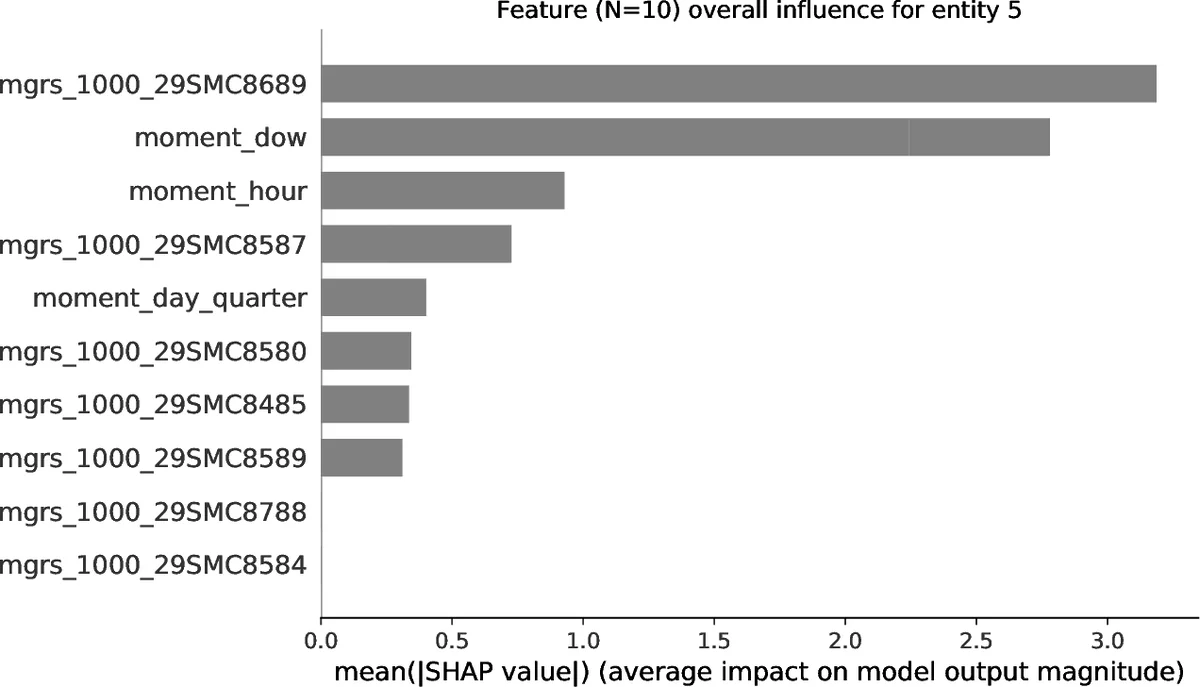
The humans are affective and cognitive beings relying on memories for their individual and social identities. Also, human dyadic bonds require some common beliefs such as empathetic behaviour for better interaction. In this sense, research studies involving human-agent interaction should resource on affect, cognition, and memory integration. The developed artificial agent system (SensAI+Expanse) includes machine learning algorithms, heuristics, and memory as cognition aids towards emotional valence prediction on the interacting human. Further, an adaptive empathy score is always present in order to engage the human in a recognisable interaction outcome. […] The agent is resilient on collecting data, adapts its cognitive processes to each human individual in a learning best effort for proper contextualised prediction. The current study make use of an achieved adaptive process. Also, the use of individual prediction models with specific options of the learning algorithm and evaluation metric from a previous research study. The accomplished solution includes a highly performant prediction ability, an efficient energy use, and feature importance explanation for predicted probabilities. Results of the present study show evidence of significant emotional valence behaviour differences between some age ranges and gender combinations. Therefore, this work contributes with an artificial intelligent agent able to assist on cognitive science studies. This ability is about affective disturbances by means of predicting human emotional valence contextualised in space and time. Moreover, contributes with learning processes and heuristics fit to the task including economy of cognition and memory to cope with the environment. Finally, these contributions include an achieved age and gender neutrality on predicting emotional valence states in context and with very good performance for each individual.
💡 Research Summary
The paper presents SensAI+Expanse, an integrated mobile‑cloud artificial intelligence system designed to predict human emotional valence (positive, neutral, negative) in real time while incorporating cognition and memory mechanisms. The mobile component, SensAI, runs on an Android smartphone and continuously gathers multimodal data: GPS location, timestamps, and user‑generated text from an in‑app diary and social media (e.g., Twitter). Text is processed by a rule‑based lexical analyzer that includes language detection, automatic translation, and emoticon handling, producing an instantaneous sentiment label. Users explicitly report their current affective state via three emoticon buttons; these self‑reports serve as ground‑truth labels for model training. An “empathy score” visualizes the agent‑human rapport, increasing with reporting frequency and decaying over time, thereby encouraging sustained interaction.
Collected data are securely transmitted to the cloud module, Expanse, where a robust AutoML pipeline performs preprocessing, outlier removal, and feature engineering. Spatial data are clustered using the unsupervised HDBSCAN algorithm, automatically selecting the optimal minimum cluster size. For supervised learning, the pipeline employs Extreme Gradient Boosting (XGBoost) as the classifier, automatically tuning hyper‑parameters through Bayesian optimization and K‑fold cross‑validation. Class imbalance is detected and mitigated using custom heuristics based on the method of Imbalance‑Check. The final per‑user model outputs probabilistic predictions of emotional valence contextualized by time, location, and inferred activity.
Energy efficiency is addressed by a low‑power sensing schedule (active 2 s, idle 8 s, 0.2 Hz) and batch‑wise data synchronization, aiming to keep battery drain within a few percentage points per day. Privacy is protected by performing sentiment extraction locally, discarding raw text after labeling, and storing only anonymized metadata in the cloud.
The empirical study recruited 57 participants across ten countries and four continents; after excluding eight users lacking age or gender data, 49 remained for analysis. To avoid the typical WEIRD bias, participants were collected “in the wild.” Age was dichotomized at the median (34 years) yielding two groups: 10–33 and 34–70, with roughly equal gender distribution (24 females, 25 males). Model performance, measured by F1 score, was high: 31 participants (≈63 %) achieved F1 ≥ 0.9, another 18 fell in the 0.7–0.9 range, and only one scored 0.68. Statistical analysis using the Mann‑Whitney U test revealed significant differences in valence distributions across age and gender sub‑groups, particularly that older females reported fewer negative and neutral states than younger females.
The authors claim that SensAI+Expanse delivers “highly performant prediction ability, efficient energy use, and feature‑importance explanations,” and that it achieves “age and gender neutrality” while still detecting meaningful demographic differences. However, several limitations are evident. The exclusive reliance on XGBoost and F1 as the evaluation metric omits comparison with alternative classifiers (e.g., neural networks, SVM) and other performance measures such as ROC‑AUC or PR‑AUC. The sample size is modest, and cultural or linguistic variations are not systematically controlled, which may affect the generalizability of the reported neutrality. Energy‑efficiency claims lack quantitative battery‑usage data, and the impact of the empathy‑score interface on user behavior is not empirically validated. Moreover, the ground‑truth labeling depends on self‑report via three coarse buttons, which may oversimplify the nuanced spectrum of affect.
In summary, SensAI+Expanse introduces a promising framework that couples on‑device sensing with cloud‑based AutoML to deliver context‑aware emotional valence predictions, while embedding a simple empathy feedback loop. The system showcases a thoughtful integration of cognition‑inspired memory management (e.g., selective data retention, forgetting mechanisms) and demonstrates feasibility across a geographically diverse cohort. Future work should broaden algorithmic diversity, provide rigorous energy consumption benchmarks, expand sample size and cultural representation, and conduct controlled experiments to assess the psychological efficacy of the empathy score. Such extensions would strengthen the claim of demographic neutrality and solidify the system’s utility for affective computing research and real‑world human‑agent interaction applications.
Comments & Academic Discussion
Loading comments...
Leave a Comment