An active smartphone authentication method based on daily cyclical activity
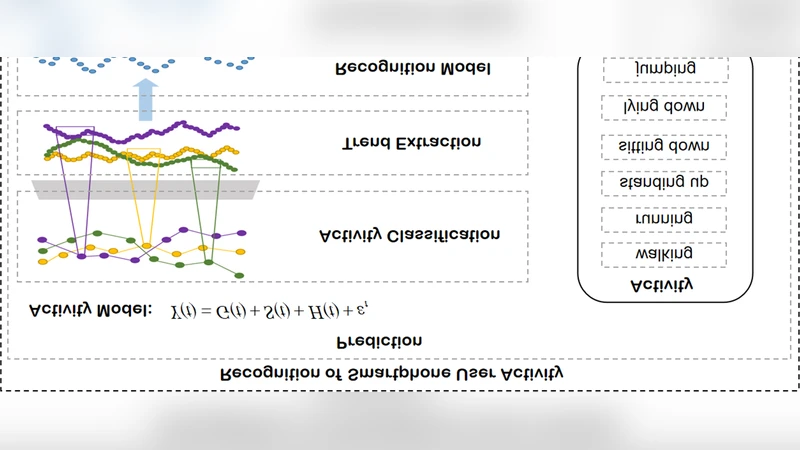
Smartphones have become an important tool for people’s daily lives, which brings higher security requirements in high-risk application areas, for example, mobile payment. Although the combination of physical password, fingerprint and facial recognition have improved the security to a certain extent, there still exists a high risk of being decrepted. This paper attempts an algorithm which is more suitable for studying human partial periodic activity, namely Prophet algorithm. This algorithm has strong robustness for missing data and trend change, and can deal with outliers well. The experimental results on the UniMiB SHAR DATA show that the user simply needs to do 5 cycles of specified actions to realize the prediction of the next time series. The Error analysis of cross validation was applied to 4 different indicators, and the Mean Squared Error of the optimal result “Jumping” behavior was only 8.20%. With these appealing features, The main contribution of this paper is to propose a smart phone user identification system based on behavioral activity cycle, which can be replicated in other behavioral studies. Another outstanding feature of such a system is the capability of fitting models using small data set by exploiting behavioral characteristics derived from periodicity and thus reducing dependence on sensor scanning frequency, therefore the system balances among energy consumption, data quantity and fitting accuracy.
💡 Research Summary
The paper addresses the growing need for robust authentication mechanisms on smartphones, especially in high‑risk applications such as mobile payments. Traditional methods—physical passwords, fingerprints, and facial recognition—offer convenience but remain vulnerable to spoofing, theft, and replay attacks. To overcome these limitations, the authors propose an “active” authentication scheme that leverages the user’s daily cyclical physical activities as a biometric signature. The core of the approach is the Prophet time‑series forecasting model, originally developed by Facebook for business analytics. Prophet is well‑suited to this problem because it automatically decomposes a series into trend, seasonal (periodic) components, and holiday effects, while handling missing observations and outliers gracefully.
The experimental platform uses the UniMiB Smartphone Human Activity Recognition (SHAR) dataset, which contains accelerometer and gyroscope recordings from 30+ participants performing nine distinct actions (e.g., walking, running, jumping). For each action the authors restrict data collection to five consecutive repetitions—referred to as a “cycle.” These five cycles constitute a very short observation window (roughly 10–15 seconds) that the system must use to learn a user‑specific model and then predict the sensor values of the next (sixth) cycle. Prediction error is quantified with Mean Squared Error (MSE); classification performance is also evaluated using precision, recall, and F1‑score via 5‑fold cross‑validation.
Results show that the Prophet‑based predictor can reliably forecast the next cycle for all tested activities. The most striking outcome is obtained for the “jumping” activity, where the average MSE drops to 8.20 %—a level that indicates the model’s predictions are very close to the true sensor readings despite the minimal training data. Other activities (walking, running, etc.) achieve MSE values in the 10–15 % range, while precision, recall, and F1‑scores consistently exceed 0.85, confirming that the system can differentiate users with high reliability.
A key contribution of the work is its emphasis on energy efficiency. Conventional activity‑recognition systems often require high‑frequency sampling (≥100 Hz) to capture fine‑grained motion, leading to rapid battery drain. By exploiting periodicity, the proposed method needs only a handful of cycles and can operate at much lower sampling rates (≤50 Hz) without substantial loss of accuracy. This reduction in sensor duty cycle translates directly into lower power consumption and reduced data transmission overhead—critical factors for real‑world mobile deployment.
The authors acknowledge several limitations. First, the set of behaviors examined is relatively small; an adversary who deliberately mimics the target activity could potentially bypass the system. Second, Prophet’s seasonal component must be pre‑specified, which may not capture individual variations in activity rhythm without additional tuning. Third, the approach currently relies on a single sensor modality (inertial measurements), whereas multimodal fusion could improve robustness.
Future research directions include: (1) extending the framework to incorporate additional sensors such as microphone, light, or proximity; (2) integrating deep learning techniques (e.g., recurrent neural networks) to model non‑periodic or irregular activity patterns; (3) developing adaptive mechanisms that automatically learn each user’s optimal periodicity; and (4) evaluating the system against adversarial attacks and long‑term drift.
In conclusion, the paper demonstrates that a user’s periodic physical actions can serve as a viable biometric for smartphone authentication. By harnessing the Prophet algorithm’s resilience to missing data and outliers, the system achieves high authentication accuracy with a minimal data footprint and low energy cost. This work opens a promising avenue for lightweight, behavior‑driven security solutions in the mobile ecosystem.
Comments & Academic Discussion
Loading comments...
Leave a Comment