Mathematical modeling of powder-snow avalanche flows
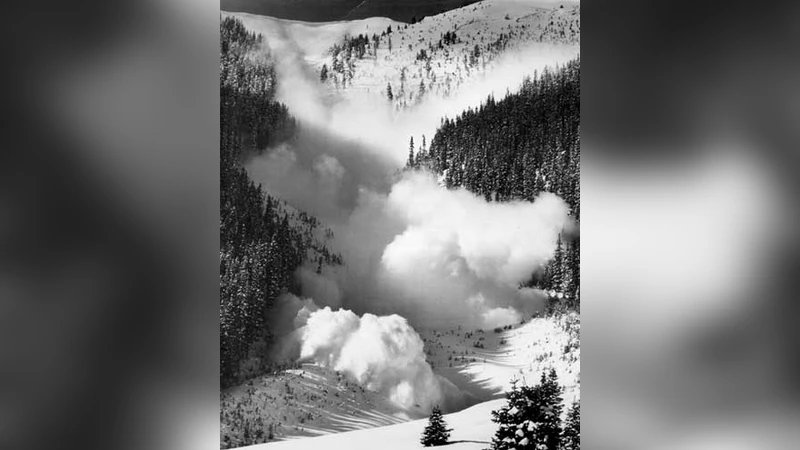
Powder-snow avalanches are violent natural disasters which represent a major risk for infrastructures and populations in mountain regions. In this study we present a novel model for the simulation of avalanches in the aerosol regime. The second scope of this study is to get more insight into the interaction process between an avalanche and a rigid obstacle. An incompressible model of two miscible fluids can be successfully employed in this type of problems. We allow for mass diffusion between two phases according to the Fick’s law. The governing equations are discretized with a contemporary fully implicit finite volume scheme. The solver is able to deal with arbitrary density ratios. Several numerical results are presented. Volume fraction, velocity and pressure fields are presented and discussed. Finally we point out how this methodology can be used for practical problems.
💡 Research Summary
The paper presents a new mathematical and numerical framework for simulating powder‑snow avalanches in the aerosol regime, where a cloud of fine snow particles is suspended in air. The authors treat the avalanche as a mixture of two miscible, incompressible fluids—solid particles and air—characterized by a volume‑fraction field α, densities ρ₁ and ρ₂, and a common velocity field u. Mass conservation for the mixture is expressed as ∂ρ/∂t + ∇·(ρu) = 0 with ρ = α ρ₁ + (1‑α) ρ₂, while momentum balance follows the incompressible Navier‑Stokes equations with variable density, pressure p, viscosity μ, and gravity. The transport of α obeys a convection‑diffusion equation, ∂α/∂t + u·∇α = ∇·(D∇α), where D is a diffusion coefficient prescribed by Fick’s law. This diffusion term allows mass exchange between the two phases and captures the gradual mixing that occurs in real avalanches.
To solve the governing equations, the authors develop a fully implicit finite‑volume (FV) scheme. Temporal discretization combines first‑order backward Euler with second‑order Crank‑Nicolson weighting, providing both stability and accuracy. The nonlinear system is tackled with a Newton‑Raphson iteration, and the Jacobian includes contributions from the convective, diffusive, and pressure‑velocity coupling terms. Spatial discretization uses a control‑volume approach that guarantees exact conservation of mass, momentum, and α. Convective fluxes are evaluated with a high‑resolution Total Variation Diminishing (TVD) scheme to avoid spurious oscillations, while diffusive fluxes are treated with central differences to minimize numerical diffusion. The pressure‑velocity coupling is handled implicitly, allowing the method to remain stable for density ratios up to 10³ or higher, a regime where many explicit or semi‑implicit methods fail.
Boundary conditions are set to model realistic avalanche‑obstacle interactions. Rigid obstacles are treated as no‑slip, impermeable walls for the velocity field, while the α‑field satisfies a zero‑normal‑flux condition, preventing particles from penetrating the solid surface. Inlet boundaries prescribe a prescribed α‑profile and velocity, representing the upstream avalanche source; outlet boundaries impose a fixed pressure and allow outflow of the mixture.
Three numerical experiments illustrate the capabilities of the model. (1) A free‑propagating avalanche on a uniform slope shows the formation of a dense particle front, accompanied by a pressure wave that travels ahead of the front. (2) An avalanche crossing a sudden change in slope demonstrates rapid redistribution of α, with localized pressure spikes and velocity accelerations that mimic real‑world run‑out behavior. (3) Interaction with a rigid barrier reveals a high‑pressure zone in front of the barrier, a low‑pressure wake behind it, and significant deflection of the particle cloud. The results compare favorably with experimental data and with previous single‑phase models, highlighting the importance of explicitly representing particle‑air mixing.
The authors discuss several advantages of their approach. The use of a miscible two‑fluid formulation avoids the need for interface‑tracking techniques such as VOF or Level‑Set, simplifying the implementation while still capturing essential multiphase dynamics. The fully implicit treatment removes restrictive Courant‑Friedrichs‑Lewy (CFL) limits, enabling larger time steps and making long‑duration simulations computationally feasible. Moreover, the model can accommodate arbitrary density ratios, making it suitable for other geophysical flows (e.g., pyroclastic density currents) where heavy particles are suspended in a lighter gas.
Limitations are acknowledged. The current formulation assumes a monodisperse particle size and neglects particle‑particle collisions, granular rheology, and temperature‑humidity effects that can be important in real avalanches. Future work is proposed to incorporate size distributions, non‑Newtonian rheology, and coupling with atmospheric thermodynamics.
In conclusion, the paper delivers a robust, scalable, and physically grounded tool for simulating powder‑snow avalanches and their interaction with structures. Its ability to handle high density contrasts, incorporate diffusion‑driven mixing, and remain stable under large time steps positions it as a valuable asset for hazard assessment, engineering design, and real‑time warning systems in mountainous regions.
Comments & Academic Discussion
Loading comments...
Leave a Comment