Event-Triggered Diffusion Kalman Filters
Distributed state estimation strongly depends on collaborative signal processing, which often requires excessive communication and computation to be executed on resource-constrained sensor nodes. To address this problem, we propose an event-triggered diffusion Kalman filter, which collects measurements and exchanges messages between nodes based on a local signal indicating the estimation error. On this basis, we develop an energy-aware state estimation algorithm that regulates the resource consumption in wireless networks and ensures the effectiveness of every consumed resource. The proposed algorithm does not require the nodes to share its local covariance matrices, and thereby allows considerably reducing the number of transmission messages. To confirm its efficiency, we apply the proposed algorithm to the distributed simultaneous localization and time synchronization problem and evaluate it on a physical testbed of a mobile quadrotor node and stationary custom ultra-wideband wireless devices. The obtained experimental results indicate that the proposed algorithm allows saving 86% of the communication overhead associated with the original diffusion Kalman filter while causing deterioration of performance by 16% only. We make the Matlab code and the real testing data available online.
💡 Research Summary
The paper addresses the high communication, computation, and sensing overhead of distributed state estimation in resource‑constrained wireless sensor networks by introducing an event‑triggered diffusion Kalman filter (ET‑DKF). Traditional diffusion Kalman filters require every node to exchange measurements and intermediate estimates at each time step, which quickly exhausts battery life and bandwidth. The authors propose to activate measurement acquisition and inter‑node communication only when a locally computed signal—specifically the trace of the node’s local error covariance matrix—exceeds a predefined threshold.
A key theoretical contribution is the derivation of an approximate relationship between the global error covariance (which is unavailable to individual nodes) and each node’s locally available covariance. By extending classical covariance addition formulas, the authors show that the inverse of the global covariance can be approximated by a weighted sum of the inverses of the local covariances. Consequently, the trace of the local covariance serves as a reliable proxy for the global estimation error, enabling each node to decide autonomously whether to trigger a measurement update and broadcast its intermediate estimate.
The algorithm proceeds as follows. The nonlinear system dynamics are linearized around the current local estimate, yielding a linearized model suitable for an extended Kalman filter. Each node first performs a measurement update, producing a local intermediate estimate Ψₖ,i. A pre‑selected leader node then evaluates the triggering condition based on the local covariance trace; if the condition is met, the node proceeds to the diffusion step, sharing Ψₖ,i with its neighbors. Importantly, the nodes never transmit their full covariance matrices, drastically reducing payload size. The authors prove that the estimator remains unbiased and provide a bound linking the triggering threshold to the expected error covariance, allowing designers to trade off resource usage against estimation accuracy by tuning the threshold and weighting coefficients γₖ.
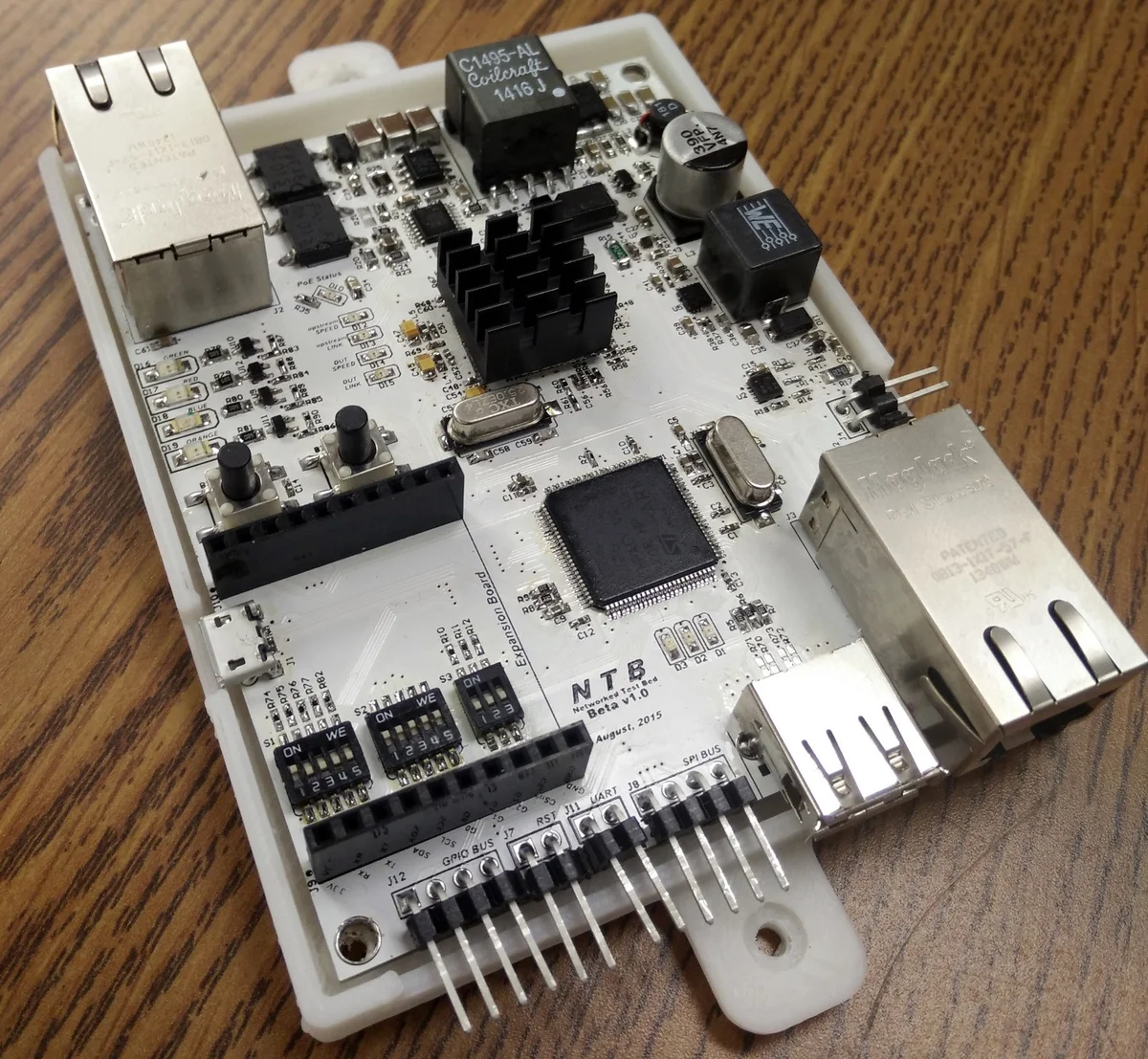
To demonstrate practical relevance, the ET‑DKF is applied to distributed simultaneous localization and time synchronization (D‑SLATS). The experimental platform consists of custom ultra‑wideband (UWB) radios, a mobile quadrotor, and several stationary nodes forming an ad‑hoc network. Compared with the standard diffusion Kalman filter, the event‑triggered version reduces the number of transmitted messages by 86 % while incurring only a 16 % degradation in positioning error and a similar modest increase in time‑synchronization error. These results confirm that substantial energy savings can be achieved without severely compromising performance.
The authors also release MATLAB code and the full dataset, facilitating reproducibility and encouraging further research. In the conclusion they highlight the novelty of extending event‑triggering to both measurement and diffusion steps without sharing covariance information, and suggest future extensions such as adaptive threshold selection, multi‑leader architectures, and handling of non‑Gaussian noise. Overall, the paper delivers a rigorously analyzed, experimentally validated solution that makes distributed Kalman filtering viable for battery‑powered, bandwidth‑limited cyber‑physical systems.
Comments & Academic Discussion
Loading comments...
Leave a Comment