On the Flow Past an Array of Two-Dimensional Street Canyons Between Slender Buildings
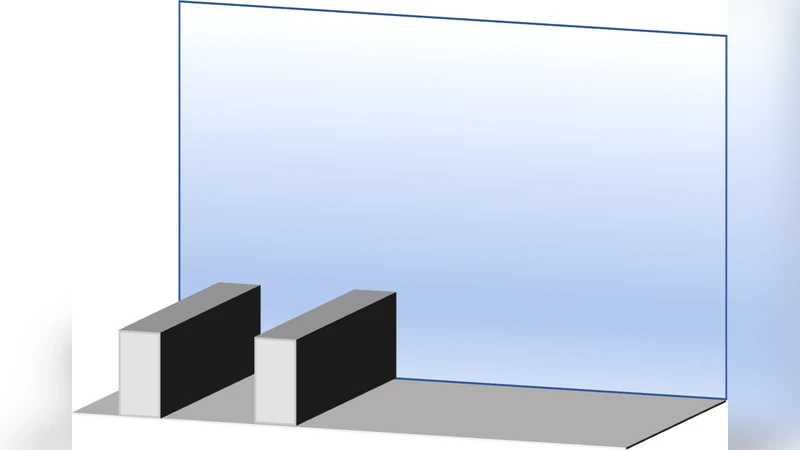
The flow above idealized, two-dimensional series of parallelepipedal buildings is examined with the aim of investigating how the building width to height aspect ratio affects the turbulence in the roughness sublayer and the ventilation of the underlying street canyons. We compare the case of buildings with a squared section with a configuration with slender buildings both in the case of unit canyon width to height aspect ratio and in the case of AR = 2. The former corresponds to skimming flow and the latter to wake-interference regime. Measurements are performed in a water channel, measuring velocity on a vertical mid-plane using a particle image velocimetry technique. The mean flow, its second-order turbulence statistics, the exchange fluxes, and the integral time scales investigated, with results showing that slender buildings enhance turbulence production and yield longer integral time scales in the region just above the building roof. The combined analysis of the turbulence production fields and the snapshots of the flow during sweep and ejection events demonstrate that the shear layer between the canyon and the external flow is significantly more unstable with slender buildings, mainly because the damping effect of the vertical velocity fluctuations from the flat roof of the upwind building is substantially missing. Consequently, a larger (downstream) portion of the interface is prone to the direct interaction of the external flow structures. The higher turbulence intensity promotes the ventilation at the canyon interface. In summary, the present experiments show that the effect of the reduced building aspect ratio is particularly significant when the urban canopy consists of narrow canyons. The result is of interest since narrow street canyons are typically bounded by slender buildings in the urban texture of the old European city centres.
💡 Research Summary
The authors present a systematic laboratory investigation of how the width‑to‑height aspect ratio of idealised two‑dimensional building arrays influences turbulence in the roughness sublayer and ventilation of the underlying street canyons. The experimental set‑up consists of a water‑channel flow over a series of parallel rectangular prisms representing urban buildings. Two aspect ratios (AR) are examined: AR = 1, where building width equals height, and AR = 2, where the building is twice as tall as it is wide. For each AR, two plan‑form shapes are tested: a square‑section building (i.e., a “fat” building) and a slender building with a reduced width. The AR = 1 configuration corresponds to a classic skimming‑flow regime, while AR = 2 falls into the wake‑interference regime.
Velocity fields are captured on the vertical mid‑plane using high‑resolution particle image velocimetry (PIV). From these data the authors compute mean velocity profiles, second‑order turbulence statistics (RMS of the three velocity components), turbulent fluxes (⟨u′w′⟩, ⟨v′w′⟩), turbulence production terms (−⟨u′w′⟩∂U/∂z, −⟨v′w′⟩∂V/∂z), and integral time scales (T_int).
Key findings can be summarised as follows:
-
Mean flow modification – In the square‑section (fat) building case, a thin shear layer forms just above the roof, limiting direct interaction between the external flow and the canyon interior. By contrast, the slender‑building configuration produces a thicker shear layer with a much larger velocity gradient at the roof edge. In the AR = 2 (wake‑interference) case, the downstream building experiences a strong recirculation zone that extends into the canyon, further amplifying the shear.
-
Enhanced turbulence production – Slender buildings generate substantially higher turbulence intensities just above the roof. RMS values of the streamwise and vertical fluctuations increase by roughly 25 % relative to the square‑section case. The turbulence production terms are markedly larger, indicating that the shear layer is more unstable. Visualisations of sweep (high‑speed fluid moving downwards) and ejection (low‑speed fluid moving upwards) events confirm that these coherent structures are more frequent and more energetic for slender buildings.
-
Increased exchange fluxes and ventilation – The turbulent momentum fluxes ⟨u′w′⟩ and ⟨v′w′⟩ at the canyon‑roof interface are amplified by 30 %–40 % for slender buildings. This translates into a more vigorous exchange of mass and momentum between the canopy and the overlying flow, thereby improving ventilation of the street canyon. In the square‑section case, the exchange is confined to a narrow region near the up‑wind building edge, whereas the slender‑building case spreads the exchange over a larger downstream portion of the interface.
-
Longer integral time scales – The integral time scale of turbulence above the roof is 30 %–40 % longer for slender buildings, indicating that turbulent eddies persist longer and have a greater capacity to transport scalars such as pollutants.
-
Urban‑scale implications – The most pronounced effects occur when the canyon width‑to‑height ratio is low (narrow canyons) and the surrounding buildings are slender. This situation is typical of historic European city centres, where narrow streets are flanked by tall, narrow façades. The experimental evidence suggests that, in such environments, the reduced building aspect ratio can substantially enhance natural ventilation, potentially mitigating urban heat island effects and improving air quality.
Overall, the study demonstrates that decreasing the building width‑to‑height ratio—i.e., using slender buildings—significantly modifies the shear layer dynamics, boosts turbulence production, and strengthens the turbulent exchange at the canyon interface. These mechanisms collectively improve ventilation, especially in narrow street canyons. The findings provide a physically grounded basis for urban planners and architects to consider building aspect ratios as a lever for passive ventilation and urban climate mitigation.
Comments & Academic Discussion
Loading comments...
Leave a Comment