Transition states in protein folding
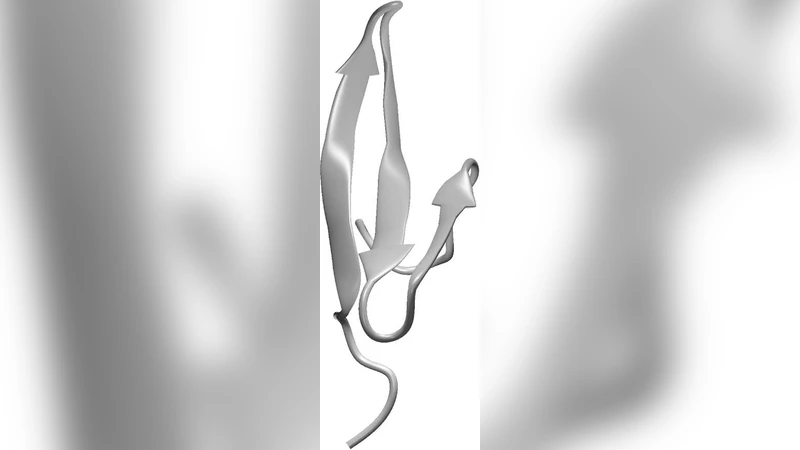
The folding dynamics of small single-domain proteins is a current focus of simulations and experiments. Many of these proteins are ’two-state folders’, i.e. proteins that fold rather directly from the denatured state to the native state, without populating metastable intermediate states. A central question is how to characterize the instable, partially folded conformations of two-state proteins, in particular the rate-limiting transition-state conformations between the denatured and the native state. These partially folded conformations are short-lived and cannot be observed directly in experiments. However, experimental data from detailed mutational analyses of the folding dynamics provide indirect access to transition states. The interpretation of these data, in particular the reconstruction of transition-state conformations, requires simulation and modeling. The traditional interpretation of the mutational data aims to reconstruct the degree of structure formation of individual residues in the transition state, while a novel interpretation aims at degrees of structure formation of cooperative substructures such as alpha-helices and beta-hairpins. By splitting up mutation-induced free energy changes into secondary and tertiary structural components, the novel interpretation resolves some of the inconsistencies of the traditional interpretation.
💡 Research Summary
The paper addresses a central problem in protein folding research: how to characterize the fleeting, partially folded conformations that constitute the rate‑limiting transition state (TS) of two‑state folding proteins. Two‑state proteins, which fold directly from a denatured ensemble to the native structure without populating detectable intermediates, present a unique challenge because the TS cannot be observed directly by any experimental technique. The authors review the traditional φ‑value analysis, which interprets mutational effects on folding kinetics as a single scalar (the φ‑value) that reflects the degree of native‑like structure at each residue in the TS. While φ‑values have been invaluable, they suffer from ambiguities: experimental error, the conflation of secondary‑structure formation with tertiary contacts, and the inability to capture cooperative formation of larger structural elements.
To overcome these limitations, the authors propose a novel framework that decomposes the mutation‑induced free‑energy change (ΔΔG) into two additive components: a secondary‑structure contribution (ΔΔG_secondary) that quantifies how much of an α‑helix, β‑strand, or β‑hairpin is formed in the TS, and a tertiary‑structure contribution (ΔΔG_tertiary) that measures the loss or gain of inter‑residue contacts. Each component yields its own φ‑value (φ_secondary, φ_tertiary), and the overall φ is reconstructed as a weighted average. This decomposition allows the researcher to ask, for example, “Is the β‑hairpin already native‑like while the adjacent helix is only partially formed?” rather than receiving a single ambiguous number.
The authors validate the approach on several small, single‑domain proteins that are well‑characterized two‑state folders (e.g., CI2, protein L, WW domains). They perform extensive molecular‑dynamics simulations to generate ensembles of transition‑path conformations, from which they compute the probability that each substructure is formed. These probabilities are then compared with experimentally derived φ‑values. The comparison shows that the traditional φ‑values often average over distinct structural contributions, whereas the split φ_secondary and φ_tertiary values align closely with the simulation‑derived formation probabilities. In particular, mutations that are non‑conservative (e.g., replacing a buried hydrophobic residue with alanine) show large ΔΔG_tertiary components, indicating that the loss of tertiary contacts dominates the kinetic effect, a nuance that the classic analysis cannot resolve.
Key insights emerging from the study include:
-
Cooperative Substructure Formation – The TS is not a random collection of isolated native‑like residues; rather, cooperative units such as helices or hairpins tend to fold together. The new analysis quantifies the degree of cooperativity by assigning high φ_secondary values to whole secondary‑structure elements that are already formed.
-
Resolution of Inconsistencies – Some residues display φ‑values that appear contradictory when examined in isolation (e.g., a residue with φ≈0.5 in a region that is otherwise highly structured). By separating secondary and tertiary contributions, the authors show that the apparent inconsistency arises from a strong tertiary penalty that offsets a high secondary‑structure formation.
-
Predictive Power for Mutational Effects – Because ΔΔG_tertiary directly reflects changes in the contact network, the method can predict how a given mutation will alter the folding barrier, which is valuable for protein engineering and for understanding disease‑related missense mutations.
-
Integration of Experiment and Simulation – The framework provides a rigorous bridge between kinetic mutagenesis data and atomistic simulations, enabling a feedback loop where simulations guide the design of informative mutations, and experimental φ‑values refine the simulation force fields.
In conclusion, the paper presents a robust, quantitatively grounded reinterpretation of mutational data that moves beyond residue‑by‑residue φ‑values to a substructure‑centric view of the transition state. By partitioning free‑energy changes into secondary‑ and tertiary‑structure components, the authors resolve longstanding ambiguities, reveal the cooperative nature of early folding events, and lay the groundwork for more accurate predictive models of protein folding kinetics. This methodological advance is poised to impact not only fundamental folding studies but also practical applications such as rational protein design, stability engineering, and the mechanistic analysis of pathogenic mutations.
Comments & Academic Discussion
Loading comments...
Leave a Comment