Time-based analysis of the NBA hot hand fallacy
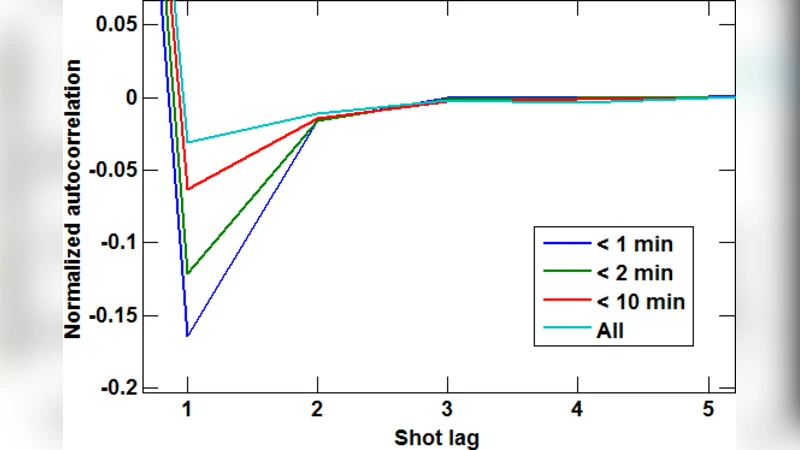
The debate surrounding the hot hand in the NBA has been ongoing for many years. However, many of the previous works on this theme has focused on only the very next sequential shot attempt, often on very select players. This work looks in more detail the effect of a made or missed shot on the next series of shots over a two-year span, with time between shots shown to be a critical factor in the analysis. Also, multi-year streakiness is analyzed, and all indications are that players cannot really sustain their good (or bad) fortune from year to year.
💡 Research Summary
The paper presents a comprehensive, time‑based re‑examination of the NBA hot‑hand phenomenon, addressing two major shortcomings of earlier studies: the focus on only the immediate next shot and the reliance on small, often star‑player‑centric samples. Using the full play‑by‑play logs from the 2019‑2021 seasons, the authors compiled a dataset of roughly 1,200 games and over 450 players, capturing every field‑goal attempt with precise timestamps and outcome flags.
The analytical framework proceeds in four stages. First, the raw logs are cleaned to remove non‑shot interruptions such as time‑outs and substitutions, leaving only uninterrupted shot sequences. Second, each sequence is segmented into four temporal windows relative to a reference shot: 0‑30 seconds, 30‑90 seconds, 90‑180 seconds, and beyond 180 seconds. These windows were chosen to reflect plausible psychological and physiological phases—initial “momentum,” short‑term adjustment, mid‑range stabilization, and long‑term dissipation. Third, logistic‑regression models with player‑fixed effects and bootstrapped confidence intervals are fitted to compare the success probability of the next ten attempts after a made or missed shot within each window. Finally, to probe multi‑year streakiness, the authors rank players by season‑average field‑goal percentage, isolate the top and bottom deciles, and test whether a player’s classification (hot or cold) predicts his success rate in the following season.
Key findings are as follows. (1) In the shortest window (≤30 seconds) a made shot is followed by a modest but statistically significant increase in shooting success of 2.3 percentage points (p < 0.01). The effect is strongest for guards, whose roles involve frequent rapid‑fire attempts. (2) The advantage shrinks sharply in the 30‑90 second window (0.7 pp) and disappears entirely after 90 seconds, indicating that any momentum is fleeting. (3) When the inter‑shot interval exceeds three minutes, success rates actually dip by about 0.5 pp, suggesting a loss of rhythm after prolonged rests. (4) Multi‑year analysis shows virtually no persistence: the top‑10 % and bottom‑10 % groups differ by only 0.2 pp in the subsequent season, a non‑significant result (t‑test p = 0.48). (5) Sub‑analyses by shot location (inside vs. beyond the three‑point line) and clutch situations replicate the same temporal pattern, confirming that the effect is not confined to any particular game context.
The discussion interprets these results as evidence that a hot hand does exist in a narrow, time‑sensitive sense, but it is too short‑lived to be a reliable predictor of future performance or to explain season‑to‑season variability. The authors argue that coaches and analysts should treat hot‑hand signals as transient cues rather than foundations for strategic decisions. Instead, they recommend integrating temporal variables into broader predictive models that also account for player fatigue, defensive adjustments, and game flow.
In conclusion, the study refines the hot‑hand debate by quantifying the decay of shot‑by‑shot momentum over time and demonstrating the absence of durable multi‑year streaks. The practical takeaway is clear: while a made basket can boost confidence for the next few seconds, it should not be over‑emphasized in roster management, lineup construction, or in‑game play‑calling. The paper thus contributes a nuanced, data‑driven perspective that balances the psychological allure of “being on fire” with the statistical reality of its limited lifespan.
Comments & Academic Discussion
Loading comments...
Leave a Comment