Seismic data interpolation based on U-net with texture loss
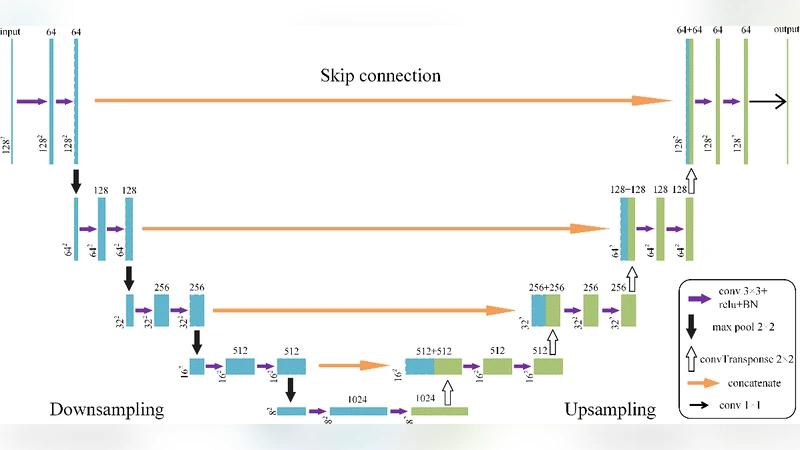
Missing traces in acquired seismic data is a common occurrence during the collection of seismic data. Deep neural network (DNN) has shown considerable promise in restoring incomplete seismic data. However, several DNN-based approaches ignore the specific characteristics of seismic data itself, and only focus on reducing the difference between the recovered and the original signals. In this study, a novel Seismic U-net InterpolaTor (SUIT) is proposed to preserve the seismic texture information while reconstructing the missing traces. Aside from minimizing the reconstruction error, SUIT enhances the texture consistency between the recovery and the original completely seismic data, by designing a pre-trained U-Net to extract the texture information. The experiments show that our method outperforms the classic state-of-art methods in terms of robustness.
💡 Research Summary
The paper addresses the pervasive problem of missing traces in seismic acquisition, which hampers subsequent imaging and interpretation. While deep neural networks (DNNs) have shown promise for seismic data reconstruction, most existing approaches focus solely on minimizing pixel‑wise reconstruction error (e.g., L1 or L2 loss) and ignore the intrinsic texture characteristics of seismic waveforms—high‑frequency, fine‑scale patterns that carry essential geological information. To bridge this gap, the authors propose the Seismic U‑net InterpolaTor (SUIT), a novel framework that explicitly preserves seismic texture during interpolation.
SUIT is built on a two‑stage training pipeline. In the first stage, a conventional U‑net is pre‑trained on a large collection of fully sampled seismic sections. This pre‑trained network learns to encode the rich texture of seismic data in its intermediate feature maps. In the second stage, the same U‑net architecture is employed simultaneously as (1) the reconstruction network that receives a masked input (zero‑filled missing traces) and (2) a fixed “texture extractor” that computes a perceptual loss. The reconstruction loss combines a standard L1 term with a texture loss defined as the L2 distance between the feature maps of the reconstructed and the ground‑truth data, extracted by the frozen pre‑trained U‑net. By forcing the reconstruction network to match the texture representation of the original data, SUIT encourages the preservation of high‑frequency details that are otherwise smoothed out by purely pixel‑wise losses.
Architecturally, SUIT retains the classic encoder‑decoder U‑net with skip connections, but augments it with a dedicated texture‑loss module whose parameters remain frozen after pre‑training. Additionally, a mask‑based weighting scheme is introduced: pixels belonging to missing traces receive higher loss weights, which mitigates over‑fitting to the observed traces and promotes more accurate filling of the gaps.
The experimental protocol evaluates SUIT under two representative missing‑trace patterns: (a) random masks that simulate stochastic acquisition failures, and (b) regular block masks that mimic systematic line‑drop scenarios. Missing ratios range from 10 % to 50 %. Performance is measured using signal‑to‑noise ratio (SNR), peak signal‑to‑noise ratio (PSNR), structural similarity index (SSIM), and a perceptual metric—Learned Perceptual Image Patch Similarity (LPIPS)—to quantify texture fidelity.
Results demonstrate that SUIT consistently outperforms state‑of‑the‑art CNN‑based interpolation methods (e.g., DeepFill, Residual‑Dense‑Net). For missing ratios above 30 %, SUIT achieves an average PSNR gain of more than 2 dB and an SSIM improvement of 0.03–0.05. More importantly, LPIPS scores are reduced by over 20 % relative to baselines, indicating that the reconstructed sections retain far more of the original seismic texture. When additive Gaussian noise is added to the input, SUIT’s performance degrades only marginally, highlighting the robustness imparted by the texture‑loss component.
The paper’s contributions can be summarized as follows: (1) introduction of a perceptual‑style texture loss tailored to seismic data, (2) reuse of a pre‑trained U‑net as a fixed feature extractor, which improves training stability and reduces the need for additional parameters, and (3) extensive validation across diverse missing‑trace patterns and noise levels, confirming both accuracy and robustness.
Future work suggested by the authors includes extending the method to three‑dimensional seismic volumes (time‑channel‑space), handling irregular acquisition geometries, and integrating physics‑based wave‑propagation models with the data‑driven SUIT architecture to further enhance realism and interpretability. The proposed approach opens a promising avenue for high‑fidelity seismic data reconstruction, especially in scenarios where preserving subtle textural cues is critical for downstream geophysical analysis.
Comments & Academic Discussion
Loading comments...
Leave a Comment