Video-based compression for plenoptic point clouds
The plenoptic point cloud that has multiple colors from various directions, is a more complete representation than the general point cloud that usually has only one color. It is more realistic but also brings a larger volume of data that needs to be …
Authors: Li Li, Zhu Li, Shan Liu
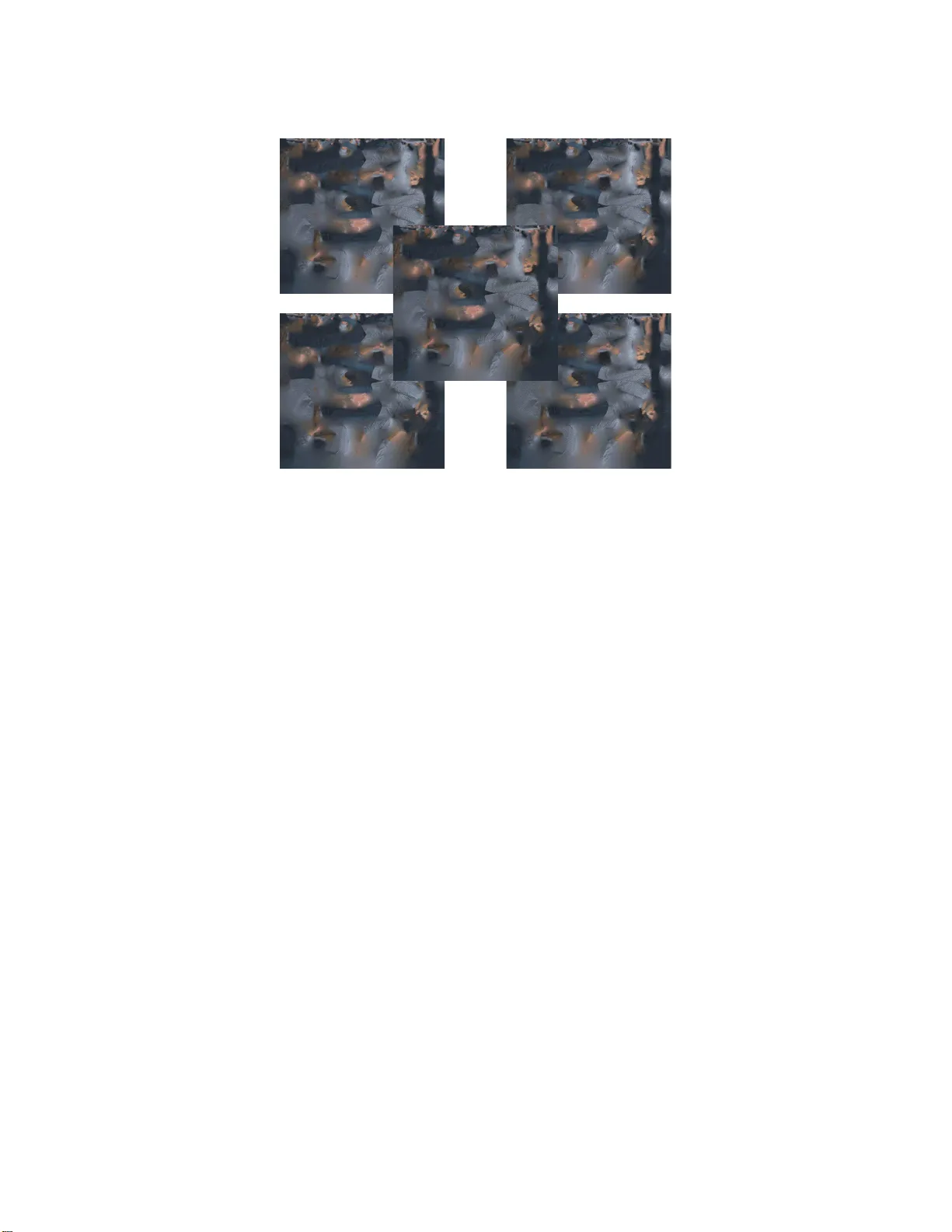
Video-based compression for plenoptic p oin t clouds Li Li ∗ , Zhu Li ∗ , Shan Liu ⋆ , and Houqiang Li † ∗ Univ ersity o f Missouri-KC ⋆ T encen t America † USTC 5100 Roc kh ill Road 661 Bry ant St No. 443 Huangshan Road Kansas Cit y , MO 64111, USA P alo Alto, CA 94301, US A Hefei, 230027, C hina lil1,lizh u@umkc.e d u shanl@tencen t.com lihq@ustc.edu.cn Abstract The p lenoptic p oin t cloud that h as m u ltiple colors from v arious dir ections, is a more com- plete represent ation th an the general p oin t cloud that usually has only one color. It is more realistic but a lso brings a larger volume of data that needs to b e compressed efficientl y . The sta te-of-the-art metho d to compress the plenoptic p oint cloud is an extension of the region-based adaptiv e h ierarc hical transform (RAHT). As far as we can see, in addition to RAHT, the video-based p oint cloud compression (V-PCC ) is also an efficien t p oin t cloud compression metho d. Ho we ver, to the b est of our knowledge , no works hav e used a video- based solution to compress th e plenoptic p oint cloud y et. In this pap er, we fir s t extend the V-PCC to sup p ort the p lenoptic p oin t cloud compr ession by generating multiple attribute videos. Th en based on the observ ation that these vid eos from m u ltiple views ha ve v ery high correlations, we pr op ose encod ing them u sing multiview high efficiency video co d ing. W e further prop ose a blo c k-based paddin g metho d that u nifies the u no ccupied attribute pixels from different views to reduce their bit cost. The pr op osed algorithms are implement ed in the V-PCC reference soft wa r e. Th e exp eriment al results sho w th at the prop osed algo - rithms can b ring s ignifican t b itrate savings compared w ith the state-of-the-art metho d for plenoptic p oin t cloud compression. 1 In tro duction A p oin t cloud is a set of 3D p oints that can b e used t o represen t a 3D surface. Eac h p oin t is usually asso ciated with one single color along with other attributes. The p oint cloud can b e used in man y applications in v olving the rendering of 3 D ob jects [1] suc h as 3D immersiv e telepresence and 6 degree-of -freedom virtual realit y . Ho we ver, the p oin t cloud with only one single color is esse ntially not realistic since the colors of the real w orld ob jects ma y v ary significantly along with the c hange of the view angles. Recen tly , 8i captures sev eral plenoptic p oint clouds with differen t colors in different view angles [2]. These p o in t clouds are more realistic but also muc h larger, and thus bring more burdens to the communic a tion and storage. F or example, the 12 or 13 attributes in the plenoptic p oin t clouds make the attributes of the p oint clouds 12 o r 13 times larg er. Therefore, there is an urgen t need to compress them efficien tly . T o transmit or store a p oin t cloud, w e need to signal t he geometry or p osition information as w ell as attribute information. Octree and its v a r ia tions [3] are typical metho ds to compress t he geometry . Some metho ds also in tro duce plane [4] or mapping [5] to compress the g eometry more efficien tly . Ho wev er, a s the main difference b etw een the plenoptic p oin t cloud and the general p o int cloud with o ne single color is the attribute information, w e put more fo cuses on the review of the po in t cloud attribute compression in this pap er. The first g r o up of w orks fo cusing on attribute compress io n is the t ransform-based metho d. Zhang et al. [6] first prop osed using Graph F o urier T ransform (GFT) to ex- ploit the correlations among the already enco ded geometry info r mation. How ev er, de- riving the transform k ernel requires solving a ve ry complex eigenproblem. Therefore, Queiroz and Chou [7] introduced the Region-based Adaptive Hierarc hical T ransform (RAHT) to obta in a b etter balance b etw een the complexit y and the p erfo rmance. This w ork is adopted in the geometry-based p oint cloud compression (G-PCC) stan- dard [8] and is the recommended algo rithm to compress the static dense p oint cloud. The second gr o up of works fo cusing on attribute compression is the mapping-based metho d. As a represen tativ e, Mammou et al. [8] prop osed a video-ba sed p oin t cloud compression (V- PCC) metho d to pro ject the p oint cloud to 2- D videos patc h by patc h and compress them using hig h efficiency video co ding (HEV C) [9 ]. Due to the high efficiency of the 2- D video compression standard, the co ding efficiency of the V-PCC is v ery high. It is shown in one recen t work that the static dense p oint cloud can be also co ded efficien tly using V-PCC [10]. The third group of works is the prediction- based method mainly designed fo r the sparse p oin t cloud attribute. Mammou et al. [8] in tro duced a lay er-based prediction to predict t he p oin t cloud from its coar se rep- resen tation. Kathariy a et al. [11] prop osed using kd-tr ee to divide the p o in t cloud in to v ario us la yers to further improv e the compression p erformance. In terms of t he compression of the plenoptic po in t cloud at tributes, Sandri et al. [12] extended the RAHT to furt her exploit the correlations among multiple attributes. They used Discrete Cosine T ransform (DCT) or Kah unen-Lo ev e T ransform (KL T) to utilize the correlations a mong v arious attributes. T he RAHT-DCT or RAHT-KL T brings m uch b etter compression p erfo r ma nce compared with the RAHT. How ev er, us- ing only t r a nsform is unable to fully utilize the correlations among v arious views. W e b eliev e a video-based solution with prediction, transform, quan tization, and en trop y co ding is a b etter w ay to exploit the correlatio ns. Therefore, in this pap er, we first extend the V-PCC to supp ort the plenoptic p oin t cloud by generating m ultiple attribute videos. Under the curren t V-PCC fr a mew ork, these attribute videos are enco ded indep endently . Then based on the observ at ion that these videos from multiple views hav e very high correlations, w e prop ose encoding them using multiv iew high efficiency video co ding (MV-HEV C) [13] to utilize the cor- relations among v arious attributes. F urthermore, as the uno ccupied pixels will ha v e no influences on the reconstructed qualit y of the plenoptic po in t cloud, w e prop ose a blo c k-ba sed g roup padding metho d that unifies the uno ccupied a ttribute pixels from differen t views to reduce their bit cost. The rest o f this pap er is org a nized as follows. In Section 2, w e will intro duce the prop osed video-based plenoptic p oint cloud compression framew ork. The blo c k- based padding for the uno ccupied pixels will b e intro duced in Section 3. Section 4 will describ e the experimen tal results in detail. Section 5 will conclude the pap er. View index 2 View index 5 View index 8 View index 11 View index 0 Figure 1: Some examples of the pro jected views from the p lenoptic p oin t cloud “Lo ot”. These views are from the view index 0, 2, 5, 8, and 11, resp ectiv ely . 2 Video-based plenoptic p oin t cloud compression framework Under the V- PCC, a p oin t cloud is first divided in to sev eral patc hes b y pro jecting to its b ounding b o x. Each patch is generated by clustering the neighboring p o in ts with similar normals together. In this w a y , the generated patc hes will hav e few er v ariances in the geometry and attributes, and thus can be co ded efficien tly . After the patches are generated, the V- PCC uses a simple pac king strategy to organize the patc hes in to frames. The patc h lo cation is determined through an exhaustiv e searc h in a raster scan order. In additio n, patc h rotation is supp orted to allow more flexible packing to improv e compression p erformance. Aft er packing, the padding pro cess aims to fill an y empt y space b et w een the patc hes to mak e the generated frames more suitable for video co ding. The geometry and attribute videos will finally go thro ugh HEVC to generate the bitstream. Note that eac h static p oint cloud is pro jected to tw o frames to handle the o cclusion so as to ac hieve a b etter balance b et w een the n umber o f pro jected p oin ts and the compression p erfo rmance. T o use the V-PCC to compress the plenoptic p oin t cloud, w e follow the ab o ve pro cesses to g enerate the geometry and attribute videos. The ma in difference is that there will b e multiple attribute videos generated since each p oint has m ultiple attributes. The m ultiple attribute videos will then b e enco ded using HEV C to b e compressed efficien tly . Under this metho d, w e will sho w the p erformance of the video- based plenoptic p oin t cloud compression fra mew ork without using t he correlations among v arious views. Fig. 1 g iv es a ty pical example of the attribute frames generated from multiple view 2 0 3 0 4 0 5 0 6 0 7 0 8 0 9 0 10 0 11 0 12 0 0 0 1 0 View direction Temporal direction 2 1 3 1 4 1 5 1 6 1 7 1 8 1 9 1 10 1 11 1 12 1 0 1 1 1 Figure 2: Prop osed MV-HEV C-based plenoptic p oin t cloud compression fr amew ork. T able 1: QP s ettings of v arious views and frames hierarc hical lev el frame 0 frame 1 0 QP I +1 QP I +4 1 QP I +2 QP I +5 2 QP I +3 QP I +6 3 QP I +4 QP I +7 angles. W e can see that the g enerated attribute frames from v arious view ang les are v ery similar despite some pixel differences. Therefore, w e prop ose using MV-HEV C to exploit the correlations from m ultiple views to compress them more efficien tly . As we ha ve men tioned, eac h static p oint cloud can b e pro jected to t wo frames. T herefore, using a 13-view static p oin t cloud as an example, w e utilize the m ultiview enco ding structure as shown in Fig. 2. In Fig. 2, the indices from 0 to 12 indicate the index of eac h view . The sub-indices 0 and 1 are t he tw o frames pro jected f r om one p oint cloud. The arro ws among v arious squares in the figure indicate the reference r elat io nships among v arious views and frames. As sho wn in Fig. 2, w e orga nize a hierarchical co ding structure with g roup of pictures (GOP) size 8 in the view direction. In this w ay , all the views are divided in to 4 hierarchic a l leve ls. All the views are co ded as B fra mes using bi-directional prediction to exploit the correlations among v arious views. In the tempora l do main, as the tw o frames pro jected from one static p oin t cloud has m uch larger correlations than that among v arious views, t he second frame will only reference the first frame with the same view index under the prop osed reference structure. In addition to the reference relatio nship, the quantization para meters (QPs) of v arious views and frames ar e also imp orta n t to the compression p erformance. Cur- ren tly , we set the QPs according to the follo wing basic rule. Fir st, the higher the Figure 3: T ypical example of a pro jected view with the uno ccup ied pixels set as blac k from the plenoptic p oint cloud “Lo ot”. hierarc hical lev el is, the larger the QP is. In the view direction, w e set the QPs of eac h lev el as QP I + lev el + 1. Second, the second non- reference fr a me uses a higher QP than the first reference frame. In the temp oral direction, w e set the QP of QP 1 as QP 0 + 3. The detailed setting of the QPs of all the frames and views a r e show n in T a- ble 1. In this work, the prop osed co ding structure is used to compress static plenoptic p oin t clouds. This co ding structure can b e easily applied to dynamic plenoptic p oint clouds by propaga t ing the co ding structure in the temp oral domain. 3 Blo c k-based group padding for uno ccupied pixels In the V-PCC, the uno ccupied pixels are padded in a wa y that they will cost bits as few as p ossible since they ha ve no influences on the reconstructed p oin t cloud qualit y . Similarly , in the plenoptic p oin t cloud, w e also need to minimize the bit cost of the uno ccupied pixels. In the V-PCC, sev eral padding metho ds [14] [15] a r e prop osed to minimize the bit cost across the temp ora l direction. Esp ecially , all the uno ccupied pixels are padded using the av erage of the first frame and the second frame to minimize the bit cost of the uno ccupied pixels in the second frame. How ev er, since the pixel differences b et ween the pixels in v arious views are muc h larger tha n that in the temp oral domain, this metho d is unable to deal with the uno ccupied pixels in the view directions. Fig. 3 sho ws a t ypical example o f the pro jected attribute with the uno ccupied pixels set as blac k. W e can see tha t some large con tinuous uno ccupied pixels exist as indicated b y the green rectangle. Those pixels can b e padded pro p erly to increase the correlations across v arious views to sa ve some bits. Ho wev er, there are also some isolated uno ccupied pixels as indicated by the small red square. If we pad those pixels across the view direction, the blo c ks including b oth o ccupied and uno ccupied pixels will b ecome less con t in uous in the spatial domain. This will mak e those blo c ks unable to find the corresp o nding blo c k in the reference frame a nd lead to a serious bitrate T able 2: Characteristics of the p lenoptic p oint clouds Name P oints Cameras Geometry bit depth A tt r ibute bit depth Bo xer 3496011 13 12 8 Lo ot 3021497 13 12 8 Soldier 4007891 13 12 8 Thaidancer 3130215 13 12 8 Longdress 3100469 12 12 8 Redandblac k 2776067 12 12 8 increase. Therefore, in this pap er, we prop ose a blo c k-ba sed g roup padding fo r uno ccupied pixels. F o r eac h pixel, w e first find a blo c k with the pixel as the cen ter pixel. Only when a ll the pixels in the blo c k are uno ccupied, w e will pad the pixel. In this w ay , the isolated uno ccupied pixels will not b e padded and w e can still k eep the spatial con tinuit y for the blo c ks including b o t h o ccupied and uno ccupied pixels. F or the large con tinuous uno ccupied pixels, w e can reduce the prediction residue so as to compress them more efficien tly . In o ur curren t implemen tation, t he blo ck size is set to 4. After the detection of the con t in uous uno ccupied pixels, we will pad them using the a verage v alue of all the views in b oth frame 0 and fra me 1, f i,j = N − 1 X k =0 ( f 0 ,k + f 1 ,k ) / (2 N ) , i ∈ 0 , 1 , j ∈ 0 , 1 , ..., N − 1 , (1) where N is n umber of views for the plenoptic p oint cloud, i is the frame index, j is the view index, and f i,j is the v alue to b e padded for eac h p osition. After the ab ov e padding sc heme, in b oth the view direction and temp ora l direction, we can obtain a v ery go o d prediction for the contin uous uno ccupied pixels, and th us the bitrate of the uno ccupied pixels can b e significantly reduced. 4 Exp erimen tal r esults The pro p osed algorithms are implemen ted in the V-PCC reference softw are TMC-7.0 [16] to compare with the state-of-the-a r t metho d RAHT-KL T [12]. W e test all the static plenoptic p oin t clouds defined in [2]. The c haracteristics o f all the tested static plenoptic p o in t clouds are show n in T able 2. When v erifying t he p erformance of the prop osed extension of V-PCC, w e follo w the V-PCC common test condition [17] to test v arious bitr ates fro m r1 (low bitrate) to r5 (high bitrat e). W e use the all intra configuration to generate the results since w e hav e only o ne static plenoptic p oint cloud to b e compressed. When v erifying the p erformance of t he prop o sed m ultiview- based solution, we use the same QP settings for the I frames as the V-PCC-based metho d. The QPs of the other views and frames a re set according to T able 1. Note that the av erage p eak signal to noise ratio (PSNR) of a ll the views is used as the qualit y metric for the attribute. T able 3: Comparison b et ween the prop osed m ulti-view solution and RAHT-KL T [12] Name RAHT-KL T Multiview-video-solution Luma Color bits Luma PSNR Color bits Luma PSNR BD-rate Bo x 534974 36.58 594616 37.31 –17.9% 1102667 38.51 1142904 39.32 2506516 41.02 2138928 41.37 4144398 42.77 4185776 43.38 7624336 45.08 8265288 45.24 Lo ot 505156 36.47 521152 37.64 –42.4% 1036214 38.57 1005832 40.32 2252251 41.16 1830264 42.71 3576056 42.91 3332400 44.80 6210303 45.21 6014088 46.54 Soldier 1193244 34.15 966392 35.33 –33.9% 2361547 36.60 1867736 37.85 3514995 38.24 3410864 40.14 7227865 41.62 6146560 42.11 11973133 44.15 11044128 43.82 Thaidancer 434126 28.46 435816 31.26 –50.4% 1719585 33.63 823680 34.07 3058823 36.63 1515208 36.66 4292715 38.52 2842568 38.87 5599587 40.03 5450840 40.91 Longdress 519371 28.01 870840 32.98 –40.6% 2081546 33.01 1517448 35.36 3770193 36.19 2575000 37.38 5245716 38.36 4538608 39.15 9214122 42.67 8311904 41.20 Redandblac k 224020 31.82 625080 36.48 –28.3% 903125 35.90 1098712 38.71 1736193 38.43 1886296 40.69 3313844 41.59 3416560 42.43 6081458 45.08 6384704 44.08 Av erage – – – – –37.0% W e first giv e a p erformance comparison b et ween our multiview solution with the prop osed padding metho d and the state- of-the-art metho d RAHT-KL T as sho wn in T able 3. W e can see that the prop osed m ultiview solution can lead to 3 7 . 0% p erfor- mance improv emen ts on av erage compared with the stat e- of-the-art method. Through b etter utilizing the correlations among v arious views , the prop osed metho d leads to a b etter compression p erfo r ma nce compared with RAHT-KL T. The exp erimen tal re- sults demonstrate t he effectiv eness of the prop osed algorithm. In addition, w e can T able 4: Comparison b etw een the p r op osed multi- v iew solution and the V-PC C solution without using the correlations among m ultiple views Name BD-AttrRate BD-T otalRate Luma Cb Cr D1 D2 Luma Cb Cr Bo xer –62.4% –67.1% –69.2% –22.9% –22.6% –23.1% –26.7% –26.0% Lo ot –67.1% –71.8% –73.3% –24.5% –24.3% –22.7% –27.5% –27.4% Soldier –73.6% –75.1% –76.1% –33.3% –33.0% –32.6% –37.0% –37.2% Thaidancer –82.6% –83.5% –83.2% –78.5% –78.6% –77.3% –79.1% –78.8% Longdress –86.5% –86.6% –86.5% –51.2% –50.9% –53.0% – 55.6% –5 5 .4% Redandblac k –78.1% –7 8.1% –79 .1% –36.3% –3 6 .0% –36.1 % –41.1% –38.9% Av erage –74.4% –76.8% –77.7% – 4 2.1% –41.9% – 41.7% –4 5 .2% –45.0 % see that the prop o sed a lgorithm alw ays leads to a b etter R-D p erformance in low bitrate case. While in high bitrate case, the pro p osed algorithm brings similar o r ev en slightly w orse R-D p erformance. After a n ov erall comparison with the state-of - the-art metho d, w e then verify t he p erformance of the prop osed metho ds one b y one. T a ble 4 giv es a comparison b et wee n the prop osed multi-view solution compared with the V-PCC solution without using the correlations among multiple views. W e can see tha t throug h utilizing the correla- tions among v arious views, w e can ac hieve 74 . 4%, 76 . 8%, and 77 . 7% bitrate sa vings on av erage for the Luma, Cb, and Cr comp onents with resp ect to the attribute bits, resp ectiv ely . Although t he pro p osed algorithm mainly targets the attribute compres- sion, the prop osed algorithm can reduce the t o tal bits so a s to bring p erfo rmance impro ve ments for b oth the g eometry a nd attribute with resp ect to the total bits. W e can achie ve 42 . 1% and 41 . 9% bitrate sa vings o n a v erage for the geometry un- der D1 a nd D2 measuremen ts. In addition, w e can ac hiev e an av erage of 41 . 7%, 45 . 2%, and 45 . 0% p erformance impro v emen ts for the Luma, Cb, and Cr comp onen ts, resp ectiv ely . The exp erimen ta l results demonstrate that the prop osed m ultiview com- pression framework can substan tially exploit the corr elat io ns among v arious views so as to improv e the p erfor mance. T able 5 sho ws the p erformance of the prop osed blo c k-padding metho d under our prop osed m ultiview-based solution. W e can see that the prop osed blo ck-based padding can pro vide an av erage of 13 . 3%, 11 . 5%, and 13 . 6% p erformance improv e- men ts with resp ect to only the attribute bits for the Luma, Cb, and Cr comp onen ts, resp ectiv ely . With respect to the total bitrate, the prop o sed alg orithm can bring o v er 3 . 6% bitrate sa vings on a ve r a ge f o r b oth the geometry and att r ibute. The exp eri- men tal results demonstrate that through making the uno ccupied pixel with higher correlations, the blo c k-based padding algor ithm can bring obvious bitrate sa ving for the uno ccupied pixels so as to improv e the ov erall p erfo rmance. Tw o examples of the R- D curv es for all the ab o ve -men tioned metho ds are sho wn in Fig. 4 . W e can see that the V-PCC without considering the view correlations sho ws the w orst p erformance. The m ultiview-video solution shows a b etter p erfor- T able 5: P erformance comparison b et wee n the prop osed multi-vie w solution with and with- out the blo c k-based padding metho d Name BD-AttrRate BD-T otalRate Luma Cb Cr D1 D2 Luma Cb Cr Bo xer –18.7% –1 3.8% –16 .5% –3.1% –3.0 % –3.2% –2.5% –2.6% Lo ot –16.5% –1 5.7% –15 .0% –2.5% –2.4 % –2.6% –2.3% –2.1% Soldier –9.6% –7.7% –7.4% –1.6% –1.5% – 1 .8% – 1.6% –1.4 % Thaidancer –13.3% –1 2.2% –12 .6% –9.6% –9.6 % –9.6% –9.2% –9.5% Longdress –8.1% –8.2% –8.2% –1.4% –1.4% – 1 .7% – 1.8% –1.8 % Redandblac k –13.6% –1 3.6% –14 .1% –2.3% –2.3 % –2.3% –2.7% –2.5% Av erage –13.3% –11.5% –13.6% – 3 .6% –3.6% –3.8 % –3 .5% –3.5% 35 37 39 41 43 45 47 49 0.0 0.5 1.0 1.5 2.0 2.5 Y-PSNR (dB) Color bits x 10000000 Loot Multiview-group Multiview RAHT-KLT V-PCC 25 27 29 31 33 35 37 39 41 43 45 0 1 2 3 4 5 6 Y -PSNR(dB) Color bits x 10000000 Longdress Multiview-group Multiview RAHT-KLT V-PCC (a) Lo ot R-D curve (b) Longdr ess R-D curv e Figure 4: Some examples of the R-D curves mance than the R AHT-KL T, especially in the low bitrate case. The prop o sed group padding alg o rithm can further improv e the p erformance b y sa ving the bit cost of the uno ccupied pixels. 5 Conclusion and future work In this pap er, w e prop ose video-based plenoptic p oin t cloud compression metho ds to compress the plenoptic p oin t cloud more efficien tly . W e first extend the curren t video-based p oint cloud compression (V-PCC) to supp ort the plenoptic p oint cloud b y generating m ultiple attribute videos. Then based on the observ atio n that these videos from m ult iple views hav e v ery high correlatio ns, w e prop ose enco ding them using m ultiview high efficiency video co ding. W e f ur t her prop ose a blo c k-based g r o up padding metho d that unifies the uno ccupied attribute pixels from differen t views to reduce their bit cost. The prop osed algo rithms are implemen ted in the V-PCC refer- ence softw are. The exp erimen tal results sho w that the prop osed algor it hms can bring significan t bitrate savin g s compared with the state-of-the-a rt metho d fo r plenoptic p oin t cloud compression. 6 References [1] C. T ulv an, R. Mekuria, Z . L i, and S. L aserr e, “Use Cases for Poin t Cloud Compression (PCC),” ISO /IEC JTC1/SC29/W G11 MPEG2015 /N1633 1, Genev a, CH, Jun. 2016. [2] M. Krivo k u´ ca, P . A. Chou, and P . Savill, “8i V o x elized Sur face Light Field (8iVSLF) Dataset, ” ISO/IEC JTC 1/SC29/W G11 m42914, Lj ubljana, Jul. 2018. [3] R. S c hn ab el and R. Klein, “Octree-based P oint-Clo u d Comp ression,” IEE E VGTC c onfer enc e on Point-Base d Gr ap hics , v ol. 6, pp. 111–120, 2006. [4] B. Kathariy a, L. Li, Z. Li, J. Alv arez, and J. Chen , “Scalable P oint Cloud Geometry Co ding w ith Binary T ree Em b edded Qu adtree,” in 2018 IEEE Internationa l Confer- enc e on Multime dia and Exp o (ICME) , 2018, pp. 1–6. [5] L. He, W. Zh u, and Y. Xu, “Best-Effo r t Pro jection based A ttribu te Comp ression for 3D Poin t Cloud,” in 2017 23r d A si a- P acific Confer enc e on Communic ations (AP CC) , Dec. 2017, pp . 1–6. [6] C. Zhang, D. Flor ˆ encio, and C. Lo op, “Poin t Cloud A ttribu te Compression with Graph T ransform,” in 2014 IEEE International Confer enc e on Image Pr o c essing (ICIP) , Oct. 2014, pp . 2066 –2070. [7] R. L. de Queiroz and P . A. Chou , “Compr ession of 3D Poi nt Clouds Using a Region- Adaptiv e Hierarc hical T r ansform,” IEEE T r ansactions on Image Pr o c essing , v ol. 25, no. 8, p p. 3947– 3956, Aug. 2016. [8] S. Sch w arz, M. Pr eda, V. Baroncini, M. Bud aga vi, P . Cesar, P . A. Chou, R. A. Cohen, M. Kr ivoku ´ ca, S. Lasserre, Z. Li, J. Llac h, K. Mammou, R. Mekuria, O. Nak agami, E. S iahaan, A. T abatabai, A. M. T ourapis, and V. Z akharc henko, “Emerging MPEG Standards for Poi n t C loud Comp ression,” IEEE Journal on Emer g ing and Sele cte d T opics in Cir cuits and Systems , v ol. 9, n o. 1, pp. 133–148, Mar. 2019. [9] G. J. Sulliv an, J. Ohm , W. Han, and T. Wiegand, “Ov erview of the High Efficiency Video Co d ing (HEV C) S tandard,” IEEE T r ansactions on Cir cuits and Systems for Vide o T e chnolo gy , vol. 22, no. 12, pp. 1649–166 8, Dec. 2012. [10] M. Gonalv es, L. Agostini, D. Pa lomino, M. Porto, and G. C orr ea, “Enco ding efficiency and computational cost assessment of state-of-the-art p oin t cloud co decs,” in 2019 IEEE International Confer enc e on Image Pr o c essing (ICIP) , S ep. 201 9, p p. 3726 –3730. [11] B. Kathariy a, V. Zakharc hen k o, Z. Li, and J. C hen, “Lev el-of-Detail Generation Using Binary-T r ee for Lifting S c heme in LiDAR Poin t Cloud A ttributes Co ding,” in 2019 Data Compr ession Confer enc e (DCC) , Marc h 2019, pp. 580–580. [12] G. Sand ri, R. L. de Queiroz, and P . A. Chou, “Compression of plenoptic p oin t clouds,” IEEE T r ansactions on Image Pr o c essing , v ol. 28, no. 3, pp. 1419–14 27, Marc h 2019. [13] M. M. Hann uksela, Y. Y an, X. Huang, and H. Li, “Overview of the multiview h igh efficiency video co ding (m v-h ev c) standard,” in 2015 IEEE International Confer enc e on Image Pr o c essing (ICIP) , Sep. 2015, pp. 2154 –2158. [14] K. Mammou, J. Kim, V. V alent in , F. Robinet, A. T ourapis, and Y. Su, “CE2.12 Re- lated: S parse Linear Mod el Based Padding Metho d for the T exture Im ages,” Do cument ISO/IEC JTC1/SC29/W G11 m44837, Macau, CH, Oct. 2018 . [15] S. Rhyu, Y. Oh, and J. W o o, “PCC CE2.13 Rep ort on T exture and Depth P add ing Improv emen t,” Do cument ISO /IEC J TC1/SC29/W G11 m43667, Ljubljan a, SI, Jul. 2018. [16] Video-based p oin t cloud compression test mo del, TMC-7.0. [On line]. Av ailable: h ttp://mp egx.in t- evr y .fr /soft wa r e/MPEG/PCC/mp eg- p cc- dmetric.git [17] 3DG, “Common test conditions for p oin t cloud compression,” Docum en t ISO/IEC JTC1/SC29/W G11 N18665 , Gothen bur g, SE, Jul. 2019.
Original Paper
Loading high-quality paper...
Comments & Academic Discussion
Loading comments...
Leave a Comment