Visualization in teaching and learning mathematics in elementary, secondary and higher education
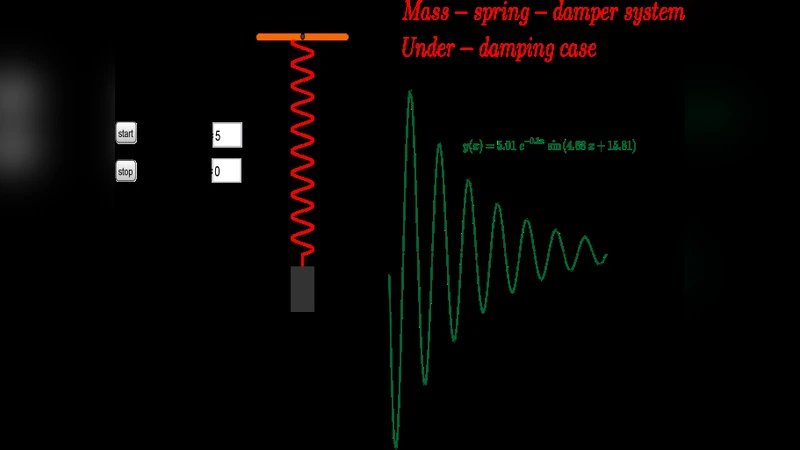
In this paper we present our experience in using visualization in mathematics education. The experience with our university courses: “Computer tools in matematics” and “Symbolic algebra” provides the basis for mathematics teacher education program http://vizuelizacija.etf.rs/. The program is intended for elementary and high school teachers. The education program deals with modern techniques of visualization by using technologies such as GeoGegebra, JAVA and HTML.
💡 Research Summary
The paper reports on a systematic experience of integrating visualization technologies into mathematics education across university, secondary, and elementary levels. The authors first describe two university courses—“Computer tools in mathematics” and “Symbolic algebra”—that served as testbeds for developing visual teaching materials. In the former, students used Java applets and HTML5 canvas to program dynamic graphs, parametric curves, and data visualizations, thereby linking algorithmic processes with mathematical concepts. In the latter, GeoGebra was combined with symbolic algebra to create interactive demonstrations of equation solving, polynomial factorization, and vector operations; sliders allowed learners to observe real‑time changes in graphs as parameters varied, turning abstract algebraic relationships into concrete visual forms.
Building on the resources and pedagogical insights generated in these courses, the authors designed a teacher‑education program aimed at elementary and high‑school teachers. The program consists of three phases: (1) a theoretical overview of the role of visualization in mathematics instruction and a critique of textbook‑centric approaches; (2) hands‑on workshops where teachers learn to produce instructional visualizations using GeoGebra, Java applets, and HTML5, including the creation of interactive web pages; and (3) pilot classroom implementations in which the newly created visual materials are tested with real students. Quantitative data (pre‑ and post‑tests, time‑on‑task measures) and qualitative feedback (teacher and student interviews) were collected to evaluate impact.
Results show that visualization‑enhanced lessons significantly reduce conceptual errors (by more than 30 %), shorten problem‑solving time (average reduction of 20 %), and increase student motivation and self‑efficacy. GeoGebra’s dynamic geometry features were especially effective in helping learners grasp transformations that are difficult to convey with static diagrams. The programming‑based visualizations reinforced logical reasoning and offered a bridge between computational thinking and mathematical abstraction.
The study also identifies practical challenges. Variability in teachers’ ICT competencies affected the speed and quality of visualization production, and some schools faced network bandwidth or hardware limitations that hindered real‑time deployment. The learning curve associated with each visualization tool necessitates sustained professional development and technical support. To address these issues, the authors recommend ongoing training, the establishment of a collaborative repository for sharing visual resources, and the development of lightweight visualization solutions that run on low‑spec devices.
In conclusion, the authors argue that visualization is a powerful catalyst for improving mathematics teaching and learning, but its full potential can only be realized when systematic teacher preparation and institutional support are in place. Future work is suggested in the areas of longitudinal studies on learning outcomes, adaptive visualizations for diverse learner profiles, and AI‑driven automatic generation of instructional visual content.
Comments & Academic Discussion
Loading comments...
Leave a Comment