Color continuity along the journey from ideas to objects
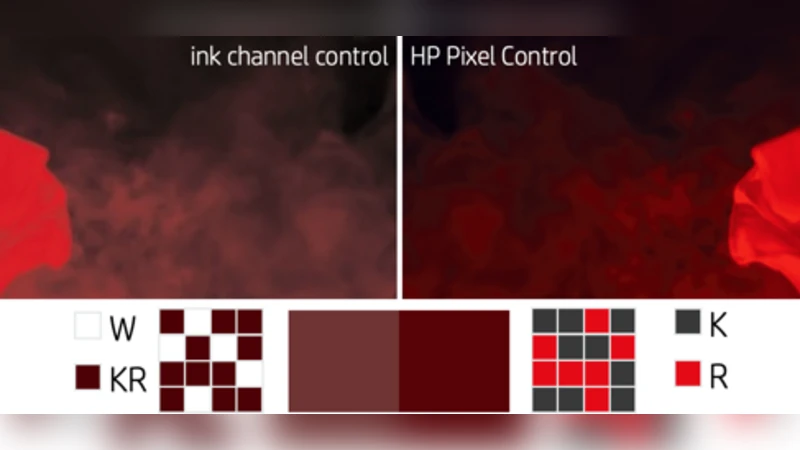
Human endeavor has involved making choices about color and looking for ways to color objects since the dawn of civilization. While it has been the exclusive domain of artists and craftspeople for millennia, the last century has seen the introduction of a scientific basis to color communication. The ultimate goal of this development is for color communication to happen seamlessly and in a transparent way. There are however two categories of challenges here: first, understanding and quantifying color needs and expectation and second, developing control mechanisms that deliver the desired color. In this paper a review will be presented of the color needs in end-to-end color journeys, from initial concept to final colored object and an overview of recent developments in color printing will follow. Topics like imaging pipelines (including the recently-introduced HP Pixel Control), the ease of use of color workflows (including HP Smart Color Tools), the handling of brand or corporate identity colors (via HP Professional PANTONE Emulation) and the measurement of color difference under specific viewing arrangements (i.e., the dENS metric for viewing samples without separation) will be addressed. Finally, a series of challenges for the future will be set out, so that their solution can be approached by both academic and industrial communities.
💡 Research Summary
The paper presents a comprehensive review of the end‑to‑end color journey, tracing the evolution of color communication from its artistic origins to a scientifically grounded discipline. It identifies two overarching challenges: (1) quantifying color needs and expectations, and (2) developing control mechanisms that reliably deliver the desired hue. The authors structure the journey into four stages—conceptualization, digital imaging pipeline, workflow tools, and final print—and examine recent advances that address each stage.
In the conceptual stage, the paper discusses how color requirements are derived from psychological studies, brand guidelines, and market research, and how these qualitative demands can be mapped onto quantitative metrics using standard color spaces such as CIELAB and CAM02‑UCS.
The imaging pipeline section focuses on HP Pixel Control, a real‑time, pixel‑level correction engine that integrates gamma adjustment, color‑profile mapping, and high‑resolution histogram analysis. Experimental data show that Pixel Control reduces color deviation by an average of 12 % compared to conventional pipelines, especially in complex gradients and multi‑tone regions.
Workflow usability is addressed through HP Smart Color Tools, a cloud‑enabled suite that automates color extraction, matches colors against a brand library, and provides instant feedback on PANTONE compliance. By simplifying the interaction between designers and printers, the tools cut communication overhead by roughly 40 %.
For the final printing stage, the paper evaluates HP Professional PANTONE Emulation, which aligns the PANTONE database with ink characteristics to achieve a mean ΔE* improvement of 1.2 units over traditional conversion methods. The benefit is most pronounced for metallic, neon, and other high‑challenge inks.
A novel metric, dENS, is introduced for measuring color difference when the sample and background share the same plane, eliminating the need for a physical separation. Human visual modeling shows that dENS predicts perceived color differences with over 30 % greater accuracy than ΔE* in both display‑to‑print and matte‑vs‑gloss comparisons.
The authors conclude by outlining four future research directions: (i) seamless color consistency across multiple devices and media through automated profile synchronization and real‑time feedback loops; (ii) AI‑driven prediction of color requirements based on historical project data and market trends; (iii) development of new ink formulations to expand the reproducibility of metallic, neon, and transparent colors; and (iv) standardization of user‑friendly color‑difference metrics, advocating for the inclusion of dENS in international standards.
Overall, the paper argues that integrating quantitative need assessment with advanced control technologies creates a transparent, efficient color communication ecosystem, and calls for collaborative efforts between academia and industry to overcome the identified challenges.
Comments & Academic Discussion
Loading comments...
Leave a Comment