Willing Buyer, Willing Seller: Personal Data Trade as a Service
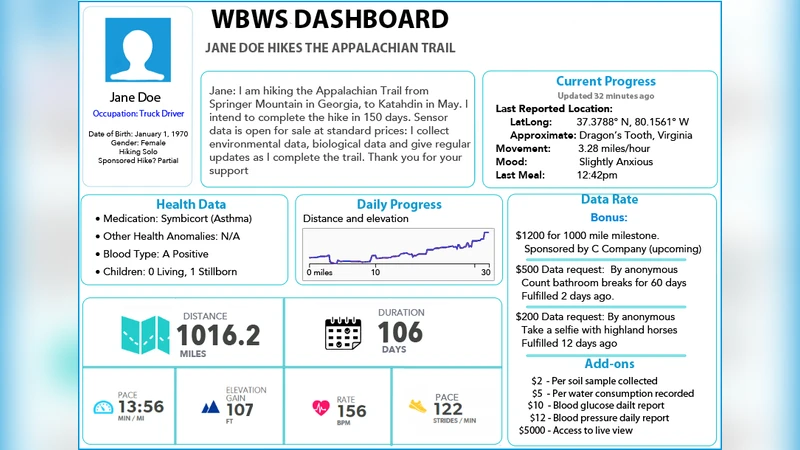
There is an increased sensitivity by people about how companies collect information about them, and how this information is packaged, used and sold. This perceived lack of control is highlighted by the helplessness of users of various platforms in managing or halting what data is collected from/about them. In a future where users have wrested control of their data and have the autonomy to decide what information is collected, how it is used and most importantly, how much it is worth, a new market emerges. This design fiction considers possible steps prescient companies would take to meet these demands, such as providing third-party subscription platforms offering personal data trade as a service. These services would provide a means for transparent transactions that preserve an owner’s control over their data; allowing them to individually make decisions about what data they avail for sale, and the amount of compensation they would accept in trade.
💡 Research Summary
The paper presents a design‑fiction vision of a “Personal Data Trade as a Service” (DTaaS) platform that flips the current surveillance‑capitalism model on its head. Instead of users surrendering their data for “free” services, the platform empowers individuals to own, price, and sell their personal data directly to interested buyers. The authors ground the concept in a concrete domain—long‑distance hikers—because hikers continuously generate rich streams of environmental, situational, and biometric data that are valuable to a variety of commercial stakeholders (mapping services, weather providers, health‑monitoring firms, gear manufacturers, etc.).
The proposed system consists of three tightly coupled layers: (1) Data acquisition, using lightweight, plug‑and‑play sensors (GPS, heart‑rate, accelerometer, etc.) that stream data via a SIM‑enabled hub to a cloud backend; (2) Marketplace & pricing, where data is packaged into hierarchical “tiers” (basic, intermediate, premium) and priced according to two dimensions: intimacy (how personally identifying the data is) and acquisition difficulty (sensor cost, energy consumption, rarity). Sellers can set their own price or accept a market‑derived recommendation; third‑party sponsors may add milestone‑based bounties (e.g., a bonus for completing a 500‑mile segment). (3) Consumer interface, a transparent dashboard that shows buyers exactly what they are purchasing, provides real‑time visualizations, and allows custom alerts for events such as sudden altitude changes or physiological spikes. The platform takes a flat 15 % fee to cover collection, storage, and processing; the remainder is split between sellers (who also earn equipment‑rental fees) and buyers (who pay subscription fees for each tier).
Key technical contributions include an automatic data‑integrity pipeline (periodic uploads, auto‑resume after connectivity loss), a standardized API for heterogeneous sensors, and a real‑time notification system that pushes event‑driven alerts to buyers. The pricing model attempts to reflect data quality by linking price to “intimacy” and “difficulty,” a novel departure from the usual volume‑oriented pricing in data markets.
From an ethical standpoint, the design foregrounds data sovereignty: users can view, modify, or revoke any transaction through the dashboard, and all terms of use are displayed in plain language. However, the paper stops short of detailing concrete privacy‑preserving mechanisms such as differential privacy, anonymization, or compliance with regulations like GDPR/CCPA. It also does not address the potential for new forms of inequality—where individuals who can generate high‑value data (e.g., elite athletes, frequent hikers) accrue cash while those unable to produce such data may be left behind.
The business model is fleshed out with multiple revenue streams: equipment rentals, subscription fees, and a modest platform commission. Early‑adopter incentives (seller milestone bounties, buyer fee rebates) are proposed to bootstrap the market. Yet, the authors acknowledge practical challenges: sensor cost, battery life, and limited network coverage in remote trails could hinder adoption. Moreover, data quality assurance (e.g., GPS error handling, detection of spoofed biometric signals) and anti‑fraud safeguards are not fully specified, leaving buyers exposed to potential low‑quality or manipulated data.
In summary, the paper offers a comprehensive speculative blueprint for turning personal data into a tradable commodity via a subscription‑based service. It convincingly maps out system architecture, pricing heuristics, and user‑experience flows, while also highlighting the social desire for greater control over personal information. The work would benefit from deeper treatment of legal compliance, robust privacy‑enhancing technologies, and empirical validation of the pricing model. Future research should explore quantitative valuation of different data types, cost‑benefit analyses of sensor deployment, and pilot studies to assess user willingness to sell personal data for cash versus retaining privacy.
Comments & Academic Discussion
Loading comments...
Leave a Comment