Generalized Metric Repair on Graphs
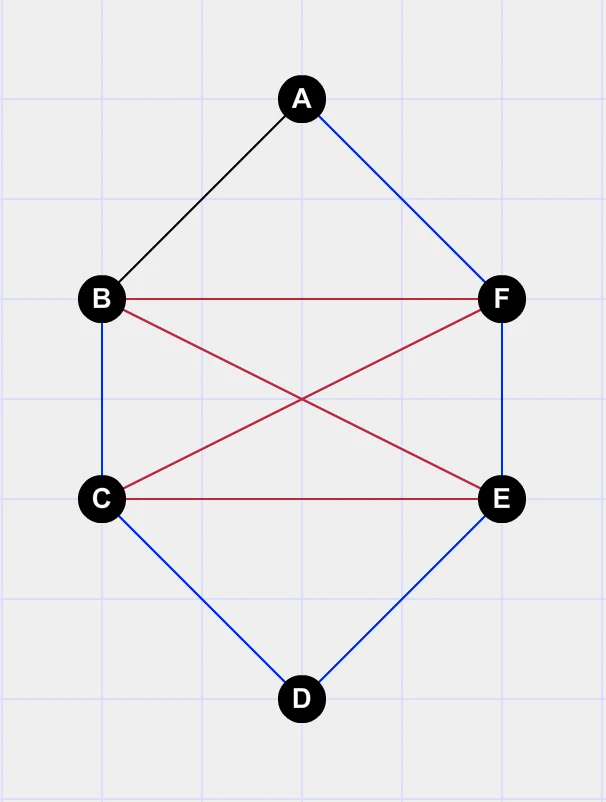
Many modern data analysis algorithms either assume or are considerably more efficient if the distances between the data points satisfy a metric. These algorithms include metric learning, clustering, and dimension reduction. As real data sets are noisy, distances often fail to satisfy a metric. For this reason, Gilbert and Jain and Fan et al. introduced the closely related sparse metric repair and metric violation distance problems. The goal of these problems is to repair as few distances as possible to ensure they satisfy a metric. Three variants were considered, one admitting a polynomial time algorithm. The other variants were shown to be APX-hard, and an $O(OPT^{1/3})$-approximation was given, where $OPT$ is the optimal solution size. In this paper, we generalize these problems to no longer consider all distances between the data points. That is, we consider a weighted graph $G$ with corrupted weights $w$, and our goal is to find the smallest number of weight modifications so that the resulting weighted graph distances satisfy a metric. This is a natural generalization and is more flexible as it takes into account different relationships among the data points. As in previous work, we distinguish among the types of repairs permitted and focus on the increase only and general versions. We demonstrate the inherent combinatorial structure of the problem, and give an approximation-preserving reduction from MULTICUT. Conversely, we show that for any fixed constant $\varsigma$, for the large class of $\varsigma$-chordal graphs, the problems are fixed parameter tractable. Call a cycle broken if it contains an edge whose weight is larger than the sum of all its other edges, and call the amount of this difference its deficit. We present approximation algorithms, one which depends on the maximum number of edges in a broken cycle, and one which depends on the number of distinct deficit values.
💡 Research Summary
The paper introduces Graph Metric Repair (GMR), a natural generalization of the previously studied Sparse Metric Repair (SMR) and Metric Violation Distance (MVD) problems from complete distance matrices to arbitrary weighted undirected graphs. Given a graph G = (V, E, w) with positive edge weights and a set Ω ⊆ ℝ of allowed modifications, the goal is to change the smallest possible number of edge weights (by adding values from Ω) so that the resulting shortest‑path distances satisfy the triangle inequality, i.e., the graph becomes metric. Three variants are considered: decrease‑only (Ω = ℝ_{\le0}), increase‑only (Ω = ℝ_{\ge0}), and the unrestricted (Ω = ℝ) version.
The authors first show that the decrease‑only variant can be solved in O(n³) time using an All‑Pairs‑Shortest‑Path (APSP) approach, extending earlier results for complete graphs. However, as soon as any positive value is allowed in Ω, the problem becomes APX‑complete. This hardness is established via approximation‑preserving reductions from two well‑studied cut problems:
-
MULTICUT – a reduction shows that any instance of MULTICUT can be transformed into a GMR instance such that a small set of edge modifications in GMR corresponds to a small multicut. Since MULTICUT is hard to approximate within any constant factor under the Unique Games Conjecture (UGC), the same hardness transfers to GMR (both increase‑only and unrestricted versions).
-
Length‑Bounded Cut (LB‑CUT) – a reduction maps LB‑CUT instances with bound L to GMR instances where all edge weights are at most L. Known Ω(√L) hardness for LB‑CUT therefore yields Ω(√L) hardness for GMR on instances with maximum edge weight L.
A central structural insight is the notion of a broken cycle: a cycle C where some edge h has weight larger than the sum of the remaining edges. The difference w(h) – Σ_{e∈C\h} w(e) is called the deficit of C. The authors prove that any feasible solution must “cover” every broken cycle, i.e., contain at least one edge from each broken cycle. Two types of covers are defined:
- Regular cover – any edge from each broken cycle; corresponds to feasible solutions for the unrestricted variant.
- Light cover – an edge that is not the heavy edge of its broken cycle; corresponds to feasible solutions for the increase‑only variant.
Theorem 3.2 establishes that a set S ⊆ E is a regular (resp. light) cover iff S is the support of some solution to the unrestricted (resp. increase‑only) GMR problem. Moreover, given a candidate support S, the authors present an O(n³) algorithm (Verifier) that decides whether a valid weight assignment exists and constructs it when possible. This generalizes earlier results for complete graphs and replaces linear‑programming approaches with purely combinatorial checks.
Based on the structural characterization, the paper offers two approximation algorithms whose performance depends on natural parameters of the input:
-
L‑approximation – let L+1 be the maximum number of edges in any broken cycle (i.e., the number of light edges). Selecting a light edge from each broken cycle yields a solution whose size is at most L times the optimum. This matches the Ω(√L) hardness from LB‑CUT.
-
O(κ log n)‑approximation – let κ be the number of distinct positive deficit values among all broken cycles. By grouping cycles with the same deficit and applying a greedy set‑cover style algorithm, the authors obtain a solution of size O(κ log n)·OPT. When κ is small, this algorithm can be far superior to the L‑approximation, even for graphs with long broken cycles.
Both approximations are “tight” in the sense that they mirror the known hardness bounds: the L‑approximation aligns with LB‑CUT hardness, while the O(κ log n)‑approximation is comparable to the best known O(log n) approximation for MULTICUT.
A significant contribution is an FPT algorithm for the class of σ‑chordal graphs, i.e., graphs whose largest chordless cycle has length at most σ (σ is a fixed constant). Parameterizing by the optimal solution size k, the algorithm runs in time f(k, σ)·poly(n) and enumerates all possible supports using a bounded‑depth branching process that respects the regular/light cover conditions. This resolves an open question from earlier work on complete graphs and extends it to a much broader family, including many graph complements and sparse structures.
Finally, the authors revisit the complete‑graph case and provide refined analyses of previously known algorithms, improving constant factors and clarifying the dependence on OPT.
In summary, the paper delivers a comprehensive treatment of metric repair on general graphs: it establishes exact polynomial‑time solvability for the decrease‑only case, proves strong APX‑hardness for the other variants via reductions from MULTICUT and LB‑CUT, characterizes feasible supports through broken‑cycle covers, supplies two parameter‑dependent approximation algorithms, and presents a fixed‑parameter tractable algorithm for σ‑chordal graphs. These results deepen the theoretical understanding of metric repair, connect it to classic cut problems, and open avenues for future work on dynamic settings, stochastic weights, and broader graph families.
Comments & Academic Discussion
Loading comments...
Leave a Comment