Anisotropies in the diffuse gamma-ray background measured by the Fermi LAT
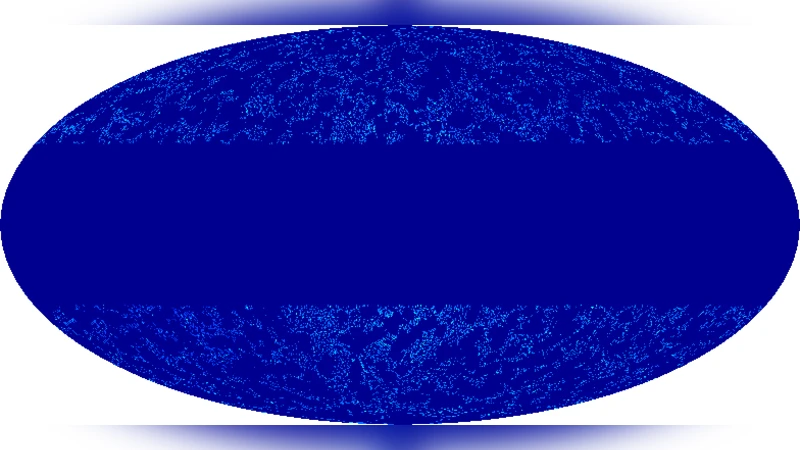
The contribution of unresolved sources to the diffuse gamma-ray background could induce anisotropies in this emission on small angular scales. We analyze the angular power spectrum of the diffuse emission measured by the Fermi LAT at Galactic latitudes |b| > 30 deg in four energy bins spanning 1 to 50 GeV. At multipoles \ell \ge 155, corresponding to angular scales \lesssim 2 deg, angular power above the photon noise level is detected at >99.99% CL in the 1-2 GeV, 2-5 GeV, and 5-10 GeV energy bins, and at >99% CL at 10-50 GeV. Within each energy bin the measured angular power takes approximately the same value at all multipoles \ell \ge 155, suggesting that it originates from the contribution of one or more unclustered source populations. The amplitude of the angular power normalized to the mean intensity in each energy bin is consistent with a constant value at all energies, C_P/^2 = 9.05 +/- 0.84 x 10^{-6} sr, while the energy dependence of C_P is consistent with the anisotropy arising from one or more source populations with power-law photon spectra with spectral index \Gamma_s = 2.40 +/- 0.07. We discuss the implications of the measured angular power for gamma-ray source populations that may provide a contribution to the diffuse gamma-ray background.
💡 Research Summary
The paper presents a detailed measurement of anisotropies in the diffuse gamma‑ray background (DGRB) using 22 months of data from the Fermi Large Area Telescope (LAT). The authors restrict the analysis to high Galactic latitudes (|b| > 30°) to minimize contamination from the Milky Way and mask all catalogued point sources, thereby isolating the truly diffuse component. The sky is divided into four logarithmically spaced energy bins—1–2 GeV, 2–5 GeV, 5–10 GeV, and 10–50 GeV—and each bin is projected onto a HEALPix map (Nside = 512).
Angular power spectra Cℓ are computed using the pseudo‑Cℓ method, which corrects for the mask’s mode‑coupling. The focus is on multipoles ℓ ≥ 155 (angular scales ≲ 2°), where the photon‑noise (Poisson) contribution can be reliably subtracted. In the three lower‑energy bins the measured power exceeds the noise level with a statistical significance greater than 99.99 %, while in the highest bin the significance remains above 99 %. Importantly, the spectra are flat across the examined ℓ range, indicating a Poisson‑like, scale‑independent component rather than a clustered signal.
To compare across energies, the authors normalize the Poisson term C_P by the square of the mean intensity ⟨I⟩ in each bin. The resulting dimensionless quantity C_P/⟨I⟩² is remarkably constant, (9.05 ± 0.84) × 10⁻⁶ sr, suggesting that the same population (or populations with similar spectral shapes) dominates the anisotropy throughout the 1–50 GeV range. By fitting the energy dependence of C_P to a power law I(E) ∝ E⁻Γ_s, they obtain a spectral index Γ_s = 2.40 ± 0.07, consistent with the overall DGRB spectrum (Γ ≈ 2.3).
The flat angular power and the common spectral index point to one or more unclustered source classes as the origin of the anisotropy. The authors discuss three leading candidates: (i) unresolved blazars, (ii) star‑forming galaxies (SFGs), and (iii) annihilation or decay of dark‑matter particles. Model predictions for blazars typically yield a Poisson power about a factor of two lower than observed, implying that blazars alone cannot account for the measured signal. SFG models also fall short, primarily because their individual fluxes are low and their collective contribution to C_P is modest. Dark‑matter scenarios can produce a sizable C_P for certain particle masses and annihilation cross‑sections, but the required parameters are tightly constrained by the observed flatness of the spectrum and by independent limits from other gamma‑ray searches.
Consequently, the authors argue that a mixed population—dominated by blazars but supplemented by additional faint, possibly new, source classes—is needed to reconcile theory with observation. The measured anisotropy thus provides a powerful, complementary probe of the unresolved gamma‑ray sky, offering constraints that are independent of intensity‑based studies.
Finally, the paper outlines future directions: longer LAT exposure will reduce statistical uncertainties and extend the multipole range; improved source masking and better Galactic foreground models will lower systematic errors; and cross‑correlations with multi‑wavelength surveys (radio, X‑ray, optical) could identify the specific contributors. Moreover, the anisotropy measurement can be combined with upcoming facilities such as the Cherenkov Telescope Array (CTA) to tighten limits on dark‑matter models. In summary, this work delivers the first high‑confidence detection of small‑scale anisotropy in the DGRB, establishes its Poisson nature, and opens a new avenue for dissecting the composition of the gamma‑ray background.