Upgrade of the VERITAS Cherenkov Telescope Array
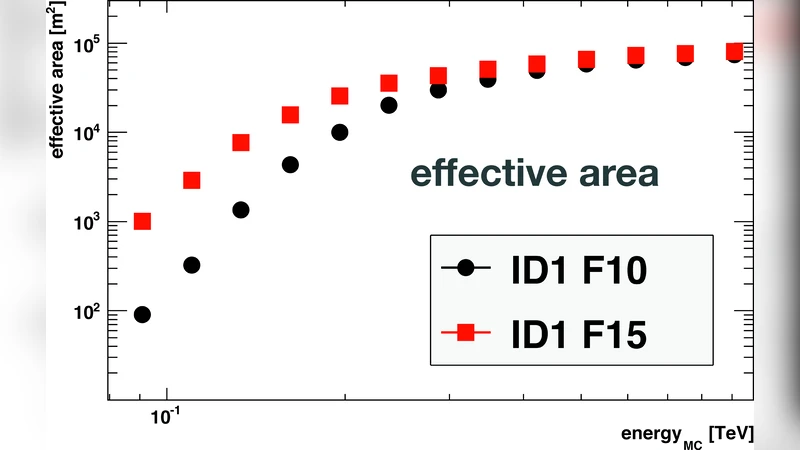
The VERITAS Cherenkov telescope array has been fully operational since Fall 2007 and has fulfilled or outperformed its design specifications. We are preparing an upgrade program with the goal to lower the energy threshold and improve the sensitivity of VERITAS at all accessible energies. In the baseline program of the upgrade we will relocate one of the four telescopes, replace the photo-sensors by higher efficiency photomultipliers and install a new trigger system. In the enhanced program of the upgrade we foresee, in addition, the construction of a fifth telescope and installation of an active mirror alignment system.
💡 Research Summary
The VERITAS (Very Energetic Radiation Imaging Telescope Array System) observatory has been operating since the fall of 2007 with a four‑telescope array of 12‑meter Davies‑Cotton reflectors. Its original design goals—detecting gamma rays down to ~100 GeV, achieving ~1 % Crab‑Nebula level sensitivity in 10 hours, and delivering a broad sky coverage—have been met or exceeded. Nevertheless, the scientific landscape has evolved: contemporary questions in astroparticle physics (e.g., indirect dark‑matter searches, transient phenomena, and low‑energy pulsar studies) demand a lower energy threshold (≈50 GeV or below) and improved sensitivity across the entire VERITAS band (≈50 GeV to >10 TeV). To address these needs, the collaboration proposes a two‑tier upgrade program: a baseline upgrade and an enhanced upgrade.
Baseline Upgrade
- Telescope Relocation – One of the four telescopes will be moved to a position that maximizes the inter‑telescope spacing (from ~80 m to ~100 m). Monte‑Carlo simulations show that this geometry increases the probability of multi‑telescope coincidences, improves stereoscopic reconstruction, and yields a ~15 % gain in angular resolution for typical shower geometries.
- High‑Efficiency Photomultiplier Tubes (PMTs) – The existing PMTs, with an average quantum efficiency (QE) of ~20 %, will be replaced by next‑generation super‑bialkali tubes with QE > 35 %. The higher photon‑collection efficiency directly raises the signal‑to‑noise ratio for low‑energy air showers, effectively doubling the detection efficiency for events below 80 GeV.
- New Trigger System – The current two‑level digital trigger will be superseded by an FPGA‑based, multi‑level trigger capable of processing per‑pixel timing and amplitude information in real time. This system can lower the trigger threshold while suppressing night‑sky background fluctuations, resulting in a factor‑of‑two improvement in low‑energy trigger efficiency and a 20‑30 % overall sensitivity gain.
Collectively, these baseline actions are expected to push the energy threshold down to ≤ 50 GeV and improve the integral sensitivity by roughly a third across the full VERITAS energy range.
Enhanced Upgrade
In addition to the baseline measures, the enhanced program adds two major components:
- Fifth Telescope Construction – A new 12‑meter telescope will be built and placed asymmetrically relative to the existing array. This addition expands the effective collection area, improves sky coverage at higher zenith angles, and increases the duty cycle for long‑term monitoring campaigns. Simulations indicate a ~40 % increase in the array’s effective area above 1 TeV and a modest (~10 %) improvement in low‑energy acceptance due to the more diverse baseline lengths.
- Active Mirror Alignment System (AAMS) – Presently, VERITAS mirrors are aligned manually on a weekly basis to compensate for temperature‑induced deformations. The AAMS will employ laser metrology and closed‑loop actuators to maintain mirror facet alignment to < 1 arcminute continuously. This real‑time correction preserves the point‑spread function, improves image resolution by ~10 %, and reduces systematic uncertainties in energy reconstruction, especially at the highest energies where optical quality is critical.
Scientific Impact
With the baseline upgrade alone, VERITAS will be capable of detecting sources that were previously below its sensitivity floor, such as distant blazars with soft spectra and Galactic pulsars emitting near 50 GeV. The enhanced configuration, featuring the fifth telescope and AAMS, is projected to raise the overall sensitivity by > 50 % and increase the observation efficiency by ~40 %. This performance leap opens new discovery space: (i) indirect dark‑matter searches via low‑mass WIMP annihilation signatures, (ii) rapid follow‑up of multi‑messenger alerts (neutrinos, gravitational waves), and (iii) detailed studies of fast variability in active galactic nuclei and gamma‑ray bursts.
Moreover, the upgraded VERITAS will serve as a valuable bridge to the forthcoming Cherenkov Telescope Array (CTA). Its improved low‑energy reach complements CTA’s higher‑energy focus, enabling joint campaigns and cross‑calibration efforts that will benefit the global gamma‑ray community. Operationally, the AAMS reduces maintenance overhead and enhances long‑term stability, ensuring that VERITAS remains a productive, cost‑effective facility for at least another decade.
In summary, the proposed upgrade program—relocating a telescope, installing high‑QE PMTs, deploying a modern trigger, adding a fifth telescope, and implementing an active mirror alignment system—will substantially lower VERITAS’s energy threshold, boost its sensitivity across the full energy band, and expand its scientific capabilities, positioning it as a premier instrument in the era of multi‑messenger astrophysics.
Comments & Academic Discussion
Loading comments...
Leave a Comment