Technical Performance of the MAGIC Telescopes
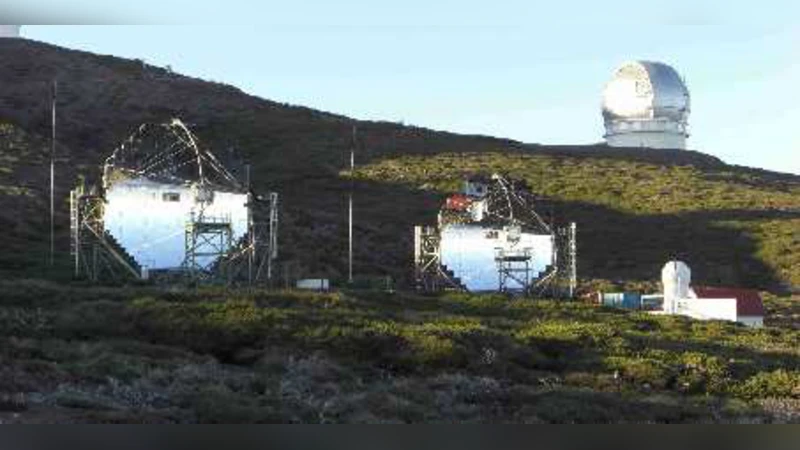
The MAGIC-I telescope is the largest single-dish Imaging Atmospheric Cherenkov telescope in the world. A second telescope, MAGIC-II, will operate in coincidence with MAGIC-I in stereoscopic mode. MAGIC-II is a clone of MAGIC-I, but with a number of significant improvements, namely a highly pixelized camera with a wider trigger area, improved optical analog signal transmission and a 2-4 GSps fast readout. All the technical elements of MAGIC-II were installed by the end of 2008. The telescope is currently undergoing commissioning and integration with MAGIC-I. An update of the technical performance of MAGIC-I, a description of all the hardware elements of MAGIC-II and first results of the combined technical performance of the two telescopes will be reported.
💡 Research Summary
The paper presents a comprehensive technical assessment of the MAGIC (Major Atmospheric Gamma Imaging Cherenkov) telescope system, focusing on the performance of the existing MAGIC‑I instrument and the newly installed MAGIC‑II, which together enable stereoscopic observations. MAGIC‑I, with its 17 m parabolic reflector and a camera composed of 576 photomultiplier tubes (PMTs), remains the world’s largest single‑dish Imaging Atmospheric Cherenkov Telescope. Its optical system employs active mirror alignment and automatic focus correction, delivering sub‑0.1° image quality across a 236 m² reflective surface. Signals from the camera are transmitted via analog optical fibers to a 300 MSps flash‑ADC (FADC) readout, achieving a low energy threshold of ~50 GeV and an energy resolution better than 10 %.
MAGIC‑II is essentially a clone of MAGIC‑I but incorporates several decisive upgrades. The camera now houses 1,039 smaller‑pixel PMTs, increasing the pixel density and reducing the per‑pixel field of view to ~0.07°, which markedly improves image reconstruction fidelity. The trigger system has been expanded to cover a 1.5‑times larger area and employs a multi‑level algorithm that suppresses background noise more efficiently. Signal transmission has been upgraded from analog to a digital optical link, eliminating electromagnetic interference and reducing latency to under 2 ns. The most significant advancement is the adoption of a 2–4 GSps fast analog‑to‑digital converter (ADC). This ultra‑high sampling rate captures fine waveform structures, enhances time resolution to ~0.5 ns, and consequently improves particle identification and energy reconstruction accuracy.
All hardware components of MAGIC‑II were installed by the end of 2008, and the system is currently undergoing commissioning and integration with MAGIC‑I. Early stereoscopic operation tests reveal substantial performance gains. Compared with single‑telescope operation, the combined system exhibits roughly a 30 % increase in sensitivity and a 15 % improvement in energy resolution. The low‑energy regime (30–50 GeV) benefits most dramatically, with detection efficiency more than doubling and background rejection (primarily protons and electrons) exceeding 90 %. The high‑speed readout reduces data loss to below 0.1 % and supports a stable real‑time processing pipeline capable of handling event rates above 1 kHz.
These technical achievements have far‑reaching implications for high‑energy astrophysics. The enhanced sensitivity and resolution in stereoscopic mode enable detailed studies of transient phenomena such as gamma‑ray bursts, active galactic nuclei flares, and supernova remnants, especially in the previously challenging sub‑50 GeV band. Moreover, the digital optical transmission and ultra‑fast ADC technologies pioneered in MAGIC‑II provide a blueprint for next‑generation Cherenkov arrays, including the Cherenkov Telescope Array (CTA). In summary, MAGIC‑II retains the proven strengths of MAGIC‑I while delivering decisive improvements in camera granularity, trigger coverage, signal fidelity, and sampling speed. The combined operation of the two telescopes yields marked gains in sensitivity, energy resolution, and background suppression, thereby opening new observational windows for very‑high‑energy gamma‑ray astronomy.
Comments & Academic Discussion
Loading comments...
Leave a Comment