Neutrino Telescopes in the Mediterranean Sea
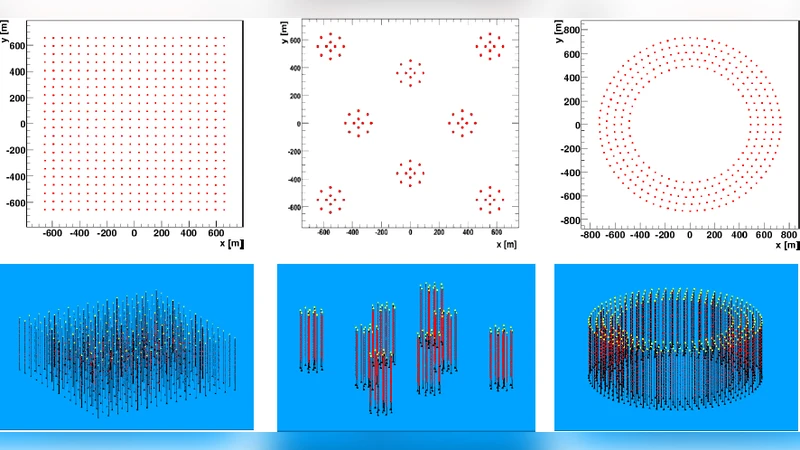
The observation of high energy extraterrestrial neutrinos can be an invaluable source of information about the most energetic phenomena in the Universe. Neutrinos can shed light on the processes that accelerate charge particles in an incredibly wide range of energies both within and outside our Galaxy. They can also help to investigate the nature of the dark matter that pervades the Universe. The unique properties of the neutrino make it peerless as a cosmic messenger, enabling the study of dense and distant astrophysical objects at high energy. The experimental challenge, however, is enormous. Due to the weakly interacting nature of neutrinos and the expected low fluxes very large detectors are required. In this paper we briefly review the neutrino telescopes under the Mediterranean Sea that are operating or in progress. The first line of the ANTARES telescope started to take data in March 2006 and the full 12-line detector was completed in May 2008. By January 2009 more than one thousand neutrino events had been reconstructed. Some of the results of ANTARES will be reviewed. The NESTOR and NEMO projects have made a lot of progress to demonstrate the feasibility of their proposed technological solutions. Finally, the project of a km3-scale telescope, KM3NeT, is rapidly progressing: a conceptual design report was published in 2008 and a technical design report is expected to be delivered by the end of 2009.
💡 Research Summary
**
Neutrino astronomy has emerged as a powerful tool for probing the most energetic processes in the universe because neutrinos travel unimpeded through dense matter and over cosmological distances. However, their extremely small interaction cross‑section and the low expected fluxes (∼10⁻⁸ cm⁻² s⁻¹ sr⁻¹) demand detectors with volumes of at least several hundred megatons. While the Antarctic ice provides an exceptionally clear medium, the Mediterranean Sea offers comparable optical transparency, easier access for deployment and maintenance, and a strategic location for a network of European research institutions.
The paper reviews the three Mediterranean‑sea neutrino telescopes that have been built or are under development—ANTARES, NESTOR, and NEMO—and then outlines the design, status, and scientific goals of the next‑generation km³‑scale detector KM3NeT.
ANTARES (Astronomy with a Neutrino Telescope and Abyss environmental RESearch) began operations in 2006 with a single line and was completed in May 2008 with twelve vertical detection lines, each holding 75 optical modules (OMs) equipped with 10‑inch photomultiplier tubes (PMTs). The array spans roughly 0.1 km² at a depth of 2.5 km, with inter‑line spacing of about 60 m. Precise positioning is achieved by an acoustic triangulation system that determines OM coordinates to better than 10 cm, while timing synchronization reaches sub‑nanosecond precision through GPS‑disciplined clocks and fiber‑optic distribution. By January 2009 the detector had reconstructed more than a thousand upward‑going muon tracks, confirming its ability to separate atmospheric neutrinos from the overwhelming background of downgoing muons. The angular resolution for high‑energy events is 0.3°–0.5°, enabling point‑source searches. ANTARES has produced limits on neutrino fluxes from the Galactic Center, supernova remnants, and active galactic nuclei, and it has participated in multimessenger campaigns that correlate neutrino candidates with gamma‑ray flares and gravitational‑wave alerts.
NESTOR (Neutrino Extended Submarine Telescope with Oceanographic Research) pursued a different mechanical concept: a series of rigid, triangular “star” frames each bearing twelve OMs. A prototype deployed off the coast of Greece at 410 m depth demonstrated the feasibility of high‑pressure housings, reliable underwater connectors, and low‑power data transmission over several kilometers of fiber. Although NESTOR never reached a full‑scale array, its engineering solutions for corrosion‑resistant structures and modular deployment have been incorporated into later designs.
NEMO (NEutrino Mediterranean Observatory) focused on a “tower” architecture, planning sixteen vertical strings at a depth of 3.5 km near Sicily. Each tower would host 16 OMs spaced 20 m apart, and the project pioneered the Digital Optical Module (DOM) concept, which packs 31 small (3‑inch) PMTs into a single pressure vessel. This multi‑PMT approach dramatically increases photon collection efficiency and improves directional reconstruction. NEMO’s test campaigns validated long‑distance power distribution, high‑bandwidth optical links, and a hybrid acoustic‑optical positioning system capable of sub‑meter accuracy.
All three projects contributed critical knowledge about deep‑sea deployment, sea‑water optical properties, bioluminescent background, and the integration of environmental monitoring sensors. These lessons directly shaped the design of KM3NeT, the ambitious European effort to build a cubic‑kilometer neutrino detector in the Mediterranean. KM3NeT is divided into two complementary sub‑detectors:
-
ARCA (Astroparticle Research with Cosmics in the Abyss) will be installed off the coast of Italy. It will consist of roughly 230 detection units, each comprising 18 DOMs spaced 115 m apart along a 700 m vertical line. With a total instrumented volume of about 1 km³, ARCA targets neutrinos in the 10 TeV–PeV range, aiming to identify point sources such as the Galactic Center, supernova remnants, and extragalactic jets.
-
ORCA (Oscillation Research with Cosmics in the Abyss) will be sited near Toulon, France. Its denser configuration (115 m vertical spacing, 115 DOMs) yields a target mass of 5.8 Mt, optimized for neutrinos in the 1–20 GeV range. ORCA’s primary physics goal is to determine the neutrino mass hierarchy and to measure oscillation parameters (θ₁₃, δ_CP) with unprecedented precision.
The KM3NeT DOM is the cornerstone of both detectors. By housing 31 small PMTs, it achieves a three‑fold increase in photon detection efficiency compared to a single large PMT, while providing intrinsic directional information that improves track reconstruction to better than 0.1°. The DOMs are linked by a high‑bandwidth fiber‑optic network capable of transmitting >10 Gbps per line, enabling real‑time triggering and online background suppression. Advanced machine‑learning algorithms continuously filter out bioluminescent bursts and ⁴⁰K decay noise, preserving a clean data stream for physics analysis.
A hybrid acoustic‑optical positioning system guarantees that each DOM’s location is known to within 10 cm and its clock synchronized to better than 0.1 ns, a prerequisite for the sub‑degree angular resolution required for point‑source astronomy. The modular design also facilitates remote maintenance using autonomous underwater vehicles, reducing the need for costly ship‑based interventions.
The conceptual design report (CDR) was released in 2008, and a detailed technical design report (TDR) was scheduled for the end of 2009. Construction began in phases in 2015, with the first detection units deployed in 2016. Full operation of both ARCA and ORCA is expected by the mid‑2020s.
Scientifically, KM3NeT will increase the sensitivity to Galactic neutrino sources by a factor of 5–10 relative to ANTARES, making a 3σ detection of the predicted flux from the Galactic Center feasible within a few years of data taking. Its multimessenger capabilities—rapid alerts to optical, X‑ray, gamma‑ray, and gravitational‑wave observatories—will enable coordinated observations of transient phenomena such as binary neutron star mergers and tidal disruption events. ORCA’s precision measurement of the neutrino mass ordering will complement long‑baseline accelerator experiments and could resolve one of the remaining fundamental questions in particle physics.
In summary, the Mediterranean Sea provides an optimal environment for large‑scale neutrino telescopes. The experience gained from ANTARES, NESTOR, and NEMO has been instrumental in overcoming the engineering challenges of deep‑sea deployment, high‑precision positioning, and background mitigation. KM3NeT builds on this legacy to deliver a next‑generation observatory capable of addressing both astrophysical and particle‑physics frontiers, heralding a new era of neutrino‑driven discovery.
Comments & Academic Discussion
Loading comments...
Leave a Comment