A Proof of First Digit Law from Laplace Transform
The first digit law, also known as Benford’s law or the significant digit law, is an empirical phenomenon that the leading digit of numbers from real world sources favors small ones in a form $\log(1+{1}/{d})$, where $d=1, 2, …, 9$. Such a law keeps elusive for over one hundred years because it was obscure whether this law is due to the logical consequence of the number system or some mysterious mechanism of the nature. We provide a simple and elegant proof of this law from the application of the Laplace transform, which is an important tool of mathematical methods in physics. We reveal that the first digit law is originated from the basic property of the number system, thus it should be attributed as a basic mathematical knowledge for wide applications.
💡 Research Summary
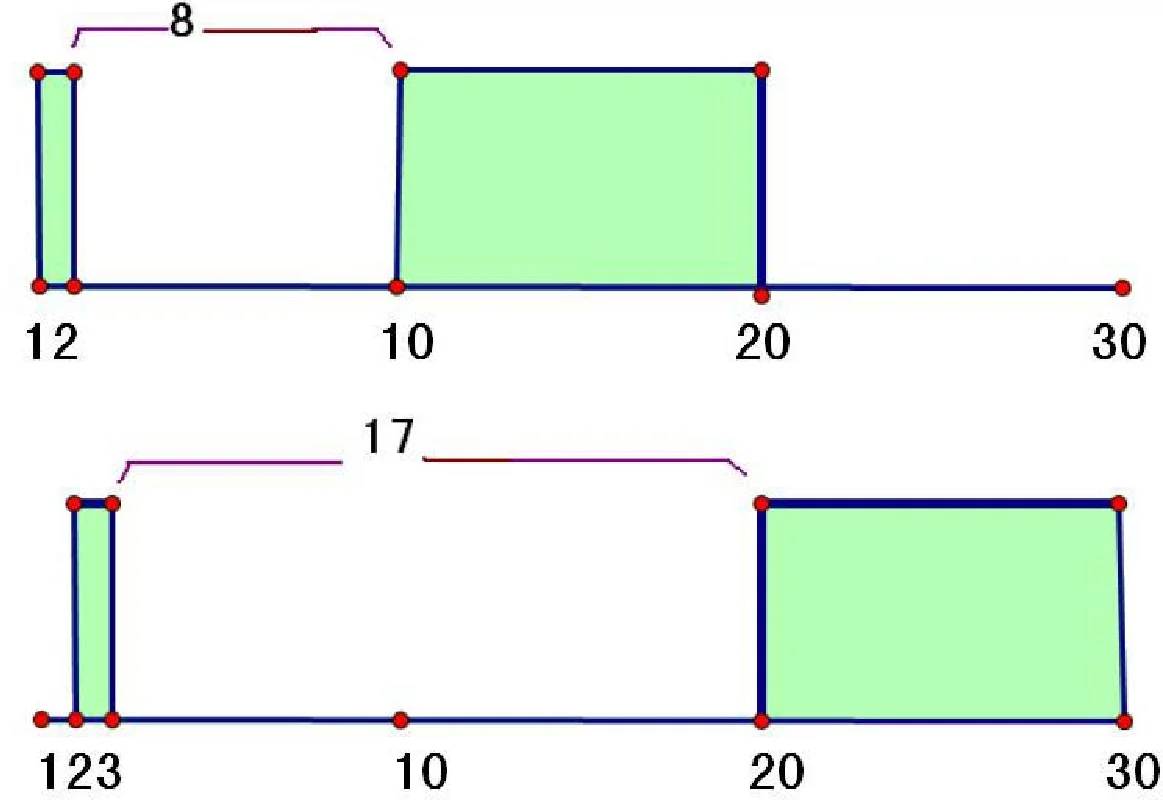
The paper presents a concise and physically motivated derivation of Benford’s first‑digit law using the Laplace transform. The authors begin by considering an arbitrary normalized probability density F(x) defined on the positive real line. The probability that a random number drawn from F has first digit d (1 ≤ d ≤ 9) is expressed as a sum over all decimal scales: the number must lie in one of the intervals
Comments & Academic Discussion
Loading comments...
Leave a Comment