Atmospheric aerosols at the Pierre Auger Observatory and environmental implications
The Pierre Auger Observatory detects the highest energy cosmic rays. Calorimetric measurements of extensive air showers induced by cosmic rays are performed with a fluorescence detector. Thus, one of the main challenges is the atmospheric monitoring, especially for aerosols in suspension in the atmosphere. Several methods are described which have been developed to measure the aerosol optical depth profile and aerosol phase function, using lasers and other light sources as recorded by the fluorescence detector. The origin of atmospheric aerosols traveling through the Auger site is also presented, highlighting the effect of surrounding areas to atmospheric properties. In the aim to extend the Pierre Auger Observatory to an atmospheric research platform, a discussion about a collaborative project is presented.
💡 Research Summary
The Pierre Auger Observatory (PAO) is the world’s largest detector for ultra‑high‑energy cosmic rays, employing a surface array and four fluorescence detector (FD) stations to observe nitrogen fluorescence emitted by extensive air showers. Because the atmosphere itself acts as a giant calorimeter, precise knowledge of atmospheric transmission is essential for accurate energy reconstruction. The dominant sources of light attenuation are Rayleigh scattering by molecules and Mie scattering by aerosols. While molecular scattering is well understood and relatively stable, aerosol concentrations vary rapidly with weather, wind, and regional sources, introducing significant systematic uncertainties.
To address this, the PAO collaboration has built a comprehensive atmospheric monitoring system that includes several complementary instruments:
-
Central Laser Facility (CLF) and Extreme Laser Facility (XLF) – Both emit 355 nm UV laser pulses (7 ns, ~7 mJ) vertically (CLF) and horizontally (XLF). The FD telescopes record the scattered light from these beams. By comparing the observed light profile with a reference profile obtained on “clear nights” (negligible aerosol content), the vertical aerosol optical depth τ_a(h,λ₀) is derived using a Beer‑Lambert formalism that assumes horizontal uniformity of the aerosol layer. The method yields τ_a at various altitudes; typical values at 3.5 km above the FD level are around 0.04, with a quality cut rejecting events when τ_a ≥ 0.1.
-
Elastic Backscatter Lidars – Four lidars (one per FD site) provide real‑time vertical profiles of aerosol backscatter, confirming the CLF‑derived τ_a and offering independent measurements of aerosol layer height and density. A Raman lidar prototype is being tested for future deployment.
-
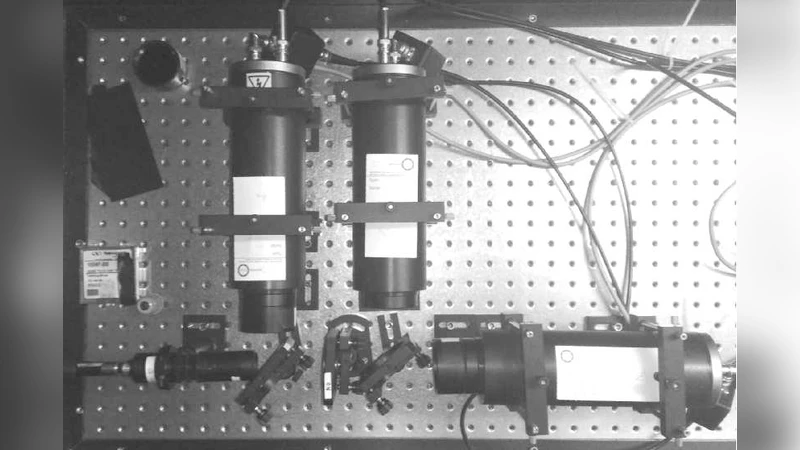
Aerosol Phase Function (APF) Monitors – Installed at Coihueco and Los Morados, these devices fire a collimated Xenon flash horizontally across the FD field of view. By measuring the angular distribution of scattered light, the aerosol phase function P_a(ζ) is fitted with a modified Henyey‑Greenstein model:
P_a(ζ|g,f) = (1−g²)/(4π(1+g²−2g cos ζ)³⁄²) + f·(3 cos² ζ−1)/(2(1+g²)³⁄²).
The asymmetry parameter g (forward‑scattering strength) is found to lie between 0.6 and 0.9, indicating strong forward scattering, while the backward‑scattering enhancement factor f ≈ 0.4 adds a modest backscatter component. -
Horizontal Attenuation Monitor (HAM) and FRAM (Photometric Robotic Atmospheric Monitor) – These optical telescopes observe stars at multiple wavelengths to determine the wavelength dependence of aerosol extinction. The data are fitted with an Angström power law τ_a(λ) = τ_a(λ₀)(λ₀/λ)^γ. The exponent γ is close to zero, consistent with a dominance of coarse particles (diameter > 1 µm) typical of desert dust.
-
In‑situ Filter Sampling – A campaign in 2008 collected aerosol particles on filters for laboratory analysis of size distribution and chemical composition, corroborating the optical findings and helping to identify source regions.
The combined dataset reveals that the aerosol population over the PAO site is generally thin but highly variable. The low Angström exponent (γ≈0) and high g values point to a coarse, desert‑type aerosol regime, likely sourced from the surrounding Andes foothills, the Patagonian desert, and occasional maritime contributions from the Atlantic. Seasonal and episodic transport events can raise τ_a significantly, prompting the use of real‑time monitoring to flag periods unsuitable for precise cosmic‑ray energy reconstruction.
Beyond its primary role in cosmic‑ray physics, the paper argues that the PAO infrastructure constitutes a valuable atmospheric research platform. The existing laser, lidar, and optical facilities enable long‑term studies of aerosol dynamics, radiative forcing, and climate‑relevant processes in a remote, high‑altitude environment. The authors propose expanding collaborations with atmospheric science groups, sharing data through open repositories, and integrating additional instruments (e.g., multi‑angle Raman lidars, sun photometers) to deepen the interdisciplinary impact.
In summary, the study provides a detailed methodology for quantifying aerosol optical depth and phase function at the Pierre Auger Observatory, demonstrates that aerosol effects, while modest on average, can dominate systematic uncertainties during dusty episodes, and outlines a roadmap for leveraging the observatory’s unique assets for broader atmospheric science research.
Comments & Academic Discussion
Loading comments...
Leave a Comment